The traditional framework of Western Hemispheric diplomacy is facing its most significant challenge in decades as former President Donald Trump intensifies his calls for a more muscular, military-centric approach to Latin American relations. This proposed shift, which includes the potential deployment of U.S. special forces against drug cartels and a heightened naval presence to curb migration and smuggling, represents a radical departure from the "Good Neighbor" policies of the past century. As the United States grapples with a domestic fentanyl crisis and escalating geopolitical competition with China, the prospect of U.S. kinetic action south of the border is no longer confined to the fringes of political discourse; it has become a central pillar of a "Monroe Doctrine 2.0" strategy that seeks to reassert American hegemony through hard power.
At the heart of this policy shift is the escalating public health catastrophe driven by synthetic opioids. With over 100,000 Americans dying annually from drug overdoses—the majority linked to fentanyl produced by Mexican syndicates—the rhetoric surrounding the "War on Drugs" has evolved from a law enforcement issue to a matter of national defense. Trump’s platform suggests that the traditional methods of interdiction and judicial cooperation have failed, necessitating a transition toward treating cartels as foreign terrorist organizations (FTOs). By applying a military lens to the narcotics trade, the proposed strategy envisions targeted strikes, cyber warfare against financial networks, and the deployment of advanced surveillance assets within sovereign territories. While such actions are framed as essential for U.S. national security, they pose profound risks to the legal and diplomatic architecture of the Americas.
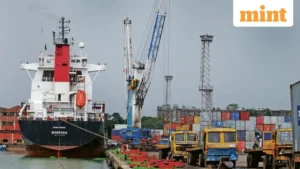
The economic ramifications of a militarized approach to Latin America are particularly acute for Mexico, which has recently overtaken China to become the United States’ largest trading partner. Total bilateral trade between the two nations exceeded $800 billion in 2023, underpinned by the United States-Mexico-Canada Agreement (USMCA). The integrated nature of North American supply chains means that any unilateral military action or significant border disruption could trigger a massive economic shock. Manufacturing sectors, particularly automotive and aerospace, rely on "just-in-time" logistics that cross the border multiple times. Expert analysts suggest that even the threat of military intervention could introduce a "sovereignty risk" premium for investors, potentially stalling the "nearshoring" trend that has seen global firms relocate production from Asia to Mexico to be closer to the American market.
Beyond the immediate concerns of trade, the push for increased military involvement is inseparable from the broader context of Great Power competition. Over the last two decades, China has aggressively expanded its footprint in Latin America, becoming the top trading partner for South American giants like Brazil, Chile, and Peru. Beijing’s "Belt and Road Initiative" has funneled billions into critical infrastructure, including deep-water ports, 5G networks, and lithium mining operations in the "Lithium Triangle" of Argentina, Bolivia, and Chile. From a strategic perspective, Trump’s call for a more assertive U.S. presence is viewed by his advisors as a necessary counter-maneuver to prevent the region from falling entirely into the Chinese sphere of influence. However, the use of military coercion rather than economic incentives may alienate regional leaders, potentially pushing them closer to Beijing as a counterbalance to perceived "Yankee Imperialism."
Energy security remains another critical variable in this geopolitical calculus. Venezuela, home to the world’s largest proven oil reserves, has long been a target of Trump’s "maximum pressure" campaign. While the current U.S. administration has experimented with a cautious easing of sanctions to stabilize global oil prices following the invasion of Ukraine, a return to a Trumpian policy could see the revival of military posturing near Venezuelan waters. For global energy markets, any escalation that threatens to disrupt maritime corridors in the Caribbean or the Gulf of Mexico would likely lead to increased volatility in Brent and WTI crude prices. Furthermore, the potential for military-enforced blockades or interdictions raises questions about the freedom of navigation in a region vital for global shipping routes, including the Panama Canal.
The domestic legal hurdles for such a policy are equally complex. The Posse Comitatus Act generally prohibits the use of federal military personnel to enforce domestic policies, but the application of military force on foreign soil falls under the President’s authority as Commander-in-Chief. However, such actions without the consent of host nations would violate the United Nations Charter and the Charter of the Organization of American States (OAS). Critics argue that bypassing these international norms would dismantle decades of institutional cooperation on intelligence sharing and extradition. Conversely, proponents of the "Trump Doctrine" argue that the concept of sovereignty is conditional; if a state cannot or will not control its territory to prevent the export of lethal substances or mass migration, it forfeits its right to absolute non-interference.
Migration management also stands as a primary driver for military consideration. The proposal to utilize military assets for border enforcement and potentially for operations within the "Northern Triangle" (Guatemala, Honduras, and El Salvador) aims to stem the flow of asylum seekers at the source. This "forward-defense" posture would likely involve expanding the role of the U.S. Southern Command (SOUTHCOM) to provide not just training, but active operational support for regional militaries. The economic impact of such a move is twofold: while it might reduce the perceived costs associated with processing migrants at the U.S. border, it could also lead to regional instability that triggers even larger waves of displacement, creating a self-reinforcing cycle of crisis.
From a market perspective, the "securitization" of Latin American policy introduces significant uncertainty for sovereign debt markets. Countries like Colombia and Ecuador, which have historically maintained close security ties with Washington, may find themselves caught in a difficult position between domestic public opinion—which remains highly sensitive to U.S. intervention—and the need for continued American financial and security assistance. If U.S. policy shifts toward unilateralism, the risk of regional blowback could manifest in the form of nationalization of assets or the election of populist, anti-American governments, further complicating the landscape for multinational corporations operating in the extractive and agricultural sectors.
The environmental and social implications of a militarized narcotics strategy also deserve scrutiny. The potential revival of aerial fumigation of coca crops, often supported by military protection, has historically led to significant displacement of rural populations and environmental degradation in the Andean region. Such policies often ignore the underlying economic drivers of the drug trade—namely, the lack of viable legal livelihoods for peasant farmers. A purely military solution risks treating the symptoms of regional instability rather than its root causes, such as income inequality, corruption, and the lack of robust state presence in peripheral areas.
As the debate over the future of U.S.-Latin American relations intensifies, the choice appears to be between two vastly different visions of the hemisphere. One vision prioritizes diplomatic engagement, trade integration, and collaborative institution-building to address shared challenges. The other, championed by Donald Trump, views the region through a realist lens where security is the prerequisite for all other forms of interaction. For business leaders and economists, the primary concern remains whether a "security-first" approach will provide the stability necessary for growth or whether it will ignite a new era of friction that disrupts the very economic engines—like the USMCA—that have become vital to American prosperity.
In conclusion, the call for increased U.S. military action in Latin America marks a pivot toward a more confrontational and unilateral foreign policy. While the objectives—stopping the flow of fentanyl and reducing illegal migration—are widely shared across the political spectrum, the proposed methods represent a high-stakes gamble. The success or failure of this strategy will not only be measured in terms of drug interdictions or border crossings but also in its impact on the $1.5 trillion in annual trade that flows through the Americas and the long-term geopolitical alignment of a region that is increasingly becoming a theater for global competition. The coming years will determine if the Western Hemisphere moves toward deeper integration or if it becomes a landscape of fortified borders and tactical interventions.