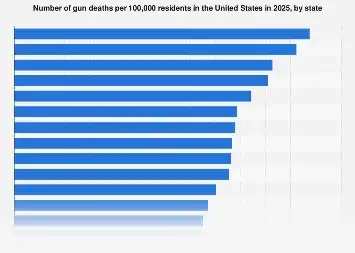
In 2026, the United States grappled with a deeply entrenched and geographically uneven crisis of gun violence, with stark statistical differences emerging across its states. Preliminary data indicated that one particular state registered the highest rate of fatalities stemming from firearms, with a harrowing figure of [Redacted Number] deaths per 100,000 residents. This alarming statistic was closely followed by another state, which recorded [Redacted Number] fatalities per 100,000 residents. In stark contrast, the state of Hawaii presented a significantly lower gun violence rate, with [Redacted Number] deaths per 100,000 residents, positioning it as the state with the least firearm-related mortality nationwide. Over the preceding decade, the cumulative toll of gun violence has been substantial, with annual homicides by firearm consistently exceeding [Redacted Number] instances across the nation.
The complex tapestry of gun violence in the United States is intricately woven with a patchwork of state-specific legislation and deeply ingrained constitutional interpretations. The effectiveness of gun laws in mitigating this crisis is a subject of ongoing debate and empirical scrutiny. While research suggests a correlation between more stringent firearm regulations and a reduction in gun-related fatalities, the reality on the ground is often more nuanced. Several states, despite implementing robust gun safety measures, continue to contend with elevated levels of gun violence. This persistent challenge is frequently attributed to the pervasive issue of interstate gun trafficking. Firearms illegally diverted from states with less restrictive laws can readily cross state lines, undermining the efficacy of localized legislative efforts and presenting a formidable obstacle to comprehensive gun violence reduction strategies.
At the heart of the American discourse on gun control lies the Second Amendment of the Constitution, which enshrons the right of citizens to keep and bear arms. This fundamental right is a cornerstone of American identity for a significant portion of the populace, fostering a deep-seated reluctance to embrace extensive gun control measures. Consequently, the debate surrounding gun ownership and regulation has evolved into a highly polarized political issue, often mirroring broader partisan divides. Polling data from the period reveals a clear divergence in perspectives: an estimated [Redacted Percentage]% of Democrats expressed the view that prioritizing limitations on gun ownership was paramount, while a substantial [Redacted Percentage]% of Republicans maintained that safeguarding the right of Americans to own firearms held greater importance. This ideological chasm significantly complicates the path toward federal consensus on gun policy.
The economic ramifications of gun violence extend far beyond the immediate human tragedy. Studies have attempted to quantify the immense financial burden imposed by gun-related incidents, encompassing direct costs such as medical expenses for victims, law enforcement expenditures, and judicial system resources, as well as indirect costs like lost productivity, decreased property values in affected communities, and the chilling effect on tourism and business investment. While precise, universally agreed-upon figures remain elusive, estimates suggest that the annual economic cost of gun violence in the United States runs into the hundreds of billions of dollars, representing a significant drag on national economic growth and diverting vital resources from other critical areas such as infrastructure development, education, and public health initiatives. States experiencing higher rates of gun violence often bear a disproportionate share of these economic burdens, creating a vicious cycle where social instability hinders economic recovery and perpetuates further hardship.
Analyzing the geographical distribution of gun violence reveals a complex interplay of socioeconomic factors, urbanicity, and access to firearms. While the highest rates of gun violence per capita are often concentrated in specific states, the underlying causes are multifaceted and vary considerably. Factors such as poverty, educational attainment, unemployment rates, the prevalence of gang activity, and the accessibility of mental health services are all recognized as contributing elements. Furthermore, the availability and type of firearms in circulation, as well as the cultural attitudes towards gun ownership within a given region, play a significant role. Understanding these localized dynamics is crucial for developing targeted and effective intervention strategies. For instance, communities struggling with high rates of gun violence often benefit from comprehensive approaches that combine law enforcement efforts with social service provisions, community-based violence interruption programs, and initiatives aimed at addressing the root causes of crime and despair.
The impact of gun violence on public health is profound and far-reaching. Beyond the immediate fatalities and injuries, survivors often face lifelong physical and psychological challenges. The pervasive threat of gun violence can foster a climate of fear and anxiety within communities, impacting mental well-being, reducing social cohesion, and limiting opportunities for recreation and civic engagement. Healthcare systems bear a substantial burden in treating gunshot victims, a cost that is ultimately absorbed by taxpayers and insurers. Public health organizations increasingly advocate for viewing gun violence not solely as a criminal justice issue but as a public health epidemic requiring preventative strategies, much like infectious diseases or chronic conditions. This paradigm shift emphasizes data-driven research, evidence-based interventions, and a focus on upstream factors that contribute to violence.
Globally, the United States stands out among developed nations for its exceptionally high rates of gun violence. While other countries grapple with crime and violence, the scale and nature of firearm-related deaths in the U.S. are often an anomaly. Comparisons with nations like Canada, Australia, or Western European countries, which have generally implemented stricter gun control measures and exhibit significantly lower rates of gun violence, offer valuable insights into the potential impact of different policy approaches. These international comparisons highlight that the relationship between firearm availability and violence is not immutable and can be shaped by legislative choices and societal norms. However, it is also critical to acknowledge the unique historical, cultural, and legal context of gun ownership in the United States, which differentiates it from other national experiences.
The economic debate surrounding gun control often centers on the potential impact on the firearms industry, including manufacturers, retailers, and related businesses. Proponents of stricter gun laws argue that the long-term economic benefits of reduced violence, including lower healthcare costs and increased productivity, far outweigh any short-term economic disruption to the industry. Conversely, opponents often highlight the economic contributions of the firearms sector, including job creation and tax revenue, and express concerns that stringent regulations could stifle legitimate commerce and infringe upon constitutional rights. Analyzing the economic footprint of the firearms industry requires a nuanced approach, considering not only direct employment and sales but also the broader economic ecosystem that supports it, including related industries like ammunition production and shooting range operations.
The future trajectory of gun violence rates in the U.S. will likely be shaped by a confluence of legislative actions, societal shifts, and ongoing demographic trends. Demographic changes, such as evolving population demographics and urbanization patterns, can influence crime rates and the distribution of violence. Furthermore, the persistent debate over gun rights versus gun control will continue to be a central theme in American politics, with potential legislative breakthroughs or setbacks influencing the landscape of firearm accessibility and regulation. The effectiveness of various intervention strategies, from community-based programs to technological solutions for gun safety, will also play a crucial role. Ultimately, addressing the multifaceted challenge of gun violence in the United States requires a sustained, comprehensive, and evidence-based approach that acknowledges the complex interplay of social, economic, and political factors at play.