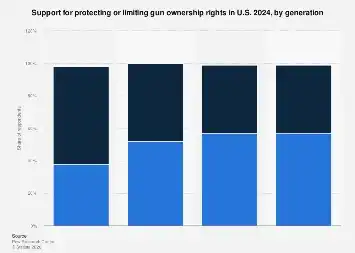
A significant and widening generational chasm is shaping public discourse and policy debates surrounding firearm ownership rights in the United States. While the Second Amendment to the U.S. Constitution guarantees the right of the people to keep and bear arms, the interpretation and perceived importance of this right demonstrably vary across different age demographics, impacting everything from legislative priorities to consumer behavior within the firearms industry. This generational divergence is not merely a matter of differing opinions; it represents a fundamental shift in cultural perspectives and the evolving social contract regarding personal security and collective safety.
Analysis of recent surveys and public opinion data reveals a clear pattern: younger Americans, particularly Millennials and Generation Z, express a greater propensity to support stricter gun control measures compared to their older counterparts, Baby Boomers and the Silent Generation. This trend is often attributed to a confluence of factors, including greater exposure to gun violence through media and personal experiences, different educational curricula, and exposure to global perspectives on gun regulation. For instance, while countries with more stringent gun laws, such as Australia, Japan, or many European nations, have significantly lower rates of gun violence, these comparisons often struggle to resonate fully with segments of the American population deeply rooted in a tradition of widespread gun ownership. However, the stark contrast in outcomes undeniably influences the perceptions of younger generations who may not have the same historical or cultural ties to the unfettered right to bear arms.
Conversely, older generations in the U.S. tend to exhibit a stronger defense of Second Amendment rights, often viewing gun ownership as a crucial aspect of self-defense and individual liberty. This perspective is frequently informed by historical narratives, a perceived increase in crime rates, and a distrust of government overreach. For many in these demographics, firearms are not just tools for sport or defense but are intrinsically linked to their identity and a fundamental right that should be preserved with minimal infringement. This deeply ingrained belief system can create a formidable barrier to legislative changes that aim to impose more restrictive gun laws, leading to persistent political deadlock.
The economic implications of this generational divide are substantial. The firearms industry, a multi-billion dollar sector in the U.S., faces a dynamic market influenced by these shifting attitudes. While older consumers may continue to drive demand for traditional firearms and accessories, the future growth trajectory of the industry may hinge on its ability to adapt to the preferences and concerns of younger demographics. This could involve greater emphasis on firearm safety education, responsible gun ownership campaigns, and potentially the development of products that align with evolving perceptions of safety and utility. Furthermore, the debate over gun control has direct repercussions on sectors such as ammunition manufacturing, shooting range operations, and firearm training services. Any significant legislative changes, driven by the evolving views of a growing electorate, could lead to substantial market disruptions, affecting employment and investment within these industries.
Statistics consistently underscore this generational disparity. Polling data from reputable research institutions frequently indicates that a higher percentage of adults under 30 express support for universal background checks, bans on certain types of firearms, and red flag laws. In contrast, older age groups are more likely to oppose such measures, often favoring the enforcement of existing laws and focusing on mental health issues as the primary drivers of gun violence. This divergence in opinion is not static; it is a living, evolving aspect of American society, shaped by ongoing events, political rhetoric, and the generational succession of voters.
The impact of this generational divide extends beyond domestic policy and into the realm of international perception. The United States stands as an outlier among developed nations in its high rates of gun ownership and gun violence. While proponents of robust gun rights often point to cultural differences and historical precedent, the persistent concerns raised by international observers and the stark statistical disparities create an ongoing challenge for America’s global image and its ability to advocate for certain international norms. Younger Americans, who are often more globally connected and exposed to international perspectives, may be more attuned to these criticisms, further fueling their desire for policy changes.
Understanding this generational dynamic is crucial for policymakers, industry leaders, and anyone seeking to comprehend the complex landscape of gun rights in America. It suggests that the long-term trajectory of gun policy will likely be influenced by the increasing political power of younger generations. As Millennials and Gen Z age into their prime voting years and economic influence, their differing perspectives on gun ownership are poised to play an increasingly significant role in shaping legislation and societal norms. The challenge for the United States lies in finding common ground and developing solutions that address the deeply held beliefs and concerns across all generations, while striving to enhance public safety. This ongoing dialogue, often fraught with emotion and deeply entrenched viewpoints, will undoubtedly continue to be a defining feature of American public life for years to come. The economic and social fabric of the nation is inextricably linked to the resolution of this fundamental debate.