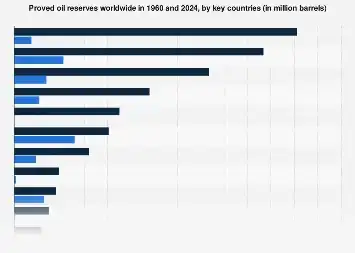
The intricate tapestry of global energy markets in 2024 is heavily influenced by the strategic positioning of nations holding the largest proven oil reserves. These reserves represent not only a critical component of national economic security and geopolitical leverage but also a fundamental driver of international trade, investment, and the ongoing energy transition discourse. While precise, real-time figures for these vast underground assets are often subject to proprietary analysis and evolving extraction technologies, available data and expert assessments paint a clear picture of the dominant players in the global oil landscape.
At the forefront of this domain are nations blessed with immense hydrocarbon deposits, primarily concentrated in regions with historically significant oil-producing histories. Venezuela, despite facing considerable economic and political challenges, continues to command the largest estimated proven oil reserves globally. Its Orinoco Belt, a vast area rich in heavy crude, holds the potential for trillions of barrels. However, the practical realization of this potential is contingent on significant investment in advanced extraction and upgrading technologies, as well as a stable operating environment. The sheer scale of Venezuela’s reserves places it in a unique, albeit complex, position within the global energy calculus.
Following closely behind, or in some assessments, vying for the top spot depending on the methodology, is Saudi Arabia. As a cornerstone of the Organization of the Petroleum Exporting Countries (OPEC), the Kingdom possesses vast conventional crude oil reserves, characterized by relatively easy extraction and high quality. Saudi Aramco, the state-owned oil giant, has consistently demonstrated its capacity for large-scale production and its significant influence over global oil prices. The nation’s strategic reserve management and its role as a swing producer underscore its pivotal importance in maintaining global oil market stability. Its proven reserves are a testament to decades of exploration and consistent production, making it a linchpin in the international energy supply chain.
The Islamic Republic of Iran, another key Middle Eastern player, also boasts substantial proven oil reserves, ranking among the top three globally. Its reserves are largely composed of light and heavy crude, located in onshore and offshore fields. However, like Venezuela, Iran’s oil sector has been significantly impacted by international sanctions, affecting its production capacity and export volumes. The future trajectory of its oil industry is closely tied to geopolitical developments and the potential for sanctions relief, which could unlock substantial untapped potential and reconfigure regional energy dynamics.
Further enriching the list of major reserve holders is the Russian Federation. Russia’s vast landmass encompasses diverse geological formations yielding significant quantities of both conventional and unconventional oil, including vast reserves in Western Siberia. Its position as a major global oil producer and exporter, coupled with its substantial reserves, grants it considerable influence in international energy policy and markets. The nation’s strategic importance is amplified by its extensive pipeline infrastructure and its ability to serve both European and Asian markets.
Canada, particularly through its oil sands, holds the third-largest proven oil reserves in the world, making it a North American energy powerhouse. The oil sands in Alberta are characterized by bitumen, a thick, heavy form of crude oil that requires specialized extraction and processing techniques. While the scale of these reserves is immense, the economic viability and environmental impact of their extraction remain subjects of ongoing debate and technological advancement. Canada’s proximity to the United States, the world’s largest oil consumer, further solidifies its strategic importance in the North American energy landscape.
Other nations with significant proven oil reserves include Iraq, Kuwait, the United Arab Emirates, and Nigeria. Each of these countries plays a vital role in global oil supply, with their reserve levels influencing production quotas within OPEC and impacting regional energy security. Iraq’s reserves, though substantial, have been hampered by years of conflict and instability, with significant potential for future growth if the operating environment stabilizes. Kuwait and the UAE, both long-standing members of OPEC, possess large conventional reserves and have historically been reliable suppliers to the global market. Nigeria, the largest oil producer in Africa, has considerable reserves but faces challenges related to infrastructure, security, and declining investment in new exploration.
The economic implications of these reserve holdings are profound. Nations with large reserves often benefit from substantial export revenues, which can fuel national development, fund infrastructure projects, and support social programs. However, this reliance on oil exports can also create economic vulnerabilities, making nations susceptible to global price fluctuations and the eventual decline in demand as the world transitions to cleaner energy sources. Managing these revenues effectively, diversifying economies, and investing in sustainable development are critical challenges for these energy-rich states.
Furthermore, the concentration of oil reserves in specific geopolitical regions has shaped international relations for decades. The Middle East, in particular, has been a focal point of global energy diplomacy and, at times, geopolitical tension, due to the immense reserves located within its borders. Access to these reserves, the security of supply routes, and the pricing of oil have consistently been central to the foreign policy objectives of major global powers.
Looking ahead, the dynamic nature of oil reserves cannot be overstated. Technological advancements in exploration and extraction, such as hydraulic fracturing and enhanced oil recovery techniques, can unlock previously inaccessible reserves, altering the global supply picture. Conversely, sustained low oil prices can disincentivize investment in exploration and development, potentially leading to a decline in proven reserves over time. The increasing global focus on climate change and the transition to renewable energy sources also introduces a long-term element of uncertainty for oil-dependent economies. Countries are increasingly exploring strategies to transition away from fossil fuels, which will inevitably impact the long-term value and strategic importance of their oil reserves. This transition necessitates careful planning, diversification of economic bases, and investment in new industries to ensure continued prosperity in a decarbonizing world. The strategic imperative for these nations is to balance the immediate economic benefits of their hydrocarbon wealth with the long-term necessity of adapting to a changing global energy paradigm.