Fixed Deposits (FDs) continue to stand as a cornerstone of India’s retail investment landscape, revered for their promise of capital preservation and predictable returns, a stark contrast to the volatility inherent in equity markets and mutual funds. These term deposits, where a lump sum is parked with a financial institution for a predefined period at a fixed interest rate, are particularly attractive to risk-averse investors, retirees, and those seeking stable income streams. The enduring appeal of FDs is deeply rooted in the Indian psyche, where financial security often takes precedence over speculative gains, positioning them as a critical tool for wealth preservation and accumulation, especially for senior citizens who rely on regular interest payouts.
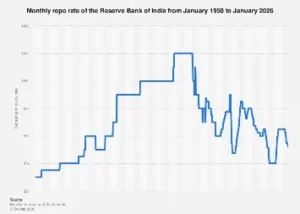
The interest rates offered on FDs are not static but are a dynamic reflection of broader macroeconomic conditions, the Reserve Bank of India’s (RBI) monetary policy stance, and the competitive strategies of individual banks. In a rapidly evolving economic environment, understanding these influencing factors is paramount for optimizing investment decisions. The RBI’s repo rate, the benchmark interest rate at which it lends to commercial banks, plays a pivotal role, often dictating the general direction of FD rates. When the RBI tightens monetary policy to combat inflation, banks typically raise their lending and deposit rates. Conversely, a loosening policy to stimulate economic growth often leads to lower rates. Beyond central bank actions, a bank’s own liquidity position, its cost of funds, and the competitive intensity within the banking sector significantly shape its FD offerings. Banks with higher credit demand or lower deposit bases may offer more attractive rates to draw in funds, while larger, more established players might leverage their brand trust.
For investors considering FDs, a thorough evaluation extends beyond just the headline interest rate. The tenure of the deposit, ranging from as short as seven days to as long as ten years, is a primary determinant. While traditionally longer tenures often commanded higher rates, this is not always a linear relationship, with banks sometimes offering promotional rates for specific mid-term durations to manage their asset-liability matching. Investors must also choose between periodic interest payouts (monthly, quarterly, annually) or cumulative interest, where the interest is compounded and paid out at maturity along with the principal. Each option caters to different financial needs, with periodic payouts suitable for those requiring regular income and cumulative FDs favoring long-term wealth growth.
A critical aspect of FD investment is the understanding of tax implications and liquidity constraints. Interest earned on FDs is taxable income, subject to the investor’s applicable income tax slab rates. Banks typically deduct Tax Deducted at Source (TDS) if the interest income exceeds a certain threshold in a financial year. Furthermore, FDs, while offering assured returns, come with penalties for premature withdrawals, which can erode a portion of the accrued interest. This makes careful planning of liquidity needs essential before committing funds to an FD. Some banks also offer "non-callable" FDs, which, as the name suggests, do not permit early withdrawal before maturity (except in exceptional circumstances like death or bankruptcy). These often carry a premium in interest rates, rewarding investors for their commitment to lock in funds for the full term.
Let’s delve into the current offerings from some of India’s leading financial institutions, illustrating the competitive landscape for retail depositors.
State Bank of India (SBI): The Public Sector Bellwether
As India’s largest public sector bank, SBI’s FD rates often serve as a benchmark for the wider market. For the general public, SBI’s interest rates on deposits below INR 3 crore typically range from 3.05% for short tenures (7-45 days) up to 6.40% for a 2-year to less than 3-year tenure, which represents its highest rate for this segment. Senior citizens, a key demographic for FDs, consistently receive a higher yield, generally 50 basis points more than regular customers. Their rates span from 3.55% to a compelling 7.05% for tenures between 5 and 10 years, reflecting a strategic effort to attract long-term savings from this segment. SBI’s extensive branch network and perceived sovereign backing reinforce its position as a safe haven for millions of depositors. Its non-callable FD options also present attractive rates, reaching 6.80% for the general public and 7.30% for senior citizens for 1-2 year lock-in periods, highlighting the premium for illiquidity.
ICICI Bank: A Private Sector Powerhouse

ICICI Bank, India’s second-largest private sector lender, presents a competitive array of FD products, often with a keen eye on optimizing yields for various customer segments. For the general public, ICICI Bank’s rates typically start from 2.75% for very short-term deposits and climb to 6.50% for tenures ranging from 3 years 1 day to 10 years, including its popular 5-year tax-saver FD. Senior citizens at ICICI Bank enjoy rates between 3.25% and an impressive 7.10% for deposits of 3 years 1 day to 5 years, and also on the 5-year tax-saver FD. The emphasis on the 3-5 year tenure for the highest rates suggests a strategic focus on medium-term liabilities, aligning with the bank’s lending portfolio requirements. The inclusion of tax-saver FDs at competitive rates also underscores its commitment to catering to tax-planning needs.
HDFC Bank: India’s Largest Private Lender
HDFC Bank, the nation’s largest private sector bank by assets, is known for its robust retail presence and often competitive product offerings. Its FD rates for the general public typically vary from 2.75% for the shortest periods to 6.50% for deposits between 3 years 1 day and 4 years 7 months, marking its highest offer in this category. Senior citizens at HDFC Bank benefit from rates ranging from 3.25% to 7.00% for the same 3 years 1 day to 4 years 7 months tenure. The slightly shorter "sweet spot" for peak rates compared to some peers indicates a nuanced approach to managing its deposit book and responding to market demand for specific tenures. HDFC Bank’s consistent performance and strong brand recall contribute to its ability to attract a large depositor base even amidst intense competition.
Axis Bank: A Growing Contender
Axis Bank, another prominent private sector bank, has been aggressively expanding its market share and enhancing its product suite. Its FD rates for the general public range from 3.00% to 6.45%. The highest rate of 6.45% is offered for tenures between 15 months and 10 years, showcasing a consistent high yield across a broad mid-to-long term spectrum. For senior citizens, Axis Bank offers rates from 3.50% up to an attractive 7.20% for deposits ranging from 5 to 10 years. This competitive offering, particularly for longer tenures for senior citizens, positions Axis Bank as an appealing option for those seeking sustained higher returns over an extended period. The bank’s strategy appears to be focused on securing long-term funds to support its growth initiatives.
Broader Market Dynamics and Investor Strategy
Beyond these major players, the Indian FD market is diverse, with small finance banks (SFBs) and some non-banking financial companies (NBFCs) often offering higher interest rates to attract deposits. While these institutions might provide superior yields, investors must conduct thorough due diligence regarding their financial health and regulatory oversight, as the risks can sometimes be marginally higher compared to systemically important banks.
The current global interest rate environment, marked by central banks tightening policies to tame persistent inflation, has led to a general uplift in FD rates in India over the past year. However, as inflation shows signs of moderation and global economic growth faces headwinds, the RBI might eventually pivot to a more accommodative stance, which could lead to a softening of FD rates in the future. This makes the present period potentially opportune for locking in current attractive rates for longer tenures.
For a well-rounded investment strategy, financial advisors often recommend a "laddering" approach for FDs. This involves splitting the total investment into multiple FDs with staggered maturity dates (e.g., one-year, two-year, three-year FDs). This strategy helps mitigate interest rate risk; if rates rise, a portion of the funds becomes available for reinvestment at higher rates, and if rates fall, a portion remains locked in at previously higher rates. Furthermore, while FDs offer safety, they should ideally be part of a diversified portfolio that also considers inflation-adjusted returns. In periods of high inflation, the real return from FDs (nominal interest rate minus inflation) can be low or even negative, diminishing purchasing power over time. Therefore, investors should align their FD choices with their financial goals, risk appetite, and overall asset allocation strategy. The enduring appeal of FDs in India is undeniable, but informed decision-making, coupled with a keen awareness of market trends and individual financial circumstances, remains the key to unlocking their full potential.