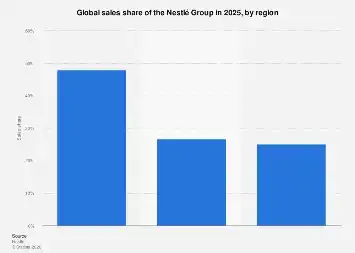
Nestlé, the venerable Swiss multinational food and beverage giant, solidified its dominant global position in 2025, with the Americas emerging as its most significant revenue-generating region, accounting for a substantial portion of its total sales. This geographical concentration underscores the company’s deep-rooted presence and robust market penetration across North and South America, a testament to decades of strategic investment, brand building, and adaptation to diverse consumer preferences. Nestlé’s extensive portfolio, which encompasses iconic brands such as Nespresso, Nesquik, and La Laitière, has been meticulously cultivated to appeal to a wide spectrum of consumers, from premium coffee enthusiasts to families seeking everyday staples. The company’s ability to maintain such a strong foothold in a dynamic and competitive market like the Americas speaks volumes about its operational efficiency, supply chain resilience, and profound understanding of regional consumer behavior.
While the Americas stand out as Nestlé’s primary revenue engine, the company’s global footprint is far more extensive, with significant operations and sales across Europe, Asia, Oceania, and Africa. Each of these regions presents unique opportunities and challenges, influenced by varying economic conditions, demographic trends, and cultural nuances. Nestlé’s success is not merely a function of its brand recognition but also its agile approach to product development and marketing, tailoring its offerings to meet specific local demands. For instance, the company has strategically expanded its health and nutrition segment, recognizing the growing global demand for products that support well-being. This focus has resonated particularly well in developed markets where health-conscious consumers are increasingly discerning about the ingredients and nutritional value of their food and beverages.
Beyond its core food and beverage operations, Nestlé’s influence extends into various segments of the consumer goods market. However, in the fiercely competitive confectionery sector, the company’s standing in 2025 saw it positioned as a significant player, though not at the very apex of the market. In that year, the global confectionery landscape was notably led by Mondelez International, a powerhouse responsible for beloved brands like Oreo, Milka, and Toblerone. Mondelez International reported impressive net sales reaching up to 36 billion U.S. dollars in 2025, underscoring its commanding presence in the sweets and chocolate segment. Nestlé, while a formidable competitor, ranked fourth in the global confectionery market during the same period, generating just under 12 billion U.S. dollars in net sales. This distinction highlights the specialized nature of the confectionery market and the strong competitive positioning of dedicated players within it.
The disparity in confectionery sales between Nestlé and the market leader, Mondelez International, provides a valuable insight into Nestlé’s broader business strategy. While confectionery remains an important part of its portfolio, Nestlé’s revenue streams are far more diversified across categories such as dairy, coffee, water, pet care, and prepared dishes and cooking aids. This diversification acts as a buffer against sector-specific downturns and allows the company to leverage synergies across its vast brand ecosystem. The company’s strategic decisions, including its historical divestments and acquisitions, have been aimed at optimizing its portfolio for long-term growth and profitability. For example, Nestlé’s strategic divestment of its U.S. confectionery business to Ferrero in 2018 allowed it to focus on higher-growth areas and further consolidate its strengths in other segments.
Analyzing Nestlé’s regional sales distribution in 2025 offers a glimpse into the global economic dynamics affecting the consumer goods industry. The overwhelming success in the Americas can be attributed to several factors. North America, with its mature and affluent consumer base, provides a stable demand for Nestlé’s premium and everyday products. The company has successfully leveraged its brands like Nespresso to capture the high-end coffee market, while brands like Nesquik and various dairy products remain staples in households. In South America, Nestlé has navigated diverse economic landscapes, from burgeoning middle classes in countries like Brazil and Mexico to more established markets, demonstrating an ability to adapt its product offerings and pricing strategies to local purchasing power and consumer preferences. Its extensive distribution networks across these vast territories are a critical asset, ensuring product availability even in remote areas.
The economic impact of Nestlé’s operations in the Americas is substantial, extending beyond its direct sales figures. The company is a major employer in the region, providing jobs in manufacturing, logistics, sales, and marketing. Its investments in local production facilities contribute to economic development and foster ancillary industries. Furthermore, Nestlé’s commitment to sustainability and responsible sourcing, particularly for commodities like coffee and cocoa, has a ripple effect on agricultural communities and supply chains throughout the Americas. By setting standards for ethical labor practices and environmental stewardship, Nestlé influences broader industry practices and contributes to the economic well-being of its suppliers and their employees.
Globally, Nestlé’s revenue distribution is a complex mosaic reflecting its strategic priorities and market penetration. While the Americas lead, Europe and Asia also represent significant markets. Europe, with its established economies and discerning consumers, demands a focus on quality, health, and sustainability. Nestlé’s brands in this region often emphasize premiumization and specialized dietary needs. In Asia, particularly in rapidly developing economies, the growth is driven by an expanding middle class and increasing urbanization, creating demand for accessible and affordable consumer goods. Nestlé’s strategy in Asia often involves adapting its product portfolio to local tastes and dietary habits, as well as building strong distribution networks in densely populated urban centers.
The confectionery market, as exemplified by the performance of Mondelez International and Nestlé’s position within it, is subject to various global trends. Health and wellness concerns are increasingly influencing consumer choices, leading to a demand for reduced sugar, healthier ingredients, and portion-controlled options. This trend has prompted confectionery companies to innovate, reformulate existing products, and develop new offerings that cater to these evolving preferences. Additionally, the rise of e-commerce and direct-to-consumer sales channels has reshaped how confectionery products are distributed and marketed, offering new avenues for growth and direct engagement with consumers. Nestlé’s ability to adapt to these shifts, both within its confectionery segment and across its broader portfolio, will be crucial for its continued success.
Looking ahead, Nestlé’s strategic focus on innovation, digitalization, and sustainability is poised to shape its future regional sales distribution. The company continues to invest heavily in research and development to create new products that meet emerging consumer needs, particularly in areas like plant-based foods, personalized nutrition, and convenient meal solutions. Digitalization efforts are aimed at enhancing customer engagement, optimizing supply chains, and leveraging data analytics to better understand consumer behavior and market trends across different regions. Moreover, Nestlé’s commitment to sustainability, encompassing environmental protection, responsible sourcing, and social impact, is not only a corporate responsibility but also a strategic imperative that resonates with increasingly conscientious global consumers. The continued success of its operations in the Americas, coupled with strategic growth initiatives in other key markets, will undoubtedly shape Nestlé’s revenue landscape in the years to come.