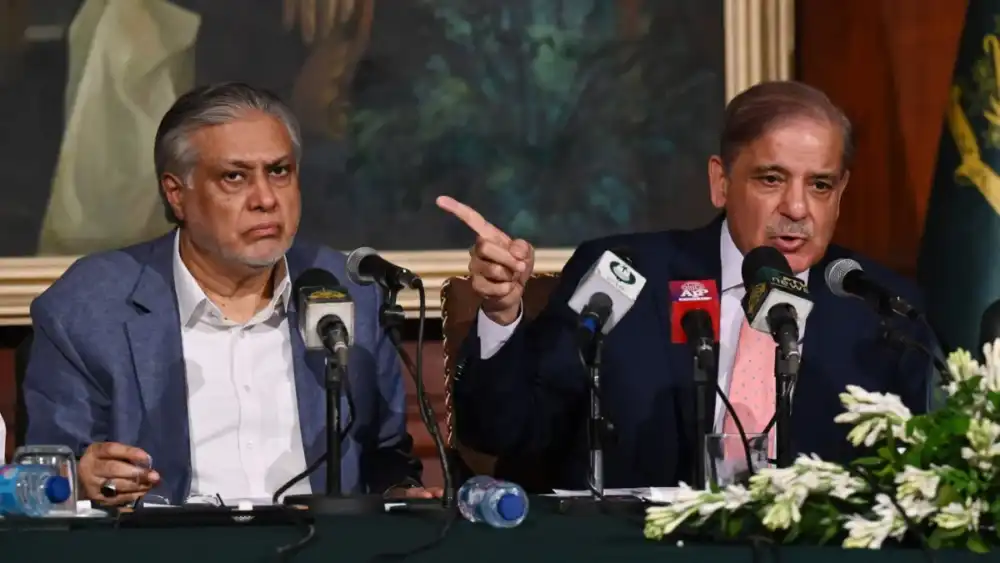
The government of Pakistan has intensified its diplomatic efforts to de-escalate rising tensions in the Middle East, issuing a direct and urgent appeal to Iran to exercise restraint and avoid any military confrontation with Saudi Arabia. This high-stakes mediation comes at a critical juncture for regional security, as the specter of a direct conflict between the two Islamic powerhouses threatens to destabilize global energy markets and derail the fragile economic recoveries of neighboring states. For Islamabad, the stakes are not merely ideological or fraternal; they are existential. As a nation sharing a 900-kilometer border with Iran while maintaining deep-seated financial and military ties with Saudi Arabia, Pakistan finds itself in the unenviable position of having to prevent a fire that would inevitably cross its own doorstep.
The geopolitical landscape of the Middle East has long been defined by the rivalry between the House of Saud and the Islamic Republic of Iran, a competition for regional hegemony that spans religious, political, and economic spheres. However, the recent intelligence reports suggesting a potential uptick in hostilities have sent shockwaves through international capitals. Pakistan’s intervention is a calculated move to preserve a status quo that, while imperfect, prevents the total collapse of regional trade and security. Analysts suggest that any kinetic engagement between Riyadh and Tehran would not remain localized; it would likely ignite a series of proxy conflicts across Yemen, Syria, and Iraq, while simultaneously threatening the maritime security of the Persian Gulf and the Gulf of Oman.
From an economic perspective, the consequences of a Saudi-Iranian conflict would be catastrophic for the global supply chain. The Strait of Hormuz, a narrow waterway through which approximately 20 percent of the world’s total oil consumption passes, remains the most sensitive chokepoint in the global energy infrastructure. Market data indicates that even a minor disruption in this corridor could send Brent crude prices soaring past the $120 per barrel mark, a scenario that would trigger a global inflationary spike. For emerging economies like Pakistan, which is currently grappling with high inflation and a precarious balance-of-payments situation, such an energy shock would be devastating. Pakistan’s energy import bill already accounts for a significant portion of its foreign exchange outflows; a sustained increase in global oil prices would likely necessitate further emergency interventions from the International Monetary Fund (IMF).
Furthermore, the economic interdependence between Pakistan and the Gulf monarchies cannot be overstated. There are currently over 2.7 million Pakistani expatriates working in Saudi Arabia, contributing a substantial portion of the $27 billion in annual remittances that keep the Pakistani economy afloat. Any conflict that threatens the domestic stability of the Kingdom would directly jeopardize these financial inflows, potentially leading to a massive repatriation of workers and a subsequent collapse of the Pakistani rupee. Conversely, Iran represents a vital, albeit complicated, partner for Pakistan’s long-term energy security. The long-stalled Iran-Pakistan (IP) gas pipeline project, often referred to as the "Peace Pipeline," remains a cornerstone of Islamabad’s strategy to address its chronic natural gas shortages, despite the looming threat of U.S. sanctions.
Pakistan’s role as a mediator is not a new phenomenon. Historically, Islamabad has sought to bridge the gap between its two neighbors to avoid being forced to take sides—a choice that would alienate a significant portion of its own population. With a domestic demographic that includes the world’s second-largest Shia Muslim population, any perceived bias toward Riyadh in a conflict with Tehran could trigger sectarian unrest within Pakistan’s own borders. Therefore, the Pakistani leadership has consistently advocated for a "policy of neutrality," emphasizing that the unity of the "Ummah" (the global Muslim community) is paramount. This diplomatic posture was most evident in 2015 when the Pakistani parliament famously voted against joining the Saudi-led coalition in Yemen, a move that initially strained ties with Riyadh but ultimately preserved Pakistan’s ability to act as an honest broker.
The current diplomatic push also takes place against the backdrop of shifting global alliances. The 2023 Beijing-brokered rapprochement between Saudi Arabia and Iran was hailed as a landmark achievement in regional diplomacy, signaling a desire on both sides to move toward a more pragmatic relationship. However, the fragility of this deal has been exposed by recent regional escalations. China, which has invested heavily in both nations and considers Pakistan a primary partner in the China-Pakistan Economic Corridor (CPEC), has a vested interest in maintaining peace. A conflict would not only disrupt Chinese energy supplies but would also threaten the multi-billion dollar infrastructure projects that form the backbone of the Belt and Road Initiative (BRI). Pakistan’s plea to Iran is thus seen by many as being aligned with Beijing’s broader regional objectives.
Expert insights suggest that Iran’s strategic calculus is currently influenced by a complex array of domestic and international pressures. On one hand, Tehran seeks to assert its regional influence and push back against what it perceives as Western-backed encirclement. On the other hand, the Iranian economy continues to suffer under the weight of international sanctions, making a full-scale war a risky and expensive proposition. By urging Iran to refrain from attacking Saudi Arabia, Pakistan is providing Tehran with a diplomatic "off-ramp," emphasizing that the costs of aggression far outweigh any potential tactical gains.
On the Saudi side, the leadership in Riyadh under Crown Prince Mohammed bin Salman has been focused on "Vision 2030," an ambitious economic diversification plan intended to transition the Kingdom away from its reliance on oil. Success for Vision 2030 requires a stable regional environment to attract foreign direct investment (FDI) and develop sectors like tourism and technology. A war with Iran would effectively halt these modernization efforts, as capital flight and security concerns would deter the very investors the Kingdom is trying to court. Pakistan’s diplomatic mission underscores the reality that both Riyadh and Tehran have more to lose than to gain from an escalation.
The military implications of a potential clash are equally sobering. Both nations possess significant missile capabilities and sophisticated drone technology. A conflict would likely see asymmetric warfare tactics, targeting critical infrastructure such as desalination plants, refineries, and power grids. The 2019 drone attacks on Saudi Aramco’s Abqaiq and Khurais facilities, which briefly knocked out half of the Kingdom’s oil production, serve as a grim reminder of the vulnerability of regional energy assets. Pakistan, which maintains a high level of military cooperation with the Saudi Armed Forces, would find itself under immense pressure to provide defensive support, further complicating its relationship with Iran.
As the international community watches closely, the success of Pakistan’s mediation will depend on its ability to leverage its unique cultural and historical ties with both nations. The Pakistani Foreign Office has been engaged in "quiet diplomacy," utilizing back-channel communications to relay messages of restraint. The message is clear: the region cannot afford another protracted war. The global economy, still recovering from the shocks of the COVID-19 pandemic and the ongoing conflict in Ukraine, is in no position to absorb a massive disruption in the Middle East.
In conclusion, Pakistan’s urgent plea to Iran represents a desperate bid for regional sanity. It is a recognition that in the modern, interconnected world of global finance and energy, a spark in the Persian Gulf can cause an explosion in the markets of London, New York, and Tokyo. For Islamabad, the path forward is a narrow one, requiring a sophisticated balancing act that prioritizes economic stability and national security over ideological alignment. As the "pivot state" of South Asia, Pakistan’s ability to facilitate a dialogue between its neighbors may well determine the economic and political trajectory of the entire region for the coming decade. The world now waits to see if the calls for restraint will be heeded or if the Middle East is destined for another cycle of catastrophic confrontation.