India is embarking on a monumental transformation of its vast national highway network, a critical artery for the nation’s economic growth and connectivity. With an extensive 146,560-km road infrastructure, the Ministry of Road Transport and Highways (MoRTH) and the National Highways Authority of India (NHAI) are set to implement the Multi-Lane Free-Flow (MLFF) electronic toll collection system, marking the most significant overhaul since the widespread adoption of FASTag. This ambitious initiative aims to eradicate physical toll booths and boom barriers, replacing them with advanced overhead gantries designed to facilitate uninterrupted vehicle movement at full highway speeds, promising a revolution in logistical efficiency and commuter experience.
The shift to MLFF represents a strategic pivot from previously considered models, such as the Global Navigation Satellite System (GNSS)-based tolling, opting instead for a system that leverages existing infrastructure while pushing the boundaries of technological integration. While the promise of seamless travel, reduced congestion, and lower operational costs is immense, the journey is fraught with complex challenges, particularly concerning data security, vendor certification, and the imperative for domestic technological sovereignty in critical infrastructure.
For years, Indian highways grappled with the inefficiency of manual toll collection, leading to extensive queues, wasted fuel, and significant economic losses. The introduction of FASTag, an RFID-based system, dramatically improved throughput, reducing average waiting times at toll plazas from 8-10 minutes to under a minute for compliant vehicles. However, even with FASTag, physical barriers and dedicated lanes still necessitated some speed reduction and channelization, creating residual bottlenecks, especially during peak hours. MLFF is engineered to eliminate these remaining friction points entirely, allowing vehicles to maintain speeds of 100 kmph or more as they pass through toll points.
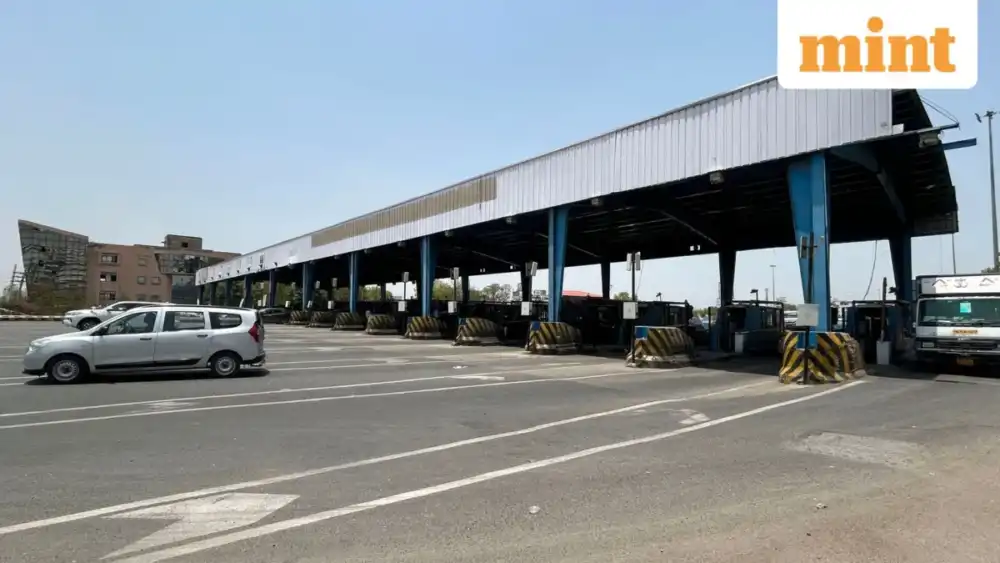
The technological backbone of MLFF consists of sophisticated overhead gantries equipped with high-speed Automatic Number Plate Recognition (ANPR) cameras and high-performance RFID readers. These systems work in tandem, simultaneously scanning a vehicle’s number plate and its embedded FASTag, with the toll amount electronically deducted from the linked account. This dual verification mechanism enhances accuracy and provides redundancy. For new highway projects, toll plazas will be designed without any physical barriers from inception. At existing plazas, the current booth structures and boom barriers will be dismantled and replaced with these advanced gantry systems, a conversion process estimated to take at least six months per plaza. The overarching goal is to drastically cut fuel consumption, reduce carbon emissions, and significantly improve traffic flow, thereby enhancing the overall efficiency of the logistics sector.
The implementation roadmap laid out by NHAI is aggressive. The initial phase involves inviting bids for 16 toll plazas, with work on a couple already nearing completion. Concurrent pilot projects are underway at select locations to rigorously test the system’s efficacy and reliability. Once these initial deployments stabilize and learnings are integrated, NHAI plans to scale up rapidly, potentially inviting bids for 200-300 plazas every month. With approximately 1,150 toll plazas currently operational on national highways and this number projected to rise as more infrastructure projects come online by FY27, the scale of this national rollout is unprecedented.
Financially, the MLFF system will operate on an ‘opex’ (operational expenditure) model, essentially treating ‘tolling as a service.’ Private operators will be compensated on a per-transaction basis, a structure designed to incentivize efficiency and cost-effectiveness. The per-transaction cost has already seen a notable reduction to approximately ₹2.90, with expectations for further decline on high-density stretches as economies of scale are achieved. This model aims to reduce the upfront capital expenditure for NHAI while ensuring robust system maintenance and operational excellence through private sector participation.
At the heart of MLFF’s functionality are high-speed ANPR cameras, which must accurately capture vehicle number plates even at rapid transit speeds. These systems often integrate advanced AI analytics for enhanced recognition and processing. Given the strategic nature of this infrastructure, the government has mandated rigorous certification from the Standardisation Testing and Quality Certification (STQC) Directorate under the Ministry of Electronics and IT. To date, only a handful of companies have received approval for their camera products, qualifying them to supply equipment for this critical project.

Globally, high-speed ANPR technology is predominantly sourced from countries like Taiwan, Spain, and the United States. However, a significant portion of these products, or their core components, originate from or are manufactured in China. This presents a considerable security dilemma for India, particularly amidst prevailing geopolitical tensions and the strategic importance of highways, including those in sensitive border regions. Cybersecurity experts highlight the inherent risks associated with large-scale imports of equipment without comprehensive vendor vetting, raising concerns about potential vulnerabilities, data breaches, or even espionage.
The primary security concern revolves around the vast amounts of sensitive vehicle and ownership data captured by these cameras. Compromised equipment could expose crucial movement patterns, logistics details, and personal information, posing risks to national security and individual privacy. Consequently, there is an emphatic push from authorities to ensure that all deployed products meet stringent cybersecurity compliance standards, incorporate robust encryption protocols, and adhere to data localization safeguards. As an interim measure while high-speed systems undergo thorough scrutiny, the deployment of low-speed cameras, capable of capturing vehicles at 30-40 kmph, from an approved vendor list is being considered to enable partial barrier-free movement.
Addressing these security challenges, the Indian government is actively promoting a ‘Make in India’ strategy for MLFF components. This involves encouraging overseas technology providers to establish joint ventures with Indian entities, fostering domestic manufacturing capabilities and facilitating gradual indigenization of the technology. This not only mitigates security risks by reducing reliance on foreign supply chains but also stimulates domestic innovation, creates high-tech jobs, and contributes to India’s self-reliance in critical infrastructure technology. Cameras, being a recurring investment with an upgrade cycle of 5-10 years, represent a significant long-term market opportunity for domestic manufacturers.
The concept of MLFF inherently implies the complete absence of physical barriers. However, practical enforcement challenges remain a key consideration. The tender documents stipulate a demanding 99% accuracy rate for vehicle identification. For the remaining fraction of cases where tolls are not successfully collected or vehicles are not identified, an robust e-challan system will be crucial for recovering dues. This necessitates seamless backend integration with vehicle registration databases and a robust legal framework to ensure compliance. While the ultimate goal is complete barrier removal, a transitional phase might involve some speed moderation or minimal enforcement checks to build public confidence and ensure minimal toll leakage before permanent removal.
Comparing MLFF with the previously explored GNSS-based tolling model reveals a pragmatic choice. The GNSS model, which charges users based on the precise distance travelled using satellite positioning, offered a highly granular and equitable tolling system. However, its implementation would require significant changes to in-vehicle units, a new regulatory framework, and a substantial public awareness campaign. MLFF, by contrast, cleverly leverages the already established FASTag ecosystem, making it a more immediately implementable and less disruptive solution. While GNSS remains a long-term aspiration for many advanced economies, MLFF provides a crucial intermediate step, solving the most pressing issue of congestion at toll plazas with existing and readily adaptable technology.
The broader economic and societal ramifications of a successful MLFF rollout are profound. For the logistics sector, the elimination of stops at toll plazas translates directly into reduced transit times, lower fuel consumption, and predictable journey schedules. This enhances supply chain efficiency, lowers operational costs for transporters, and ultimately makes Indian goods more competitive. Environmentally, the reduction in idling vehicles will lead to a significant decrease in carbon emissions and localized air pollution, contributing to India’s climate goals. For the average commuter, MLFF promises a smoother, faster, and less stressful travel experience, enhancing overall quality of life. Furthermore, the rich data generated by MLFF, when anonymized and utilized responsibly, could provide invaluable insights for traffic management, urban planning, and the development of smart city infrastructure, further amplifying the economic benefits.
In conclusion, India’s pivot to the Multi-Lane Free-Flow tolling system is a bold and necessary step towards modernizing its highway infrastructure, aiming for unparalleled efficiency and convenience. The project’s success, however, is contingent on effectively navigating the intricate interplay of advanced technology, stringent cybersecurity requirements, and strategic economic imperatives like domestic manufacturing. By meticulously addressing concerns around data privacy, vendor vetting, and fostering indigenous capabilities, India can not only create a world-class, barrier-free highway network but also establish itself as a leader in smart infrastructure deployment, driving both economic prosperity and national security.