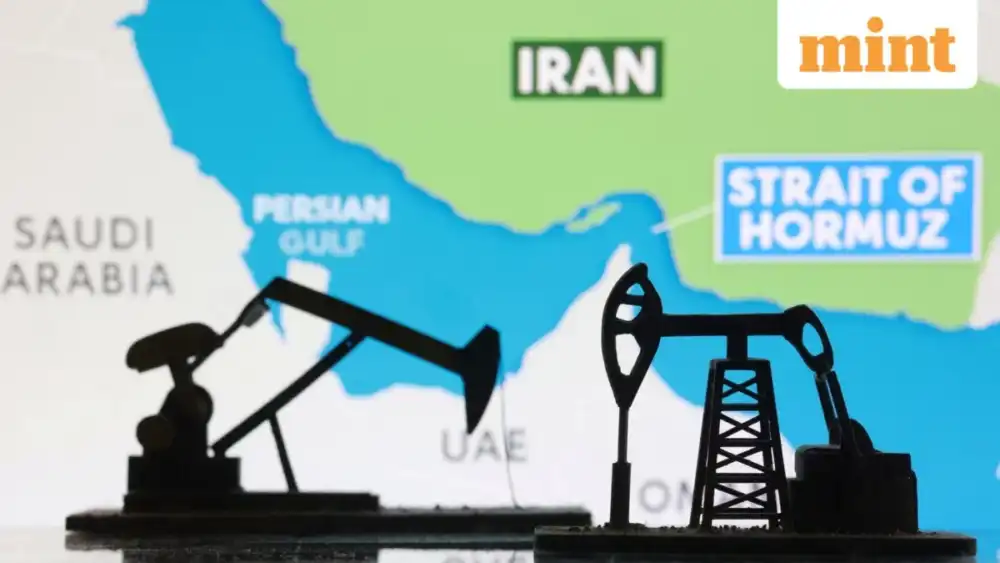
The recent declaration by Iran’s Islamic Revolutionary Guard Corps (IRGC) regarding the closure of the Strait of Hormuz, following perceived retaliatory actions by the United States and Israel, has triggered an immediate and profound surge across global energy markets, rekindling acute fears of a systemic economic shock. This pivotal maritime chokepoint, connecting the Persian Gulf to the Arabian Sea, is an artery through which approximately one-fifth of the world’s daily crude oil consumption, a significant portion of its liquefied natural gas (LNG), and a substantial volume of fertilizer shipments transit. The initial market reaction was swift, with Brent crude prices leaping past $80 per barrel, while European natural gas benchmarks saw significant upward pressure, underscoring the precariousness of global energy supply chains.
The Strait of Hormuz holds an unparalleled position in global commerce and energy security. At its narrowest, it is merely 21 nautical miles wide, with commercial shipping confined to two 2-mile-wide channels for inbound and outbound traffic. Flanked by Iran to the north and Oman and the UAE to the south, its geographical constraints make it inherently vulnerable to disruption. Unlike other critical maritime passages such as the Suez or Panama Canals, which have alternative, albeit longer, routes, Hormuz is indispensable for the vast majority of oil and gas exports from major producers like Saudi Arabia, Iraq, Qatar, Kuwait, and the United Arab Emirates. An estimated 21 million barrels of oil per day, along with 30% of global LNG and substantial dry bulk cargo, typically traverse these waters. The sheer volume and lack of viable alternatives amplify the global economic fallout of any prolonged closure.
Iran’s decision to weaponize its geographical proximity to the Strait is a strategic lever often threatened but rarely executed on a sustained scale since the Islamic Revolution in 1979. While historical precedents exist for harassment and targeted attacks – notably during the Iran-Iraq War and incidents involving tankers in 2019 – a formal "closure" marks a significant escalation. Analysts suggest that the current Iranian regime, facing immense internal and external pressures, may view this as its most potent, albeit risky, means of inflicting pain on adversaries and garnering leverage. A complete physical blockade against the formidable US naval presence in the region (primarily the US Navy’s Fifth Fleet based in Bahrain) is militarily improbable over an extended period. However, Iran possesses significant asymmetric capabilities, including naval mines, swarms of fast attack craft, and sophisticated anti-ship missiles deployed from shore batteries, which can render the strait effectively impassable by creating an unacceptable risk environment for commercial shipping. The reported suspension of crude oil, fuel, and LNG shipments by most major shipping lines, alongside a drastic reduction in daily vessel transits, illustrates the immediate effectiveness of this "sea denial" strategy.
The economic ramifications of a sustained disruption would be catastrophic. Energy market projections indicate that if the blockade persists for more than a few weeks, crude oil prices could easily surge beyond $100 per barrel, potentially reaching $120-$150 or even higher depending on the duration and severity. Such a price shock would reverberate through the global economy, fueling inflationary pressures, increasing production costs for industries, and severely impacting consumer purchasing power. For net energy importing nations, particularly in Europe and Asia, the economic strain would be immense. European gas prices, already volatile, would face unprecedented upward pressure, exacerbating the continent’s ongoing energy crisis. Beyond oil and gas, the disruption to fertilizer shipments would have profound implications for global food security, pushing up agricultural commodity prices and potentially triggering food inflation in vulnerable economies.
Shipping and logistics would also face severe challenges. War risk insurance premiums for vessels operating in the Gulf would skyrocket, potentially increasing costs by tenfold or more. Many shipping companies would opt for longer, more expensive routes around the Cape of Good Hope, adding weeks to transit times and significantly increasing fuel consumption, further straining global supply chains and port capacities. This would not only affect energy commodities but virtually all manufactured goods that rely on maritime transport from or through the region, contributing to a broader inflationary spiral and heightened risk of a global economic recession.
In response to previous threats, several Gulf Cooperation Council (GCC) states have invested in bypass pipelines, but their capacity is limited. Saudi Arabia’s Petroline, or East-West Pipeline, has a capacity of around 5 million barrels per day, while the UAE’s Abu Dhabi Crude Oil Pipeline (ADCOP) can transport approximately 1.5 million barrels per day. Combined, these pipelines can only reroute a fraction of the 21 million barrels per day typically passing through Hormuz. While strategic petroleum reserves (SPRs) held by the US and other International Energy Agency (IEA) members could offer a short-term palliative, they are not a sustainable solution for a prolonged disruption. The primary international response would likely involve a combination of military measures to ensure freedom of navigation and intense diplomatic pressure.
Major Asian economies like China and India are particularly vulnerable. China, the world’s largest crude oil importer, relies heavily on West Asian supplies, with over 50% of its crude imports transiting the Strait. Despite its strategic partnership with Iran, Beijing would face immense pressure to mediate or exert influence to reopen the strait, as a prolonged closure would severely impact its economic stability and energy security. Similarly, India, which sources over 55% of its crude oil imports (approximately 2.74 million barrels per day) from West Asia, stands to be severely impacted. The nation has been strategically diversifying its energy mix, recently scaling back its reliance on Russian crude. However, a Hormuz blockade would force a re-evaluation, potentially increasing its import bill, exacerbating inflation, and imperiling its economic growth targets. Japan and South Korea, highly dependent on Middle Eastern energy, would also face critical challenges to their industrial sectors and overall economies.
Crucially, the blockade represents a double-edged sword for Iran itself. While it is a powerful strategic lever, a total or sustained shutdown would simultaneously cripple Iran’s own economy. Approximately 90-95% of Iran’s oil exports, which currently hover around 1.5-1.8 million barrels per day and are predominantly destined for China, pass through the Strait of Hormuz. A self-imposed blockade would choke off its primary source of foreign exchange revenue, exacerbating its already severe economic challenges, undermining its ability to fund state operations, and potentially fueling internal dissent. This economic self-sabotage creates a powerful disincentive for a long-term closure.
Therefore, while Iran possesses the capability to disrupt shipping and inflict significant economic pain globally, its ability to sustain a complete, indefinite blockade is severely limited. The duration of such a standoff would likely be measured in weeks or a few months at most, constrained by: the overwhelming military force of the US and its allies committed to maintaining freedom of navigation; the devastating economic impact on Iran itself; and intense diplomatic pressure from major global powers, including its strategic allies. The most probable scenario is a period of heightened risk and intermittent disruptions designed to maximize leverage, rather than a full, protracted closure. Ultimately, the complex interplay of military realities, global economic interdependence, and domestic political pressures will determine how long Iran can realistically maintain this critical chokepoint as a bargaining chip, before the costs, both internal and external, become unbearable.