The intersection of artificial intelligence and national security has entered a volatile new phase as OpenAI, the world’s most prominent generative AI firm, moves to restructure and clarify its burgeoning relationship with the United States Department of Defense. Following internal and external critiques that labeled an initial agreement as "opportunistic and sloppy," the San Francisco-based company is implementing more rigorous frameworks to govern how its technologies are utilized by the Pentagon. This recalibration highlights the delicate balancing act facing AI pioneers who must reconcile their original ethical mandates with the immense financial and geopolitical pressures of modern defense contracting.
The controversy centers on the rapidly evolving boundaries of "dual-use" technology. For years, OpenAI maintained a strict prohibition against the use of its large language models (LLMs) for "military and warfare" purposes. However, in early 2024, the company quietly amended its usage policies, removing the blanket ban on military applications while retaining a prohibition against using its tools to "develop or use weapons, injure others, or destroy property." This policy shift opened the door for direct collaboration with the Pentagon on projects ranging from cybersecurity and veteran healthcare to logistics and administrative streamlining. Yet, the execution of these early deals reportedly lacked the necessary safeguards to prevent "mission creep," leading to a significant internal pushback and a subsequent overhaul of the partnership terms.
Economic analysts view this shift as an inevitable consequence of OpenAI’s transition from a non-profit research laboratory to a commercial powerhouse valued at over $150 billion. As the company seeks to sustain its massive operational costs—estimated to be in the billions annually due to the sheer computational requirements of training models like GPT-4 and the upcoming o1 series—government contracts represent a stable and lucrative revenue stream. The U.S. Department of Defense (DoD) has signaled its intention to spend upwards of $3 billion on AI-related research and development in the current fiscal year alone, a figure that is expected to grow as the military seeks to integrate "algorithmic warfare" into its core operations.
The "sloppy" nature of the initial deal-making process, according to insiders, stemmed from a lack of clarity regarding where administrative assistance ends and operational combat support begins. For example, using an LLM to summarize intelligence reports or write code for defensive cyber-infrastructure is generally viewed as acceptable under the new policy. However, the line becomes blurred when those same models are used to identify targets or optimize the flight paths of autonomous drones. The revised agreement aims to establish a "red-line" architecture, ensuring that OpenAI’s engineers and ethics boards have greater visibility into how the Pentagon’s various branches—including the Air Force and the Defense Advanced Research Projects Agency (DARPA)—deploy the software.
This tension is not unique to OpenAI; it mirrors the historical friction between Silicon Valley and the military-industrial complex. In 2018, Google famously withdrew from "Project Maven," a Pentagon initiative focused on using AI to analyze drone footage, following a massive employee revolt. That incident led to the birth of Google’s "AI Principles," which promised never to build AI for weapons. However, the geopolitical landscape has shifted dramatically since then. The rise of China as an AI superpower has fundamentally altered the calculus for American tech firms. Leaders in Washington have increasingly framed AI development as a "Sputnik moment," arguing that if American companies do not collaborate with the U.S. military, their adversaries will certainly do so with their own domestic tech giants.
From a global perspective, the race to weaponize AI is accelerating. China’s "Military-Civil Fusion" strategy ensures that its leading AI firms, such as Baidu and Alibaba, work in lockstep with the People’s Liberation Army. In response, the U.S. has ramped up its "Replicator" initiative, which aims to deploy thousands of cheap, AI-driven autonomous systems by 2025. For OpenAI, being sidelined from these developments could mean ceding the "defense-tech" market to rivals like Palantir or Anduril, the latter of which was founded specifically to bridge the gap between Silicon Valley innovation and military hardware.
The economic impact of this pivot extends to the venture capital ecosystem. Investors who once focused solely on consumer apps or enterprise SaaS are now pouring billions into "defense tech" startups. In the first half of 2024, venture funding for defense-related startups reached record levels, signaling a cultural shift in the tech industry. By tightening the oversight of its Pentagon deal, OpenAI is attempting to signal to the market that it can be a "responsible" defense contractor—one that captures government market share without alienating its core workforce or violating its founding mission of ensuring that AI "benefits all of humanity."
However, critics argue that the revisions are merely cosmetic. Human rights organizations and AI safety advocates point out that even "non-lethal" support, such as logistics optimization, serves as a force multiplier that directly enhances a military’s ability to wage war. There is also the persistent risk of "hallucinations"—the tendency of LLMs to generate false or misleading information. In a military context, a hallucinated coordinate or a misinterpreted diplomatic cable could have catastrophic escalatory consequences. The "sloppy" label applied to the initial deal likely referred to the absence of rigorous testing protocols for these high-stakes environments.
To mitigate these risks, the restructured deal is expected to include "human-in-the-loop" requirements and specialized fine-tuning of models to operate within the strict legal frameworks of the Geneva Convention. OpenAI is also reportedly expanding its "Global Affairs" and "Trust and Safety" teams to include veterans and former national security officials who understand the nuances of military ethics. This move follows the appointment of former NSA Director Paul Nakasone to OpenAI’s board of directors, a clear signal of the company’s deepening ties to the intelligence community.
The broader implications for the AI industry are profound. As OpenAI formalizes its role as a strategic asset for the U.S. government, it may face increased scrutiny from international regulators, particularly in the European Union. The EU AI Act, the world’s first comprehensive AI regulation, includes specific exemptions for military use, but it remains to be seen how "dual-use" software will be categorized when exported. If OpenAI’s models become deeply integrated into the U.S. defense apparatus, the company could face export restrictions or be viewed as a "state-aligned" entity by foreign governments, potentially complicating its global expansion.
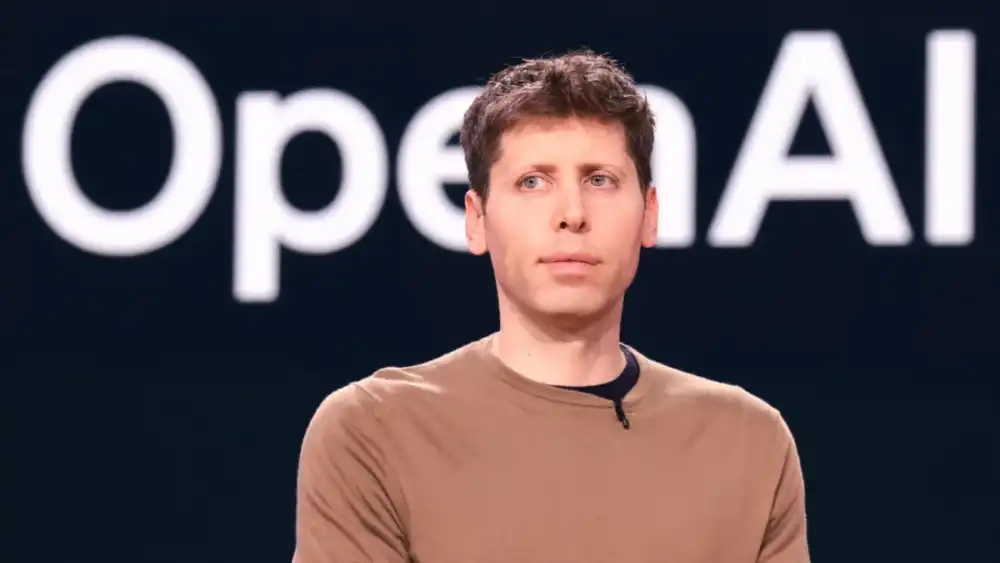
Furthermore, the "rebranding" of the Pentagon deal serves as a case study in corporate governance. OpenAI’s unique structure—a capped-profit subsidiary controlled by a non-profit board—was designed to prevent the company from being driven solely by profit or political pressure. The recent turmoil, including the temporary ousting of CEO Sam Altman in late 2023, highlighted the internal struggles over the company’s direction. By addressing the "opportunistic" nature of its defense dealings, the leadership is attempting to restore a sense of principled stability.
In the coming years, the success or failure of this recalibrated partnership will likely set the standard for the entire industry. If OpenAI can successfully navigate the complexities of defense contracting while maintaining its safety standards, it will provide a blueprint for other AI firms. If, however, the partnership leads to further ethical lapses or operational failures, it could trigger a new wave of regulation and a deepening of the "tech-military" divide.
As AI continues to permeate every sector of the global economy, its role in national defense remains the most contentious and high-stakes frontier. The revision of the OpenAI-Pentagon deal is more than just a contractual adjustment; it is a fundamental moment of maturation for a company that has moved from the laboratory to the literal front lines of global power. The challenge now lies in ensuring that the pursuit of national security does not come at the expense of the very safety and ethical standards that OpenAI was founded to protect. In the high-velocity world of artificial intelligence, "sloppy" is no longer an option—the costs of error are simply too high.