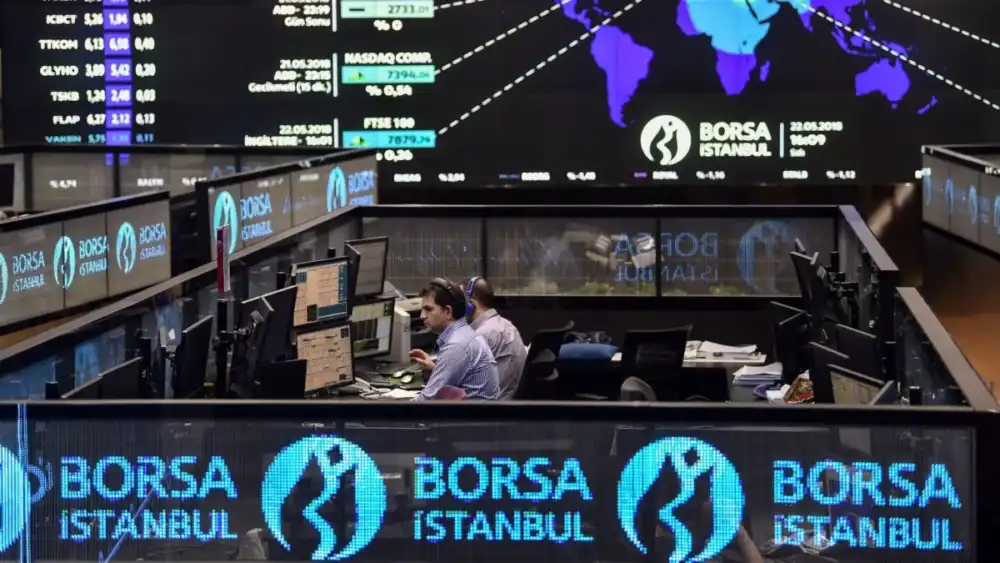
The delicate equilibrium of global finance has been disrupted by a series of military exchanges between Israel and Iran, forcing a fundamental reassessment of risk among the world’s most sophisticated institutional investors. For hedge fund managers, who had spent much of the early year positioning for a "soft landing" in the United States and a resurgence in developing economies, the sudden escalation of kinetic conflict in the Middle East has served as a jarring wake-up call. The shift from a macro-driven environment to one dominated by geopolitical "tail risks" is now driving a massive reallocation of capital, as the once-crowded emerging market (EM) trade begins to dismantle in favor of capital preservation and safe-haven liquidity.
In the immediate aftermath of the strikes, the primary concern for global macro funds has been the preservation of gains made during the first quarter. Throughout early 2024, the prevailing narrative was one of optimism: emerging market equities and high-yield sovereign debt were seen as the premier beneficiaries of an expected pivot by the U.S. Federal Reserve toward lower interest rates. However, the specter of a regional war in the Middle East has inverted this logic. When geopolitical tensions spike, the "risk-off" sentiment almost universally favors the U.S. dollar, which in turn places immense downward pressure on emerging market assets. This "dollar wrecking ball" effect is particularly damaging for nations that rely on foreign capital inflows to fund their current account deficits.
The mechanics of this retreat are most visible in the unwinding of the currency carry trade. For months, hedge funds had been borrowing in low-interest currencies like the Japanese yen or the Swiss franc to invest in high-yielding emerging market currencies such as the Mexican peso, the Brazilian real, and the Turkish lira. This strategy relied on low volatility and a stable geopolitical backdrop. The recent strikes have shattered that stability. As volatility indices climb, the cost of hedging these positions often exceeds the interest rate differential, prompting a rapid "dash for cash." In the days following the reports of military action, several high-beta EM currencies saw their sharpest drawdowns in months, as algorithmic trading platforms and discretionary managers alike hit the exit simultaneously.
Beyond the immediate currency fluctuations, the energy market serves as the primary transmission mechanism through which Middle Eastern instability affects the broader emerging world. While oil-exporting nations in the Gulf Cooperation Council (GCC) might see a nominal boost in revenue from higher Brent crude prices, the vast majority of emerging markets are net energy importers. For countries like India, Thailand, and Turkey, a sustained spike in oil prices is inherently inflationary. It forces central banks in these regions to maintain high interest rates to protect their currencies and combat imported inflation, even as their domestic economies begin to cool. Hedge funds are now scrutinizing the "energy sensitivity" of their portfolios, moving away from manufacturing-heavy Asian economies and toward commodities producers in Latin America that might offer a natural hedge against rising energy costs.
Expert analysis suggests that the current environment represents a "regime shift" in how geopolitical risk is priced. For the past decade, many traders treated geopolitical flare-ups as "buy-the-dip" opportunities, assuming that diplomatic interventions would quickly contain any fallout. However, the direct nature of the exchanges between Israel and Iran has crossed a psychological threshold. Market participants are now pricing in a "geopolitical risk premium" that is likely to persist regardless of whether immediate hostilities cease. This premium reflects the vulnerability of global supply chains, particularly the potential for disruption in the Strait of Hormuz, a chokepoint through which approximately 20% of the world’s total oil consumption passes.
The impact on emerging market debt has been equally pronounced. Sovereign bonds from frontier markets—nations that are even less developed than the traditional EM heavyweights—have seen their spreads over U.S. Treasuries widen significantly. Investors are no longer willing to overlook structural weaknesses in exchange for high coupons. The "flight to quality" has seen a surge in demand for U.S. Treasury bonds and gold, the latter of which has reached historic highs as a non-yielding but secure store of value. Hedge funds that were previously "long" on EM distressed debt are now pivoting toward "relative value" trades, seeking to exploit the price discrepancies between different emerging markets rather than betting on the asset class as a whole.
From a regional perspective, the rethink is not uniform. While the Middle East and North Africa (MENA) region is at the epicenter of the physical risk, the contagion is being felt most acutely in Eastern Europe and parts of Asia. Poland and Hungary, for instance, are seeing their markets pressured by their proximity to both the Middle East and the ongoing conflict in Ukraine, leading to a "risk cluster" effect. Conversely, some hedge funds are looking at "geographically insulated" markets. Latin America, specifically Brazil and Chile, is increasingly viewed as a viable alternative. These markets are physically distant from the conflict zones, possess mature central banking institutions, and are rich in the commodities—such as copper and agricultural products—that tend to perform well during periods of global instability.
The role of the United States in this equation remains the most critical variable. The dual-track reality of the U.S. economy—characterized by resilient growth but stubborn inflation—has complicated the outlook for emerging markets. If the Fed is forced to keep interest rates "higher for longer" to combat the inflationary pressures of high energy prices, the pressure on EM assets will be relentless. Hedge fund managers are increasingly adopting a "barbell strategy": holding significant positions in high-quality U.S. tech stocks and cash equivalents on one side, while maintaining highly selective, idiosyncratic bets in emerging markets on the other. This replaces the broad-based EM index investing that dominated the post-pandemic recovery phase.
Market data indicates that the "liquidity vacuum" often seen during such crises is beginning to form. As institutional investors pull back, bid-ask spreads in EM equity markets have widened, making it more expensive to enter or exit positions. For multi-strategy hedge funds, this illiquidity is a signal to reduce leverage. The reduction in leverage, while prudent for individual funds, can lead to a self-fulfilling prophecy of falling prices as the total volume of capital supporting these markets shrinks.
Furthermore, the strategic rethink is being influenced by the shifting alliances of the "Global South." The geopolitical alignment of countries like South Africa, India, and Brazil—often referred to as the "non-aligned" bloc—adds a layer of complexity to the investment thesis. Hedge funds are now hiring more geopolitical consultants than ever before, recognizing that traditional financial metrics like P/E ratios and debt-to-GDP are insufficient when the primary driver of value is a drone strike or a diplomatic communique. The "geopolitical alpha"—the ability to profit from correctly anticipating political shifts—has become more valuable than traditional "macro alpha."
As the situation continues to evolve, the long-term outlook for emerging market investing is being rewritten. The era of "easy carry" and predictable globalization is giving way to a more fragmented, volatile landscape. While emerging markets still offer superior growth potential compared to the aging populations and debt-laden economies of the West, the cost of accessing that growth has risen. Investors are now demanding a much higher margin of safety.
In conclusion, the strikes in the Middle East have acted as a catalyst for a broader de-risking trend that was already simmering beneath the surface. For hedge funds, the priority has shifted from chasing the next high-growth frontier to navigating a world where the lines between economics and warfare are increasingly blurred. The current retreat from emerging markets is not necessarily a permanent abandonment, but rather a tactical withdrawal as the world waits to see if the current tensions will lead to a broader conflagration or a tense, but stable, new status quo. Until that clarity emerges, the "smart money" is likely to remain on the sidelines, favoring the safety of the dollar and the stability of developed markets over the unpredictable rewards of the emerging world.