The traditional playbook for navigating global instability is undergoing a fundamental transformation as escalating tensions in the Middle East reshape the hierarchy of safe-haven assets. For decades, the reflexive response of institutional investors facing the specter of regional conflict was to rotate capital into the deep, liquid markets of U.S. Treasuries. However, as the shadow of a broader confrontation between Israel and Iran looms over global markets, a significant divergence has emerged: the "flight to safety" is increasingly bypassing the bond market in favor of gold. This migration represents more than a temporary tactical shift; it signals a growing skepticism regarding the protective qualities of sovereign debt in an era defined by fiscal profligacy and weaponized finance.
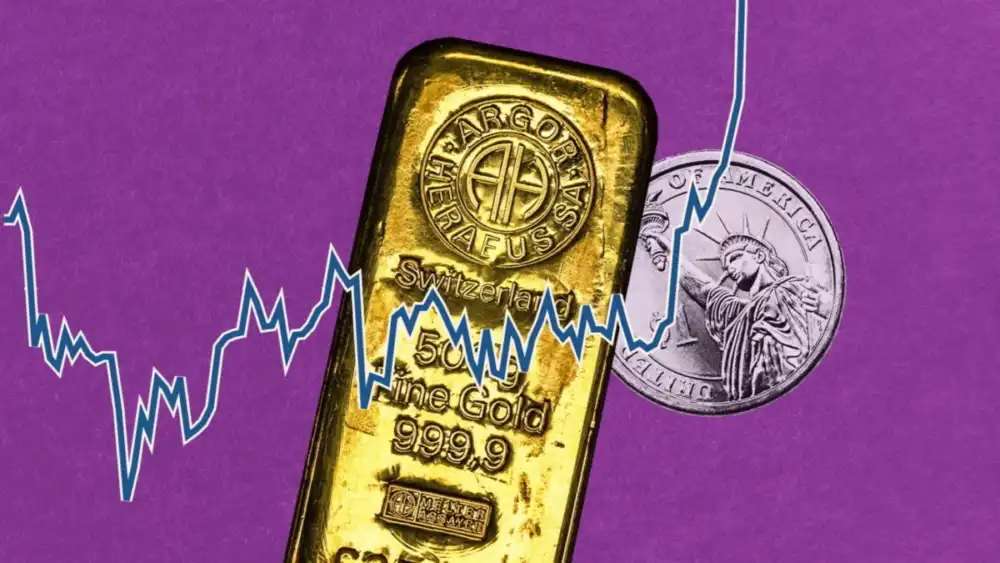
The recent intensification of hostilities in the Levant and the Persian Gulf has acted as a catalyst for a historic rally in bullion. While gold has traditionally been viewed as a hedge against "black swan" events, its current performance is notable for its resilience against headwinds that would normally suppress its price. Typically, high interest rates and a robust U.S. dollar act as gravity for gold, yet the metal has repeatedly shattered record highs even as the Federal Reserve maintains a restrictive monetary stance. This decoupling suggests that the primary driver of current demand is a profound anxiety over geopolitical stability and the long-term integrity of the fiat-based financial system.
To understand why gold is outshining bonds, one must look at the eroding "risk-free" status of sovereign debt. In previous cycles, U.S. Treasuries were the undisputed sanctuary because they offered both liquidity and a guaranteed return. Today, however, the bond market is grappling with a dual crisis of confidence. First, the sheer volume of U.S. national debt—now exceeding $34 trillion—has introduced a "term premium" that investors are increasingly unwilling to ignore. When geopolitical risks flare, the potential for an energy price shock to reignite inflation makes holding long-duration bonds a precarious proposition. If a conflict in the Strait of Hormuz were to send crude oil prices soaring toward $120 a barrel, the resulting inflationary spike would force central banks to keep rates higher for longer, causing bond prices to collapse. In this scenario, the "safe haven" of bonds becomes a source of capital loss, whereas gold remains a neutral asset with no counterparty risk.
Furthermore, the "weaponization" of the global financial system has fundamentally altered the calculus for sovereign investors. The freezing of Russian foreign exchange reserves following the invasion of Ukraine served as a wake-up call for central banks across the Global South. For nations that may find themselves on the wrong side of Western diplomatic interests—including Iran and its regional partners, as well as larger players like China—holding U.S. Treasuries is no longer seen as an entirely risk-free strategy. This has led to a structural shift in demand, with central banks adding record amounts of gold to their reserves for two consecutive years. By converting dollar-denominated assets into physical gold, these institutions are insulating their national wealth from the reach of external sanctions and the volatility of the Western banking system.
The specific dynamics of the Iran-Israel confrontation provide a unique tailwind for the precious metals market. Unlike localized conflicts, a direct engagement between these two regional powers threatens the primary arteries of global energy trade. Iran’s proximity to the Strait of Hormuz, through which approximately 20% of the world’s daily oil consumption passes, gives the Islamic Republic a potent lever of economic disruption. Markets are currently pricing in a "geopolitical risk premium" that reflects not just the danger of physical destruction, but the secondary effects of supply chain fracturing. As shipping insurance rates climb and tankers are diverted around the Cape of Good Hope, the resulting increase in landed costs for goods adds a persistent layer of inflation that gold is uniquely positioned to hedge.
Market data reveals that the current rally is being driven by a sophisticated mix of retail demand in Asia and institutional repositioning in the West. In China, where the property market has cooled and domestic equities have struggled, gold has become the preferred vehicle for wealth preservation. This "Eastern Floor" under the gold price has provided a solid foundation, allowing the metal to absorb the impact of fluctuating U.S. economic data. Simultaneously, in Western markets, total known holdings in gold-backed exchange-traded funds (ETFs) have begun to stabilize and turn upward after a period of outflows, suggesting that professional money managers are finally succumbing to the "fear of missing out" (FOMO) as the metal’s price action remains decoupled from real yields.
The economic impact of this shift extends beyond the gold pits of London and New York. The preference for gold over bonds complicates the task for the U.S. Treasury Department as it seeks to auction massive amounts of new debt to fund the federal deficit. If the traditional "safe haven" bid for Treasuries during times of war fails to materialize, the government may be forced to offer higher yields to attract buyers, further increasing the cost of debt service and potentially crowding out private investment. This creates a feedback loop: higher deficits lead to higher yields, which increase the attractiveness of gold as a non-yielding but stable alternative, which in turn reduces demand for bonds.
Expert analysts point to the 1970s as a historical parallel, though with key differences. During that decade, a combination of Middle Eastern oil embargos and loose fiscal policy led to a period of "stagflation" where both stocks and bonds performed poorly in real terms, while gold rose by over 1,300%. Today’s investors are increasingly concerned that we are entering a similar regime of structural inflation. However, unlike the 1970s, the world is now more interconnected, and the speed at which capital can exit traditional markets is unprecedented. The rise of digital trading and the accessibility of gold-linked financial products mean that a "run to gold" can happen with a velocity that central banks may find difficult to manage.
Looking ahead, the trajectory of the gold-to-bond relationship will likely be dictated by the scale of the Middle Eastern escalation. A contained shadow war may see gold consolidate its recent gains, but a full-scale regional conflict involving the disruption of energy exports would likely propel the metal into a new price regime entirely. In such a scenario, the psychological barrier of $2,500 or even $3,000 per ounce could be breached as investors abandon the "return on capital" mindset in favor of a "return of capital" philosophy.
While the bond market will always remain a cornerstone of global finance due to its size and utility in the plumbing of the banking system, its role as the ultimate protector of value is being challenged. Gold, often dismissed by modern economists as a "barbarous relic" with no place in a digital economy, is proving its enduring relevance. As long as geopolitical tensions remain high and the fiscal health of major sovereign issuers remains in question, the luster of gold is likely to outshine the perceived safety of a government promise. The movement of capital into bullion is a silent vote of no confidence in the ability of the current international order to maintain stability without devaluing the currencies that underpin it. In an increasingly fragmented and volatile world, the oldest form of money is once again becoming the most trusted.