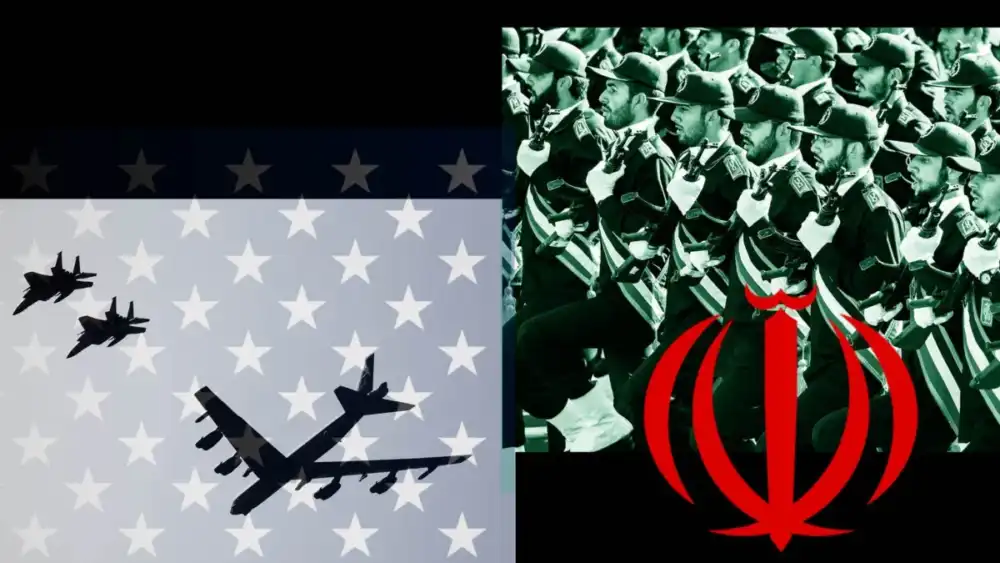
The longstanding shadow war between the Islamic Republic of Iran and the state of Israel has transitioned into a volatile era of direct kinetic engagement, fundamentally altering the security architecture of the Middle East and sending shockwaves through global commodity markets. As the United States increases its military footprint in the region to bolster Israeli defenses and deter a broader regional conflagration, the international community is facing a defining moment in 21st-century diplomacy. This escalation is not merely a localized conflict but a complex geopolitical chess match with profound implications for energy security, global trade routes, and the stability of the international financial system.
Recent military exchanges have underscored a significant shift in the rules of engagement. For decades, the confrontation was defined by proxy battles, cyber warfare, and targeted assassinations. However, the move toward direct missile and drone strikes between Iranian soil and Israeli territory represents a collapse of previous deterrence frameworks. The technical sophistication of these strikes has revealed a dual reality: while Israel’s multi-layered air defense systems—comprising the Iron Dome, David’s Sling, and the Arrow interceptors—have demonstrated high success rates, the sheer volume of Iranian ballistic technology presents a persistent challenge to regional stability.
The involvement of the United States has been both a stabilizing and an escalatory factor. Washington’s "ironclad" commitment to Israeli security has manifested in the deployment of advanced THAAD (Terminal High Altitude Area Defense) batteries and carrier strike groups to the Eastern Mediterranean. While these assets are intended to signal a "deterrence by denial" strategy, they also tie American military prestige directly to the outcome of the conflict. For the Biden administration, and any subsequent American leadership, the challenge remains the same: how to support a primary democratic ally without being drawn into a multi-front ground war that could drain domestic resources and pivot focus away from the Indo-Pacific theater.
From an economic perspective, the primary concern for global analysts remains the "oil risk premium." The Middle East accounts for approximately one-third of the world’s seaborne oil trade, and the Strait of Hormuz remains the most significant chokepoint in the global energy supply chain. Approximately 20 million barrels of oil per day pass through this narrow waterway, representing roughly 20% of global consumption. Any sustained military activity that threatens the free flow of navigation in the Persian Gulf could see Brent crude prices surge toward the $100-to-$120 per barrel range. Such a spike would exert inflationary pressure on Western economies just as central banks are beginning to signal a pivot toward interest rate cuts, potentially complicating the "soft landing" scenarios envisioned by the Federal Reserve and the European Central Bank.
Furthermore, the conflict has paralyzed the "Middle Corridor" of trade. The ongoing harassment of commercial shipping in the Red Sea by Houthi rebels—widely regarded as an Iranian-aligned proxy—has already forced major shipping conglomerates like Maersk and Hapag-Lloyd to reroute vessels around the Cape of Good Hope. This detour adds approximately 10 to 14 days to transit times between Asia and Europe, significantly increasing fuel costs and insurance premiums. These logistical disruptions are not merely temporary inconveniences; they represent a structural shift in global trade that could lead to a permanent increase in the cost of imported goods, fueling sticky inflation in the manufacturing and retail sectors.
Inside Iran, the regime faces a precarious balancing act. The Iranian economy continues to struggle under the weight of "maximum pressure" sanctions, with the rial experiencing historic depreciation and inflation hovering near 40%. The leadership in Tehran must project strength to its domestic hardline base and its regional "Axis of Resistance" partners—including Hezbollah in Lebanon and various militias in Iraq and Syria—without inviting a full-scale retaliatory strike that could target its critical energy infrastructure. The Iranian oil sector, centered around the Kharg Island terminal, is the lifeblood of the nation’s remaining export revenue. A successful Israeli strike on these facilities would not only cripple the Iranian economy but would also remove nearly 1.5 million barrels of daily production from the global market, further tightening an already sensitive energy environment.
Israel’s strategic calculus is equally fraught with risk. The government in Jerusalem views the Iranian nuclear program as an existential threat, and recent direct strikes have emboldened those within the Israeli security establishment who advocate for a decisive blow against Tehran’s enrichment facilities. However, such a move would likely trigger a massive retaliatory response from Hezbollah, whose arsenal of an estimated 150,000 rockets could overwhelm Israeli civil defenses and cause unprecedented damage to its high-tech economic hubs in Tel Aviv and Haifa. The economic cost of a full-scale war for Israel would be staggering, with the Bank of Israel already estimating that the ongoing conflict in Gaza and the north could cost the state upwards of $67 billion in defense and civilian expenditures through 2025.
The geopolitical ripples extend far beyond the immediate region. Russia and China have viewed the escalating tensions through the lens of their own strategic competition with the West. Moscow has deepened its military cooperation with Tehran, utilizing Iranian-made Shahed drones in the Ukrainian theater, while Beijing has maintained its role as the primary buyer of "sanctioned" Iranian crude. For China, the Middle East is a vital component of its Belt and Road Initiative, and while it prefers stability to ensure the flow of energy, it also benefits from the United States being bogged down in a secondary theater of operations. The emergence of this "CRINK" (China, Russia, Iran, North Korea) alignment suggests that any resolution to the US-Israeli-Iranian conflict will require a grander diplomatic bargain that the current international order may not be equipped to facilitate.
Market analysts are also monitoring the impact on "safe-haven" assets. Gold prices have reached record highs in recent months, driven in large part by central bank buying and investors seeking a hedge against geopolitical volatility. The US Dollar has also maintained its strength, acting as a flight-to-quality currency during periods of peak uncertainty. However, if the conflict leads to a perceived weakening of US influence or a direct hit to the American fiscal position due to increased military spending, the long-term status of the dollar as the world’s reserve currency could face renewed scrutiny from the BRICS+ bloc.
The humanitarian dimension of the conflict, while often secondary in economic analysis, remains a primary driver of political pressure. The potential for a massive displacement of people across the region could trigger a new migrant crisis in Europe, further empowering populist movements and complicating the internal politics of the European Union. Moreover, the destruction of civilian infrastructure in any direct exchange between Israel and Iran would require a multi-decade reconstruction effort, the funding for which is currently non-existent in an era of high global debt levels.
As the international community looks toward the future, the path to de-escalation remains narrow. Diplomatic channels, often facilitated by intermediaries such as Qatar, Oman, and Switzerland, are working overtime to establish "red lines" that both sides can respect. The goal is to return to a state of manageable friction rather than open warfare. However, the margin for error is razor-thin. A single miscalculated strike or a failure in air defense could trigger a chain reaction that neither side truly desires but neither side can afford to ignore.
In summary, the military briefing of the current age is no longer just about troop movements or tactical gains; it is an analysis of global systemic risk. The US-Israeli strikes and Iran’s subsequent responses are the visible markers of a deeper tectonic shift in power. For investors, policymakers, and global citizens, the Middle East has once again become the focal point of a struggle that will determine the economic and political landscape of the mid-21st century. The coming months will test the resilience of global markets and the efficacy of Western diplomacy in a world where the old certainties of deterrence no longer hold.