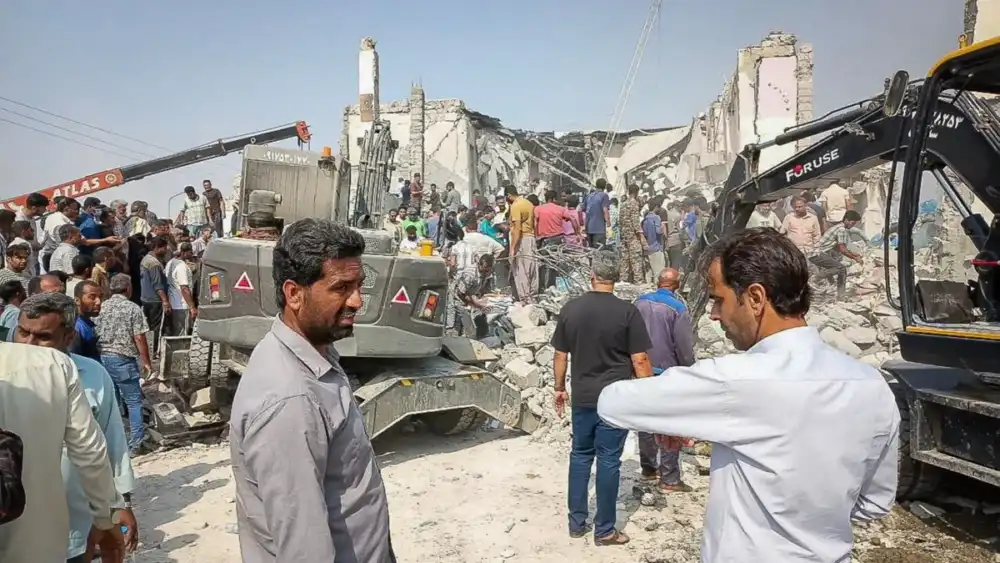
The tragic destruction of a primary school in provincial Iran, which local authorities report has claimed the lives of at least 108 individuals, has sent shockwaves through the international community and triggered immediate volatility across global commodity markets. The incident, occurring during peak morning instruction hours, represents one of the deadliest single strikes on civilian infrastructure in the region’s recent history. Beyond the immediate and devastating humanitarian toll, the event has reignited fears of a broader regional conflagration, threatening the precarious stability of the Middle East and casting a long shadow over the security of vital global energy supply chains.
Emergency response teams in the affected district—a region already grappling with the complexities of localized instability—have described a scene of absolute devastation. Of the 108 confirmed fatalities, the vast majority are reported to be school-aged children and faculty members. Preliminary reports from the Iranian Ministry of Interior suggest that the casualty count could rise further as search-and-rescue operations continue to sift through the reinforced concrete rubble of what was once a cornerstone of the local community’s educational infrastructure. The scale of the loss has prompted the Iranian government to declare a multi-day period of national mourning, while simultaneously heightening the rhetoric of retaliation against those it deems responsible for the perceived breach of its sovereign borders.
For global investors and geopolitical analysts, the strike serves as a grim catalyst for a renewed assessment of risk in the Persian Gulf. In the immediate aftermath of the reports, Brent crude futures surged by 3.4%, briefly touching a three-month high as traders priced in a heightened "geopolitical risk premium." The possibility of an escalatory cycle between Iran and its regional adversaries—or a direct confrontation involving Western powers—remains the primary driver of market anxiety. Analysts at major financial institutions have warned that any disruption to the Strait of Hormuz, through which approximately 20% of the world’s total oil consumption passes daily, could lead to a catastrophic spike in energy prices, potentially derailing the fragile disinflationary trends currently observed in Western economies.
The economic implications of the strike extend beyond the immediate fluctuations in oil and gas prices. The maritime insurance industry has already begun adjusting its risk profiles for vessels operating in the Gulf of Oman and the Persian Gulf. War risk premiums, which had seen a period of relative stabilization over the previous fiscal quarter, are expected to climb significantly. For the global shipping industry, this translates to increased operational costs that will inevitably be passed down the supply chain, adding to the inflationary pressures on consumer goods. The strike has also cast doubt on the viability of several proposed regional trade corridors, which rely on a baseline of security and diplomatic cooperation that now appears more distant than ever.
From a diplomatic perspective, the strike has placed the United Nations and the international community in a difficult position. While several Western capitals have issued statements of condolence and called for an independent investigation into the circumstances of the attack, the lack of immediate clarity regarding the origin of the strike has led to a vacuum of accountability. Iranian officials have pointed toward external intelligence agencies and state actors, framing the event as an act of "state-sponsored terrorism" designed to destabilize the country from within. Conversely, some regional analysts suggest the incident may be linked to internal security fractures or a miscalculation by non-state actors operating within the border regions.
The social and political fallout within Iran is equally significant. The government in Tehran is facing mounting pressure from a grief-stricken and angry populace to provide both security and a decisive response. This internal pressure often manifests in more aggressive foreign policy stances, which in turn triggers defensive postures from neighboring states. This "security dilemma"—where one state’s efforts to increase its security are perceived as a threat by others—is currently at its most acute stage since the height of the 2019 tanker attacks. Furthermore, the loss of an educational facility of this scale is a blow to the country’s social capital, particularly in a region where educational resources are often the primary driver of economic mobility and stability.
Expert insights from security consultants specializing in Middle Eastern affairs suggest that the choice of a primary school as a target—whether intentional or collateral—marks a crossing of a "red line" in the unofficial rules of engagement that have governed regional skirmishes for years. "We are entering a phase of total unpredictability," noted one senior analyst at a London-based geopolitical risk firm. "When civilian infrastructure of this sensitivity is hit, the traditional diplomatic off-ramps become much harder for leaders to navigate without appearing weak to their domestic audiences. The economic cost of this uncertainty is what the markets are currently trying to digest."
The strike also complicates the ongoing, albeit stalled, efforts to revive diplomatic agreements regarding Iran’s nuclear program and regional influence. International mediators, who had been working quietly to establish de-escalation channels, now find their efforts sidelined by the immediate demands for justice and retribution. The loss of 108 lives has effectively poisoned the well for near-term diplomatic engagement, making it politically impossible for various parties to return to the negotiating table in the coming weeks.
In the broader context of global security, the incident highlights the increasing vulnerability of civilian populations in modern "gray zone" conflicts. The use of high-precision long-range munitions, which can be deployed from significant distances, has fundamentally changed the geography of risk. For multinational corporations with assets in the Middle East, the strike is a reminder that the boundary between military targets and civilian or commercial zones is increasingly porous. This has led to a renewed focus on corporate security and business continuity planning for firms operating in high-risk jurisdictions.
Market data indicates that the regional volatility has also impacted the broader emerging markets sector. Currencies of neighboring nations have seen slight depreciations as investors move capital toward "safe-haven" assets like the U.S. dollar, gold, and Swiss francs. The flight to quality is a standard reaction to such geopolitical shocks, but the duration of this trend will depend heavily on the nature of the Iranian response. Should the response be measured and directed through diplomatic or localized channels, the markets may stabilize; however, a direct military retaliation could lead to a sustained period of capital outflow from the region.
The humanitarian tragedy of the school strike is a stark reminder of the human cost that underpins the geopolitical maneuvers often discussed in abstract economic terms. As the 108 victims are laid to rest, the international community remains on high alert. The coming days will be critical in determining whether this event becomes a footnote in a long history of regional tension or the spark that ignites a much larger and more destructive conflict. For now, the world watches the Persian Gulf with a mixture of sorrow for the lost lives and profound concern for the global economic stability that hangs in the balance.
The long-term economic impact on the Iranian economy itself cannot be overlooked. Already struggling under a complex web of international sanctions, the necessity of diverting further resources toward defense and internal security will likely exacerbate existing fiscal deficits. The destruction of educational infrastructure also represents a loss of future human potential, an intangible but vital component of any nation’s long-term economic health. As the smoke clears over the devastated school site, the path forward remains obscured by the competing interests of regional power players and the cold realities of global energy politics.
The international response in the next 48 to 72 hours will be pivotal. Statements from the European Union, the Arab League, and the Permanent Members of the UN Security Council will be scrutinized for any sign of a coordinated effort to prevent further escalation. However, in an increasingly multipolar world, the ability of these institutions to enforce peace is being tested to its limits. The 108 deaths in Iran are a tragic testament to the fragility of peace in the 21st century and the interconnectedness of local tragedies and global economic security. In the boardrooms of New York, London, and Tokyo, the focus remains on the charts and the tickers, but the underlying reality is one of profound human loss that no market analysis can fully capture.