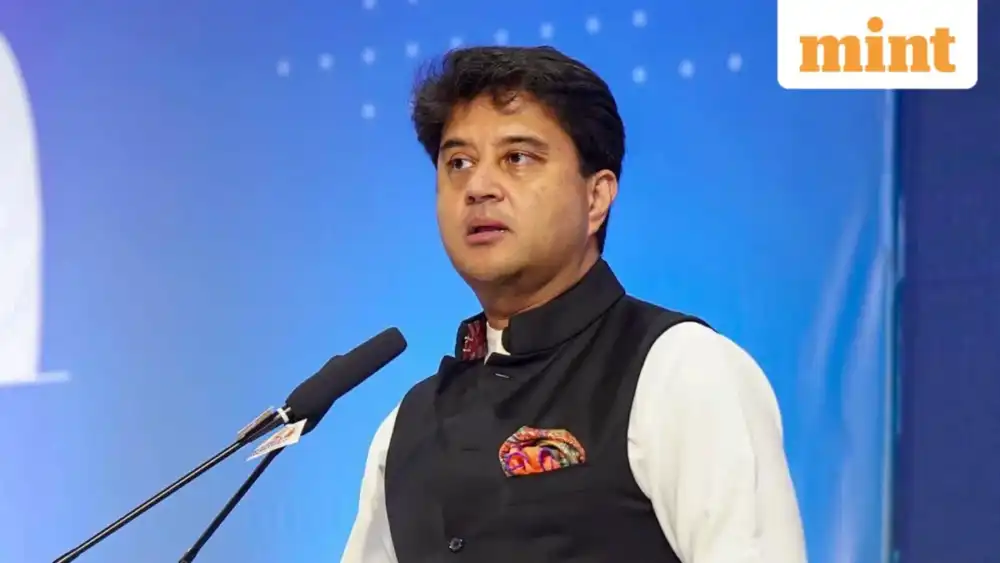
India’s burgeoning digital landscape is at a critical juncture, as the government underscores national security as a non-negotiable cornerstone for regulating Over-The-Top (OTT) communication platforms. Communications Minister Jyotiraditya Scindia recently articulated a firm stance, stating unequivocally that "there can be no compromise" on national security concerns when applying the ambit of telecom law to digital communication services. This declaration comes amidst a concerted push by the Department of Telecommunications (DoT) to enforce new SIM binding rules, mandating that popular applications like WhatsApp, Telegram, and Signal log out users without active SIM cards, a move sparking widespread debate across industry and policy circles.
The new directives, issued under the Telecommunications (Telecom Cyber Security) Rules, 2024—amended in October 2025—require these platforms to ensure users with inactive SIM cards are barred from their services. Furthermore, a significant operational change dictates that web versions of these apps must automatically log out users every six hours, requiring re-linking via a QR code from a device with an active SIM. Companies have been granted until February 28, 2026, to comply, with no extension currently contemplated by the government. The primary justification cited by the DoT for these stringent measures is the curbing of cyber fraud, a growing menace in India’s rapidly digitizing economy, where digital transactions have surged exponentially, exceeding 130 billion in 2023.
However, the implementation of these rules has ignited a fierce debate regarding regulatory jurisdiction, operational feasibility, and potential economic ramifications. Industry experts and influential lobby groups, including the Broadband India Forum (BIF) and the Internet and Mobile Association of India (IAMAI), have raised substantial objections. Their core argument hinges on the contention that the Telecommunications Act historically did not authorize the regulation of OTT communication platforms, nor did it provide a legislative basis to impose telecom-style operational mandates on them. These platforms, they argue, traditionally fall under the purview of the Ministry of Electronics and Information Technology (MeitY) and its IT Act framework, rather than the DoT. This jurisdictional ambiguity creates a complex legal challenge, potentially leading to regulatory arbitrage or overreach.
The concerns voiced by the tech industry are multifaceted. IAMAI, representing a vast ecosystem of big tech companies and startups, has highlighted the potential adverse impact on Micro, Small, and Medium Enterprises (MSMEs), which often rely heavily on these communication platforms for cost-effective operations and customer outreach. The continuous SIM binding mandate, they suggest, could introduce significant operational friction. Furthermore, the effectiveness of SIM binding in combating cyber fraud has been questioned. IAMAI points out that domestic fraud clusters frequently operate by acquiring SIM cards using fake or borrowed IDs, using them briefly, and then discarding them. In such scenarios, a SIM binding rule might merely inconvenience legitimate users while failing to deter sophisticated fraudsters. BIF expressed disappointment at the swift issuance of directions with "far-reaching operational impact" and "short implementation timelines," lamenting the apparent lack of public consultation or user-impact assessment prior to their notification. While the Minister affirmed that consultations did occur, the industry’s sentiment suggests a disconnect in the consultative process.
The economic implications of these regulations extend beyond operational burdens. India, with over 800 million internet users and a booming digital economy projected to reach $1 trillion by 2025-26, is a global leader in digital adoption. Policies that introduce significant friction for widely used communication apps could potentially stifle innovation, deter foreign investment in the digital sector, and impact user experience, especially for those who rely on virtual numbers or international roaming. For instance, the automatic logout every six hours for web versions could disrupt workflows for businesses and individuals, creating a user experience penalty. Globally, while many nations are grappling with regulating digital platforms for data privacy (e.g., GDPR in the EU) or content moderation, direct SIM binding mandates for all communication apps are less common, making India’s approach somewhat unique and potentially a precedent-setter.
Beyond OTT regulation, the government is also navigating other critical policy frontiers within the communications sector. The much-anticipated satellite internet services are yet to fully launch in India, despite a global race to deploy low-Earth orbit (LEO) constellations by players like SpaceX’s Starlink, OneWeb (partially owned by India’s Bharti Enterprises), and Amazon’s Project Kuiper. Minister Scindia acknowledged the government’s eagerness to facilitate these services, emphasizing that progress hinges on two key factors: the government’s responsibility to finalize spectrum pricing and assign airwaves, and the companies’ obligation to comply with national security regulations. Satellite broadband holds immense strategic importance for India, promising to bridge the digital divide in remote and underserved regions, enhance disaster communication, and bolster defense capabilities. The delay in policy finalization, particularly around spectrum allocation methods (auction vs. administrative assignment), remains a significant hurdle for operators keen to tap into India’s vast market potential.
Another persistent issue confronting India’s telecom sector is the Adjusted Gross Revenue (AGR) liabilities. The Minister firmly ruled out any fresh intervention or additional relief for telecom operators like Bharti Airtel beyond what the Supreme Court has already permitted for Vodafone Idea. The AGR issue, stemming from a 2019 Supreme Court verdict that expanded the definition of AGR to include non-telecom revenues, has severely impacted the financial health of Indian telecom companies, pushing some to the brink of bankruptcy. While the Union Cabinet, in December 2025, froze Vodafone Idea’s AGR dues at ₹87,695 crore and approved a repayment plan extending to FY41, along with a reassessment of its liabilities for specific periods, Airtel has sought parity in relief. The government’s stance underscores its adherence to judicial pronouncements, maintaining that any further relief would need to follow the court’s route. This approach reflects a delicate balance: supporting a vital, capital-intensive sector without undermining judicial authority or creating moral hazards for other market participants.
Finally, recent controversies surrounding public sector entities also highlight the need for robust governance. The Minister addressed the BSNL consumer fixed access (CFA) director Vivek Banzal itinerary controversy, which involved an extensive entourage of 50 officials and elaborate arrangements, labeling the actions as "unacceptable," "unbelievable," and "beyond absurd." A show-cause notice has been issued, signaling the government’s intent to take swift action. Such incidents underscore the imperative for transparency and accountability within state-owned enterprises, particularly BSNL, which is undergoing significant government-backed revival efforts to become a competitive force in the telecom market.
In essence, India’s digital trajectory is shaped by a complex interplay of national security imperatives, economic ambitions, and regulatory challenges. The government’s firm stance on OTT regulation reflects a broader global trend of nations asserting greater control over digital platforms, often citing data sovereignty and national security. However, the path forward requires a nuanced approach that balances security concerns with fostering innovation, ensuring ease of doing business, and safeguarding user experience, thereby allowing India to fully realize its digital potential while maintaining its strategic interests. The dialogue between policy makers and industry will be crucial in forging a regulatory framework that is both secure and conducive to growth in this dynamic digital era.