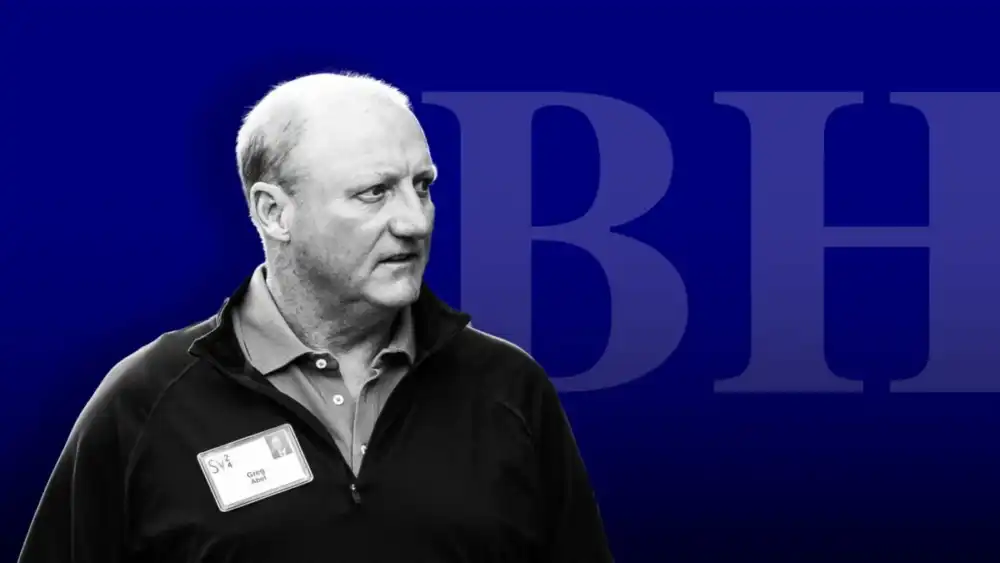
The mountain of liquidity currently sitting on Berkshire Hathaway’s balance sheet has become one of the most scrutinized figures in global finance, prompting questions about whether the world’s most famous investment conglomerate has lost its appetite for large-scale acquisitions. However, Greg Abel, the designated successor to Warren Buffett, has moved to reassure the investment community that the company’s record-breaking cash pile is not a signal of a permanent retreat from the market. Instead, Abel characterizes the current posture as a disciplined manifestation of the "fortress balance sheet" philosophy that has defined the Omaha-based firm for decades. As the conglomerate’s cash and cash equivalents soar toward the $300 billion mark, the message from the leadership is clear: Berkshire is not exiting the arena; it is waiting for the arena to offer prices that justify the deployment of its massive capital.
For decades, Berkshire Hathaway has operated under the principle of the "elephant gun"—the idea that the company maintains a massive reserve of capital to strike quickly when a major, high-quality business becomes available at a sensible price. In recent quarters, however, the gun has remained largely silent. The firm’s most recent filings reveal a significant divestment strategy, most notably the aggressive trimming of its massive stake in Apple and a steady reduction in its position in Bank of America. These moves, combined with a lack of major new acquisitions, have pushed Berkshire’s cash reserves to unprecedented levels. To some analysts, this suggests a bearish outlook on the U.S. economy or a lack of confidence in current equity valuations. To Greg Abel, who oversees the non-insurance operations and is increasingly the voice of the company’s operational future, it represents the ultimate form of optionality.
The current economic landscape presents a unique set of challenges and opportunities that justify this liquidity-heavy stance. Unlike the "lost decade" following the 2008 financial crisis, where interest rates hovered near zero and "cash was trash," the current environment allows Berkshire to earn a substantial return on its idle capital. With U.S. Treasury bill yields remaining attractive, Berkshire is effectively generating billions of dollars in risk-free income simply by waiting. This "carry" on the cash pile provides a cushion that allows Abel and Buffett to ignore the pressure from Wall Street to "do something" for the sake of activity. In a market where the S&P 500 has frequently traded at price-to-earnings multiples well above historical averages, Berkshire’s leadership remains wary of the "winner’s curse"—overpaying for an asset in a competitive bidding war fueled by cheap private equity dry powder.
Greg Abel’s role in this strategic positioning cannot be overstated. While Warren Buffett remains the ultimate arbiter of capital allocation, Abel’s management of the vast operational empire—spanning energy, railroads, and manufacturing—provides the cash flow that feeds the investment engine. Abel has earned a reputation as a meticulous operator, particularly within Berkshire Hathaway Energy (BHE). His deep understanding of capital-intensive industries informs the company’s view on valuation. In the current climate, where regulatory hurdles, wildfire liabilities in the utility sector, and shifting global trade patterns have increased the risk profile of industrial assets, Abel’s conservative approach to new deals reflects a pragmatic assessment of the risk-reward ratio.
The skepticism regarding Berkshire’s cash pile often centers on the "size problem." With a market capitalization exceeding $1 trillion, Berkshire needs to make multi-billion dollar acquisitions to move the needle on its earnings per share. Small or mid-cap deals, while perhaps attractive on their own merits, do not provide the scale necessary to impact the conglomerate’s bottom line. This narrows the field of potential targets to a handful of global giants or massive infrastructure projects. Abel’s task is to identify these opportunities in an era where antitrust scrutiny is at a generational high. The difficulty of closing "mega-mergers" in the current regulatory environment in both the U.S. and Europe has undoubtedly contributed to the decision to hold cash rather than engage in protracted and potentially futile legal battles.
Furthermore, the divestment from Apple and Bank of America should be viewed through the lens of portfolio rebalancing and tax strategy rather than a pure vote of no confidence in the American consumer. Buffett has hinted that the sales were partly motivated by a belief that corporate tax rates may rise in the future to address the ballooning U.S. federal deficit. By realizing gains now at current tax rates, Berkshire is essentially "locking in" profits to bolster its future purchasing power. Abel’s support for this strategy underscores a long-term vision that prioritizes the preservation of capital for a time when the market experiences a significant dislocation—a "Black Swan" event or a liquidity crunch where Berkshire can act as the lender of last resort, much as it did during the 2008 crisis with Goldman Sachs and General Electric.
Global comparisons also shed light on Berkshire’s strategic restraint. While many global sovereign wealth funds and private equity firms have been forced to deploy capital due to investment mandates, Berkshire operates with no such constraints. This independence is its greatest competitive advantage. In Japan, for instance, Berkshire showed its willingness to invest when it identified undervalued trading houses (the "sogo shosha") that offered stable dividends and strong cash flows. This move was a rare foray into international markets on a large scale, and it proved highly successful. Abel has indicated that the company remains open to similar opportunities globally, provided the governance structures and valuation metrics align with Berkshire’s requirements.
The economic impact of Berkshire’s cash-heavy stance is felt across the broader market. When the "Oracle of Omaha" and his successor signal caution, it often serves as a cooling mechanism for market exuberance. However, the eventual deployment of this $270 billion-plus reserve will likely be a transformative event for the industry it targets. Whether Abel directs this capital toward a massive expansion of the U.S. power grid, a pivot toward renewable energy infrastructure, or the acquisition of a major consumer brand, the move will be calculated to ensure Berkshire’s dominance for the next fifty years. Abel’s reassurance to investors is a reminder that in the world of value investing, the absence of action is often the most deliberate action of all.
Expert insights suggest that the "Abel Era" will likely be characterized by a focus on operational excellence and "bolt-on" acquisitions that strengthen existing subsidiaries like BNSF Railway or Marmon Holdings. By improving the efficiency and margins of the companies Berkshire already owns, Abel ensures that the "cash machine" continues to hum, regardless of whether a major acquisition is on the immediate horizon. This internal focus is a hedge against the volatility of the external M&A market. The company’s ability to generate tens of billions of dollars in free cash flow annually means that even without new deals, the intrinsic value of the firm continues to grow.
As the transition of leadership at Berkshire Hathaway continues to unfold, the focus on the cash pile will remain a central theme. Greg Abel has successfully navigated the challenge of following a legend by sticking to the core tenets that made the company successful: patience, discipline, and a refusal to follow the herd. His message to investors is a sophisticated defense of the "wait-and-see" approach. In an era of high-frequency trading and quarterly earnings pressure, Berkshire’s massive cash reserve is a testament to the power of the long view. It is not a sign of a company in retreat, but rather a company that is fully prepared for the moment when the market finally breaks in its favor. When that moment arrives, Greg Abel and the Berkshire team will be the only players on the field with the firepower necessary to reshape the corporate landscape.