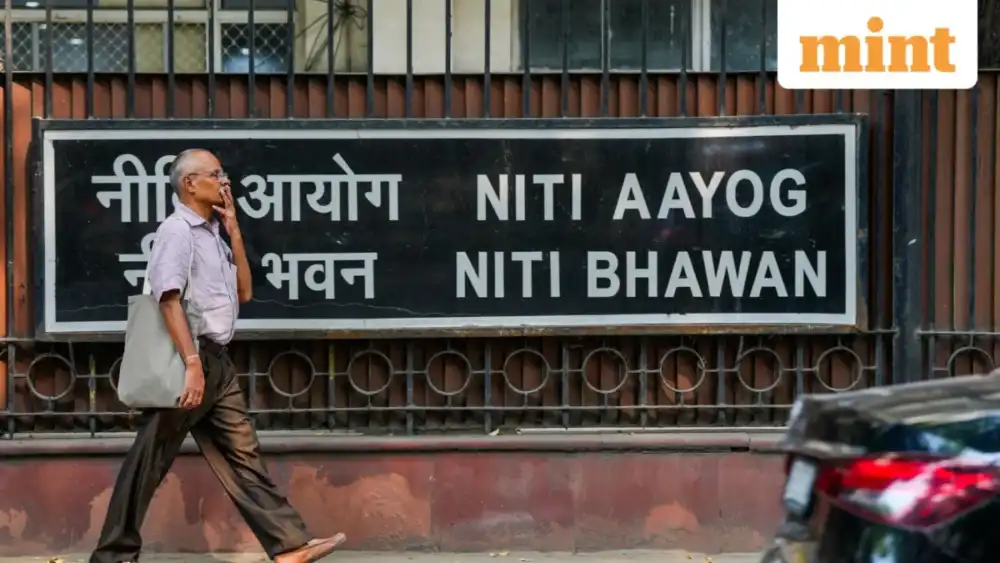
India’s ambitious drive towards a sustainable future is crystallizing a significant divergence within its automotive industry, as a pivotal government panel report by NITI Aayog sparks contention over the optimal path to decarbonization. At the heart of the debate lies a fundamental question: should India pursue an aggressive, EV-centric electrification strategy, or embrace a more diversified, phased approach that includes hybrid vehicles, sustainable biofuels, and concessions for small, fuel-efficient cars? This strategic chasm, highlighted by the contrasting stances of major players like Tata Motors and Toyota Kirloskar Motor, underscores the complexities of balancing environmental imperatives with economic realities and consumer accessibility in one of the world’s largest and fastest-growing automotive markets.
The government think tank’s report, titled "Scenarios Towards Viksit Bharat and Net Zero," issued on February 10, has ignited a fierce discussion. It advocates for specific policy adjustments under the upcoming Corporate Average Fuel Efficiency (CAFE 3) norms, including incentivizing lightweight, fuel-efficient, smaller entry-level cars. This recommendation is premised on the belief that such vehicles, being more affordable, can drive higher adoption rates, particularly among first-time buyers upgrading from two-wheelers, while simultaneously yielding benefits in fuel efficiency, lower emissions, and reduced traffic congestion. Crucially, the report also suggests a phased electrification approach, broadening the definition of "zero-emission vehicles" (ZEVs) to encompass lower-emission technologies such as Compressed Natural Gas (CNG), hybrids, and biofuel-powered vehicles, alongside battery electric vehicles (BEVs). This wider lens is championed for its potential to leverage diverse energy pathways, including ethanol and compressed biogas (CBG) in the near term, and hydrogen in the longer run, recognizing India’s inherent strengths in agricultural feedstocks for biofuels.
The industry’s reaction has been sharply bifurcated. Tata Motors Passenger Vehicles Ltd, a domestic leader that has invested heavily in establishing an early lead in India’s nascent EV market, has voiced strong objections. The company contends that its perspectives were not adequately incorporated into the report, citing limited engagement and the finalization of the document without sharing a draft. Sources close to the development indicate that Tata Motors’ primary points of contention revolve around the promotion of small cars under future fuel efficiency norms and the proposed phase-wise approach to electrification that integrates hybrid vehicles. From their perspective, incentivizing "bridge technologies" like hybrids could dilute the focus and investment needed for a robust EV ecosystem, potentially hindering the rapid adoption of pure electric vehicles, which they view as the ultimate solution for achieving true zero tailpipe emissions. Their argument posits that incentives are most impactful when directed towards emerging, truly zero-emission technologies to help them scale and mature, rather than extending the life cycle of fossil-fuel-dependent powertrains.
In stark contrast, Toyota Kirloskar Motor Ltd, the Indian joint venture of Japan’s Toyota Corp., has enthusiastically endorsed the NITI Aayog’s recommendations. Toyota, a global pioneer in hybrid technology, views the report’s multi-faceted approach as a pragmatic and holistic pathway to decarbonization. The company’s country head, Vikram Gulati, in a letter to NITI Aayog, welcomed the "wider and more holistic definition of ZEV," emphasizing its potential to promote all green energy pathways and vehicle technologies. This sentiment is echoed by the Indian Sugar and Bio-energy Manufacturers Association (Isma), which praised the inclusion of biofuels as a vital means of decarbonizing India’s road transport, aligning with the nation’s energy security goals and agricultural capabilities. Both Toyota and Isma underscore that an EV-only strategy might be too restrictive for a diverse market like India, where affordability, range anxiety, and charging infrastructure remain significant hurdles for widespread BEV adoption.
This ideological clash mirrors broader global debates but takes on a unique dimension within the Indian context. CAFE norms, essentially a ceiling on a carmaker’s total fleet emissions, are designed to push manufacturers towards more fuel-efficient and cleaner powertrains. While globally, these norms often accelerate the shift to BEVs, the NITI Aayog report’s suggestion to incentivize small cars – those under 4 meters in length and with engine capacities up to 1200 cc – introduces a layer of complexity. Maruti Suzuki India Ltd, India’s largest carmaker and a proponent of small cars and hybrids, has consistently lobbied for such concessions, arguing that these segments cater to the vast majority of Indian consumers and are crucial for market growth and affordability. However, manufacturers like Tata Motors and Mahindra & Mahindra Ltd, who have already committed substantial capital to EV research, development, and manufacturing infrastructure, perceive such concessions as potentially undermining their strategic investments and delaying the inevitable transition to pure electric mobility.
The economic implications of these differing strategies are profound. An EV-first approach necessitates massive investments in battery manufacturing, charging infrastructure, and grid upgrades. India has set ambitious targets, including achieving 30% EV penetration in private cars by 2030. While current EV penetration is less than 3%, it is growing rapidly, supported by policies like the FAME II scheme. Proponents of this path argue that such a singular focus attracts foreign direct investment into advanced manufacturing, creates new high-skill jobs, and positions India as a leader in future mobility technologies, reducing long-term dependence on fossil fuel imports.
Conversely, a multi-pathway strategy, while potentially slower in achieving full electrification, offers greater flexibility and leverages existing industrial capabilities. Strong hybrid electric vehicles (SHEVs), for instance, can offer a 36-44% improvement in energy efficiency and a 25-31% reduction in CO2 emissions compared to conventional petrol vehicles. Given that over 97% of India’s vehicle fleet still runs on internal combustion engines, integrating hybrids and biofuels could deliver immediate and substantial reductions in emissions and fuel consumption across a much larger installed base. Rahul Bharti, a senior executive at Maruti Suzuki, articulates this view, stating that while efforts to maximize EV penetration are vital, neglecting the vast majority of the market that will continue to use ICE-derived technologies for the foreseeable future would be a missed opportunity for decarbonization. He also cites international data suggesting that incentives for SHEVs do not necessarily detract from EV sales but can coexist and contribute to overall green mobility goals.
The debate also touches upon broader energy security and geopolitical considerations. A strong push for BEVs requires secure access to critical minerals like lithium, cobalt, and nickel, often sourced from a concentrated global supply chain. While India is actively exploring domestic extraction and processing, it remains heavily reliant on imports. In contrast, biofuels, particularly ethanol and CBG, leverage India’s agricultural prowess, offering a path to reduce crude oil import bills and support rural economies. The government’s ambitious ethanol blending targets (E20 by 2025) demonstrate a clear commitment to this pathway, further strengthening the case for including biofuels in the green mobility framework.
Ultimately, the NITI Aayog’s role is to provide strategic policy guidance for India’s development. The panel’s recommendations, while reflecting a consensus among diverse governmental and industry stakeholders, have clearly failed to appease all parties. The tension between accelerating towards a pure electric future and adopting a more inclusive, pragmatic transition underscores the immense challenge of decarbonizing a rapidly developing economy with diverse consumer needs and vast geographical disparities in infrastructure. For India to successfully navigate this transition, a coherent, stable, and long-term policy framework is essential – one that balances the ambition of net-zero targets with the realities of market readiness, technological maturity, and equitable access for all citizens. The outcome of this policy deliberation will not only shape India’s automotive landscape but also set a precedent for other developing nations grappling with similar dilemmas on their journey towards sustainable mobility.