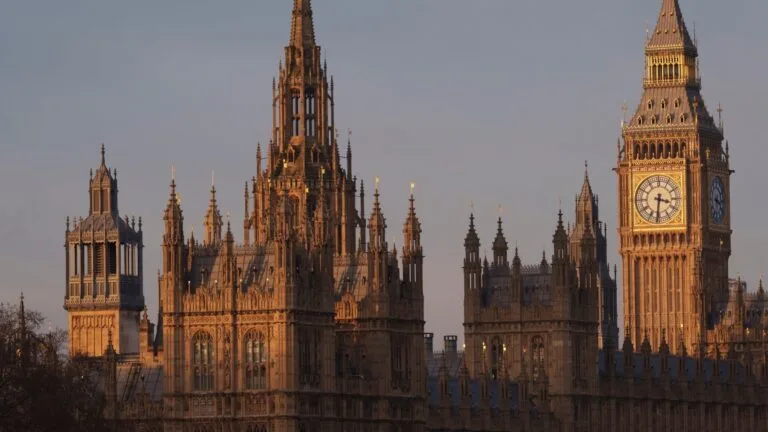
The decision by the United States and the United Kingdom to evacuate non-essential diplomatic personnel and their families from several key missions across the Middle East marks a significant escalation in the perceived risk of a direct confrontation involving Iran and its regional proxies. This strategic thinning of diplomatic presence, typically a precursor to heightened military activity or a breakdown in security conditions, has sent ripples through global capital markets and energy corridors. As the State Department and the Foreign, Commonwealth & Development Office (FCDO) raise travel advisories to their highest levels, the international community is forced to confront the possibility of a multi-front war that could destabilize the global economy and disrupt the fragile post-pandemic recovery.
The immediate catalyst for these withdrawals is a series of high-profile assassinations and retaliatory threats that have pushed the "shadow war" between Israel and Iran into the open. Following the targeted killing of senior Hamas and Hezbollah leadership in Tehran and Beirut, Iranian officials have vowed a "severe and painful" response. For Washington and London, the safety of their diplomatic corps is paramount, but the optics of these departures signal a lack of confidence in immediate de-escalation efforts. In Lebanon, the U.S. Embassy in Beirut has transitioned to an "ordered departure" status, while the British government has urged its citizens to leave the country immediately while commercial options remain available. This sense of urgency reflects intelligence assessments suggesting that any Iranian retaliation could be more expansive and sophisticated than the drone and missile barrage witnessed in April.
From an economic perspective, the specter of a broader Middle Eastern conflict introduces a "geopolitical risk premium" that had, until recently, been largely discounted by traders. Crude oil prices, the primary barometer of regional instability, have exhibited increased volatility. Brent crude and West Texas Intermediate (WTI) futures have seen sharp intraday spikes as analysts weigh the probability of a disruption in the Strait of Hormuz. This narrow waterway, through which approximately 20% of the world’s daily petroleum liquids consumption passes, remains the ultimate "choke point" for global energy security. Market analysts at major financial institutions, including Goldman Sachs and JPMorgan, have warned that a direct conflict between Iran and Israel could push oil prices well above $100 per barrel, potentially reigniting inflationary pressures that central banks have been struggling to quell for the past two years.
The impact extends far beyond the energy sector. Global supply chains, already strained by the ongoing Houthi insurgency in the Red Sea, face further fragmentation. The diversion of container ships around the Cape of Good Hope has already increased transit times by 10 to 14 days and added millions in fuel and insurance costs. If the conflict widens to include Lebanon or direct strikes on Iranian soil, the insurance premiums for commercial vessels in the Persian Gulf could become prohibitive, effectively halting trade for certain sectors. For the United Kingdom and the European Union, which rely heavily on Middle Eastern liquefied natural gas (LNG) and manufactured goods from Asia, the economic fallout of a prolonged blockade or a high-intensity war would be profound, potentially triggering a recessionary environment in the Eurozone.
Furthermore, the aviation industry is feeling the immediate brunt of the diplomatic pull-back. Major international carriers, including Lufthansa, United Airlines, Delta, and Air France, have suspended flights to regional hubs such as Tel Aviv, Beirut, and Amman. These cancellations are not merely logistical inconveniences; they represent a significant loss of revenue for the regional tourism and business travel sectors, which are vital for the economies of Jordan, Egypt, and Israel. The closure of airspace forces flights to take longer, more circuitous routes, increasing carbon emissions and operational costs for an industry already grappling with high fuel prices.
In Washington, the Biden administration is walking a diplomatic tightrope. While ordering the withdrawal of non-essential personnel to minimize potential casualties, the Pentagon has simultaneously ordered the deployment of additional carrier strike groups, a squadron of F-22 Raptor stealth fighters, and several Navy destroyers to the region. This dual-track strategy of "protect and deter" is designed to signal to Tehran that while the U.S. does not seek war, it is fully prepared to defend its interests and allies. However, the domestic political implications in the United States are equally fraught. With an upcoming presidential election, the administration is under immense pressure to prevent a regional conflagration that could lead to higher gasoline prices and increased American military involvement overseas.
Expert insights suggest that the current crisis is fundamentally different from previous cycles of violence. "We are seeing a shift from localized proxy conflicts to a direct state-on-state confrontation dynamic," says one senior geopolitical analyst. "The diplomatic withdrawals are a clear indicator that the back-channel communications that usually prevent total war are failing or are being ignored in favor of domestic political survival on all sides." This sentiment is echoed by economic historians who point out that the Middle East’s role in the global economy is shifting. While the world is gradually transitioning to renewable energy, the global economy remains tethered to hydrocarbons, and any shock to the Middle Eastern supply chain has a disproportionate impact on the developing world, where food and energy security are most fragile.
Regional powers such as Saudi Arabia, the United Arab Emirates, and Qatar find themselves in a precarious position. For years, these nations have pursued "Vision 2030" style economic diversification plans, seeking to position themselves as global hubs for finance, tourism, and technology. A regional war would jeopardize these multi-billion-dollar investments. Consequently, while the U.S. and UK pull their diplomats, regional mediators in Doha and Cairo are working feverishly to find a face-saving exit for both Tehran and Jerusalem. The success of these negotiations is critical, yet the withdrawal of Western diplomats suggests that the "window of opportunity" for a diplomatic solution is rapidly closing.
The financial markets have reacted by seeking safety in traditional havens. Gold prices have flirted with record highs, and the Japanese Yen and Swiss Franc have seen increased demand as investors hedge against a "black swan" event in the Middle East. Treasury yields have also been affected, as a "flight to quality" drives down rates despite the Federal Reserve’s "higher for longer" interest rate stance. For institutional investors, the primary concern is "contagion"—the risk that a Middle Eastern conflict could trigger a broader sell-off in emerging markets or lead to a liquidity crunch in global banking systems.
Moreover, the humanitarian implications of a full-scale conflict cannot be overstated. Lebanon, already reeling from a catastrophic economic collapse and political paralysis, is ill-equipped to handle a major war. The withdrawal of Western diplomats often precedes a reduction in humanitarian aid and developmental support, further isolating vulnerable populations. In Gaza, the ongoing conflict remains the core grievance fueling regional anger, and without a ceasefire there, the likelihood of a broader regional settlement remains slim.
In summary, the decision by the United States and the United Kingdom to reduce their diplomatic footprint in the Middle East is a watershed moment in the current crisis. It reflects a sobering assessment of the risks ahead and a preparation for a potential reality where diplomacy is replaced by kinetic action. For the global economy, the stakes are remarkably high. A major conflict would not only disrupt energy and trade but could also fundamentally alter the geopolitical map, forcing a realignment of alliances and a reassessment of global security architectures. As the world watches the movement of diplomats and warships, the hope remains that the very visible preparations for war will serve as the ultimate deterrent, though the current trajectory suggests that the region—and the global economy—is entering its most dangerous period in decades. The coming weeks will determine whether the Middle East can pull back from the brink or if the world must prepare for a new era of prolonged instability and economic volatility.