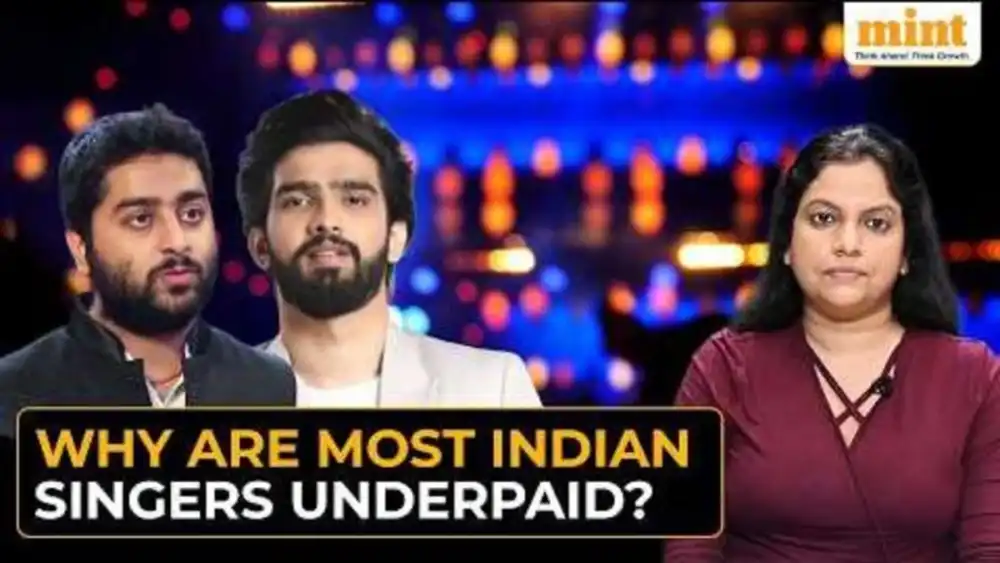
India’s vibrant film music industry, a global powerhouse of melody and rhythm, conceals a profound economic paradox at its heart: while its iconic songs routinely garner hundreds of millions of views and dominate international streaming charts, a significant portion of the vocal talent behind these hits navigates a financially precarious landscape. Recent public statements from celebrated artists, including Arijit Singh’s contemplation of stepping back from playback singing and Amaal Mallik’s candid remarks on inadequate compensation, have thrust this long-standing issue into the spotlight, sparking crucial conversations about remuneration structures and sustainability within the nation’s largely unorganised music sector.
At the core of this imbalance lies a fundamental disconnect between the immense cultural and commercial value generated by a hit song and the economic reality for many of its vocal performers. Unlike songwriters or composers who might accrue publishing royalties, playback singers are predominantly engaged on a one-time fee basis. This upfront payment, which can range from a few thousand rupees for emerging artists to upwards of ₹2.5 million for established stars, typically represents their sole direct compensation. The long-term digital earnings and intellectual property rights, which can generate substantial revenue across various platforms for years, predominantly reside with film producers and music labels. This model, while deeply entrenched, raises critical questions about equity and fair value distribution in a rapidly digitising entertainment economy.
The legal framework in India largely underpins this structure. Under Indian copyright law, particularly concerning commissioned works, the film producer is generally recognised as the first copyright owner of the music. This means that composers, lyricists, and singers are often engaged under contracts where their upfront fee effectively acts as a buyout of their long-term exploitation rights. Once ownership is vested in the producer, the music’s monetisation — through sales to music labels, direct distribution, or licensing — flows primarily to the copyright holder. While the Indian Copyright Amendment Act of 2012 sought to strengthen the rights of authors and composers by ensuring non-assignable royalty shares, its application to playback singers, who are primarily performers rather than authors of the underlying musical or literary works, remains a nuanced and often contested area. Singers do receive public performance royalties through bodies like the Indian Singers Rights Association (ISRA), but these typically constitute a relatively small fraction of the overall digital revenues generated by a hit track.
The disparity in the value chain becomes stark when examining the broader market dynamics. Despite a prominent industry report indicating a 2% contraction in the overall Indian music segment to ₹53 billion in 2024, this figure paradoxically stood against rising streaming volumes and soundtrack valuations. The digital revolution has undeniably expanded the reach and revenue potential of music, yet the benefits often fail to trickle down equitably. Revenues from streaming platforms like YouTube, Spotify, and local services are split across a multitude of stakeholders – music labels, publishers, platforms themselves, and eventually, the artists. However, the opaque nature of these contracts and the complex royalty calculation mechanisms often leave vocalists with limited insight into the true extent of their song’s digital earnings.
Moreover, the "clout economy" significantly dictates opportunities and compensation. While top-tier singers command impressive fees and secure lucrative live performance contracts – often their most substantial revenue stream, an advantage not typically shared by other musical contributors – the path for emerging talent is fraught with challenges. New voices frequently encounter situations where they may go unpaid for initial recording sessions, or worse, have their vocals replaced by a more famous name at the last minute without compensation, simply because their brand power is deemed insufficient. This dynamic is exacerbated by the escalating costs of film soundtrack acquisition. Post-pandemic, labels like T-Series, Sony Music, and Saregama have seen soundtrack acquisition costs for major Bollywood films spike five to eight times, now reaching figures between ₹25-30 crore – a sum comparable to the entire production budget of a mid-budget film. This high-stakes environment pushes labels and producers to favour established, commercially proven voices, making it increasingly risky to invest in lesser-known artists.

Beyond financial structures, the very landscape of film music is evolving, leading to fewer opportunities for playback singers. Not all contemporary films are conceived as traditional musicals requiring multiple original songs, and many narrative-driven productions opt for a more restrained musical score. This creative shift, combined with India’s immense pool of trained and aspiring vocalists (numbering in the lakhs) vying for only hundreds or a few thousand commissioned film songs annually across Hindi and regional industries, creates a severe supply-demand imbalance. This intense competition empowers producers and labels to dictate terms, further eroding the negotiation power of individual artists, especially those without significant social media following or established fan bases. As singer Aastha Gill aptly notes, "Playback singing today is as much about visibility as it is about the voice. The world has become very digital. Sometimes trends drive the choices made more than talent itself."
Globally, discussions around artist remuneration in the digital age are intensifying. While no market is without its challenges, some mature music industries in North America and Europe benefit from stronger artist unions, more robust collecting societies, and clearer contractual norms that often ensure a more predictable share of long-tail royalties for performers. Collective bargaining power and greater transparency in royalty statements are key demands in these regions, serving as potential models for India. For instance, performer rights organisations in certain countries actively negotiate with digital platforms and broadcasters on behalf of their members, providing a stronger voice than individual artists often possess.
The implications of this playback paradox extend beyond individual artists; they pose a significant threat to the long-term health and innovation of India’s creative economy. A financially unsustainable career path can lead to talent drain, discouraging promising vocalists from pursuing mainstream opportunities or even causing them to abandon their artistic pursuits altogether. It stifles creative risk-taking, as artists may feel pressured to conform to commercial trends rather than exploring new sounds or genres. Furthermore, it perpetuates the informal nature of much of the industry, hindering formalisation, data collection, and the development of robust support systems for creative professionals. For a nation aspiring to be a global cultural and economic leader, ensuring a fair return for its creative talent is paramount.
However, the landscape is not static. There’s a growing movement towards greater transparency and artist empowerment. The rise of independent music, enabled by digital distribution platforms, offers an alternative path where artists can retain greater ownership of their master recordings and participate more directly in their revenue streams. This burgeoning independent sector demonstrates that viable models exist for artists to exert more control over their creative and commercial destinies. Concurrently, within the mainstream, there is an increasing push for enhanced financial literacy among artists, helping them navigate complex contracts and understand their rights. Industry stakeholders, including labels, platforms, and artist managers, are slowly engaging in more direct conversations about royalties, ownership, and fair contracts.
The path forward demands a collaborative and multi-pronged approach. This includes bolstering artist advocacy groups, standardising contract templates for greater clarity and fairness, and potentially re-evaluating aspects of copyright law to better protect performers’ long-term interests in the digital age. Crucially, fostering an environment of greater transparency in revenue reporting from labels and streaming platforms is essential. As the Indian music industry continues its rapid evolution, it is imperative that all stakeholders – artists, producers, labels, platforms, and policymakers – work in concert to build an ecosystem where artistic brilliance is not only celebrated but also equitably rewarded, ensuring a vibrant and sustainable future for India’s iconic musical voices.