The bustling Chhatrapati Shivaji Maharaj International Airport (CSMIA) in Mumbai, a linchpin of India’s economic arteries, is poised for a significant infrastructure overhaul, necessitating a temporary suspension of its dedicated freighter operations. This impending disruption, scheduled to commence in August 2026, has prompted global logistics giants to recalibrate their strategies, with Emirates SkyCargo leading the charge by proactively expanding its Indian network. This strategic maneuver underscores the critical importance of India as a rapidly growing air cargo market and highlights the transformative shifts underway in the nation’s logistics landscape, particularly with the rise of new aviation hubs like Navi Mumbai International Airport (NMIA).
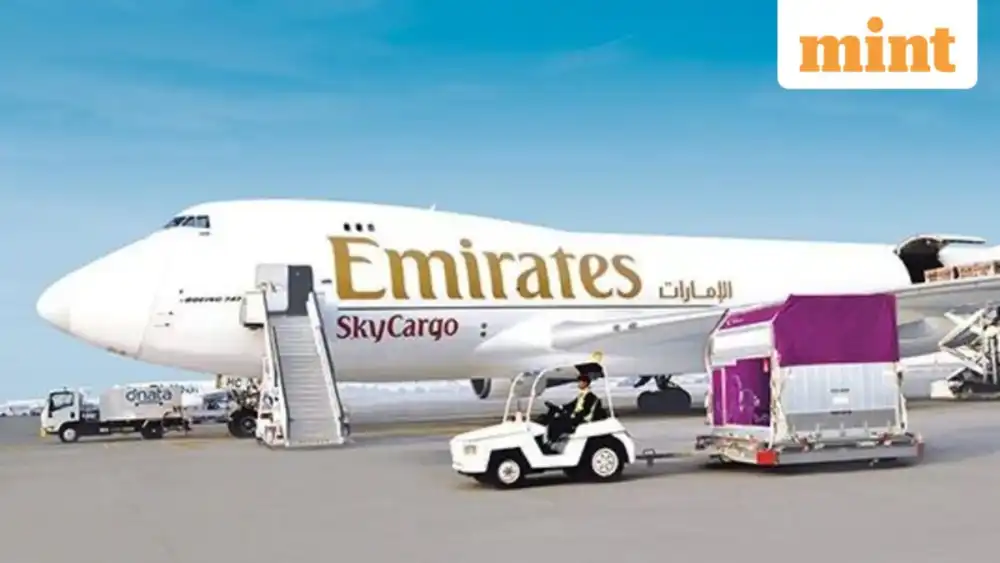
Emirates SkyCargo, a prominent global player in air freight, is making substantial adjustments to fortify its position within the Indian market. In anticipation of Mumbai’s apron rebuild, the carrier plans to augment its operations from the city, adding an additional freighter to bring its total cargo aircraft operating from CSMIA to two. This expansion is complemented by the introduction of a new freighter service from Sardar Vallabhbhai Patel International Airport in Ahmedabad, effectively increasing Emirates SkyCargo’s total weekly freighter flights into India to five. This proactive recalibration is a testament to the carrier’s commitment to maintaining robust connectivity for Indian businesses, particularly those engaged in the high-value pharmaceutical and perishable goods sectors. Annually, Emirates currently uplifts approximately 600 tonnes of pharmaceuticals and 500 tonnes of perishables from India, out of a total weekly uplift exceeding 3,000 tonnes, demonstrating the sheer volume and strategic importance of these commodities for the global supply chain. India’s status as the "pharmacy of the world" and a significant exporter of agricultural produce makes uninterrupted air cargo services vital for its economic objectives.
The catalyst for this strategic pivot is CSMIA’s crucial infrastructure upgrade, specifically the comprehensive rebuilding of Apron G, which is exclusively designated for freighter aircraft. This nine-month project, slated from August 2026 to May 2027, is designed to enhance the airport’s long-term capacity and operational efficiency, ensuring it can accommodate future growth in air traffic and cargo volumes. While essential for sustainable development, the temporary closure of freighter operations at one of India’s busiest airports presents a complex logistical challenge. Mumbai airport’s cargo capacity stands at approximately 1.45 million tonnes annually, with a utilization rate of about 62%, making it a vital node in India’s air cargo network, which collectively handled an estimated 3.3 to 3.7 million tonnes in recent years, according to industry analyses. The disruption at such a key gateway naturally raises concerns about potential bottlenecks and increased transit times for international trade.
Into this evolving scenario steps Navi Mumbai International Airport (NMIA), positioned as a crucial relief valve and a long-term strategic asset for the Mumbai Metropolitan Region. Having commenced operations in December of the previous year, NMIA is rapidly gearing up to absorb the freighter traffic diverted from CSMIA. Several prominent foreign cargo operators, including FedEx, the DHL-Lufthansa Cargo joint venture Aerologic, Challenge Air, Atlas Air, and Teleport, are slated to begin their freighter operations at NMIA as early as May. This influx of dedicated cargo carriers underscores the new airport’s immediate strategic importance. NMIA, operated by Adani Airports Holding Ltd., a key player in India’s burgeoning private airport infrastructure sector, is designed to complement CSMIA and cater to the region’s expanding aviation needs, providing modern facilities and increased capacity crucial for India’s trade ambitions.

However, the transition is not without its complexities, particularly concerning the synchronization of international passenger and freighter operations. The Air Cargo Agents Association of India (ACAAI) has voiced concerns that exporters might be compelled to reroute cargo through alternative hubs like Delhi or Bengaluru if NMIA’s international passenger services are not fully operational in tandem with its freighter capabilities. This apprehension stems from a fundamental aspect of air cargo logistics: the symbiotic relationship between dedicated freighters and "belly cargo" carried in the holds of passenger aircraft. For instance, if a freighter has a capacity of 20 tonnes but only 15 tonnes of cargo are available, the remaining 5 tonnes are often consolidated onto international passenger flights, leveraging their extensive networks and frequencies. NMIA expects to commence international passenger flights by the first quarter of FY2027, a timeline that needs careful alignment with the freighter suspension at CSMIA to ensure seamless cargo movement and prevent significant logistical bottlenecks. The absence of this synergy could lead to higher costs, longer lead times, and potential competitive disadvantages for Indian exporters.
The broader Indian air cargo market is experiencing robust growth, driven by a burgeoning economy, expanding manufacturing capabilities under initiatives like "Make in India," and the rapid proliferation of e-commerce. India’s air cargo volume has shown consistent upward trends, propelled by increasing global trade and the strategic diversification of supply chains post-pandemic. While 3.3-3.7 million tonnes is substantial, it still trails major global hubs like the United States (around 15-20 million tonnes annually) and China (over 10 million tonnes), indicating significant headroom for growth. The government’s National Logistics Policy and various production-linked incentive (PLI) schemes are further boosting industrial output and export potential, creating an escalating demand for efficient air logistics. This growth is not confined to Mumbai alone; major airports in Delhi, Bengaluru, Hyderabad, and Chennai are also investing heavily in cargo infrastructure, aiming to establish a distributed network of world-class logistics hubs.
The economic implications of these infrastructure developments are profound. For exporters, particularly those dealing in time-sensitive goods like pharmaceuticals, fresh produce, and high-value electronics, reliable and efficient air cargo is non-negotiable. Any disruption, even temporary, can translate into significant financial losses, damage to supply chain credibility, and a shift in trade routes. The proactive adaptations by carriers like Emirates SkyCargo are crucial in mitigating these risks, ensuring that Indian businesses remain competitive on the global stage. While the short-term adjustments might pose challenges, the long-term benefits of enhanced infrastructure at CSMIA and the addition of NMIA’s capacity are expected to far outweigh the transitional pains. These upgrades are vital for India’s ambition to become a global manufacturing and export powerhouse, facilitating smoother trade flows and reducing logistics costs over time.
Globally, major aviation hubs frequently undergo significant infrastructure expansions or transitions. For example, Dubai’s shift of cargo operations to Al Maktoum International Airport (DWC) to free up capacity at Dubai International (DXB) for passenger traffic, or Istanbul’s construction of a massive new airport to consolidate and expand its aviation capabilities, offer precedents for managing such large-scale changes. These examples demonstrate that careful planning, clear communication with stakeholders, and robust alternative arrangements are paramount to minimizing disruption and maximizing long-term benefits. India’s current scenario mirrors these global trends, reflecting a nation committed to modernizing its logistics backbone to support its ambitious economic trajectory.
Looking ahead, India’s air cargo sector is poised for a period of dynamic transformation. The strategic investments in airport infrastructure, coupled with the adaptability of global carriers and the growing demands of its domestic economy, signal a robust future. While the temporary closure of freighter operations at Mumbai presents an immediate hurdle, it also serves as a catalyst for the accelerated development and operationalization of NMIA, ultimately enhancing the region’s overall cargo handling capacity and resilience. This era of strategic adjustments and significant infrastructure development is critical for India to solidify its position as a pivotal global trade and logistics hub, ensuring that its economic ascent is well-supported by world-class connectivity.