The recent departure of a high-ranking British public relations executive following formal concerns raised by the United States Embassy marks a significant inflection point in the evolving relationship between private sector communications and international diplomacy. In an era where the boundary between personal expression and professional representation has become increasingly porous, the incident serves as a stark reminder of the geopolitical sensitivities that now govern the upper echelons of the corporate world. The executive’s exit, triggered by a series of online posts deemed incompatible with the diplomatic interests of the U.S. mission in London, underscores a hardening of standards regarding the digital conduct of those who operate at the nexus of government relations and public affairs.
For decades, the "Special Relationship" between the United Kingdom and the United States has been underpinned not only by military and intelligence cooperation but by a deeply integrated commercial landscape. With bilateral trade in goods and services surpassing £300 billion ($380 billion) annually, the stability of this economic corridor relies heavily on a cadre of consultants, lobbyists, and PR professionals who facilitate communication between multinational corporations and sovereign states. When a senior figure within this ecosystem is flagged by a foreign embassy, it is rarely a matter of mere personal disagreement; rather, it reflects a calculated assessment of reputational risk and the potential for diplomatic embarrassment.
The specifics of the case involve social media activity that reportedly strayed into territory the U.S. State Department found objectionable. While the exact nature of the content remains a subject of internal corporate discussion, the fallout highlights a broader trend: the "vetting" of key personnel is no longer the sole province of intelligence agencies or internal HR departments. Foreign governments, increasingly sensitive to the narrative environment in their host countries, are actively monitoring the digital output of influential private-sector actors. This proactive stance by the U.S. Embassy suggests that for those working on high-value accounts involving transatlantic trade, defense, or policy, a "private" social media profile is a functional myth.
From a business journalism perspective, this incident illuminates the shifting risk profile of the public relations industry. The UK’s PR and communications sector, valued at approximately £16.7 billion and employing nearly 100,000 people, has long prided itself on its ability to navigate complex political waters. However, the professionalization of the industry has brought with it a set of stringent expectations regarding neutrality and decorum. In the current climate, a single ill-judged post can jeopardize multi-million-pound contracts and sever ties with institutional stakeholders that have taken decades to cultivate.
Economic analysts point out that the cost of such departures extends beyond the immediate loss of talent. The "revolving door" between government service and high-level PR agencies—such as Edelman, Teneo, and Brunswick—means that many executives carry with them the perceived imprimatur of their former offices. When an executive’s digital footprint clashes with the policy positions or cultural sensibilities of a major ally like the United States, it creates a "friction cost" for the firm. Clients, particularly those in the Fortune 500, pay a premium for discretion and access; if an agency is seen as persona non grata at a major embassy, its value proposition is fundamentally compromised.
Furthermore, this development raises profound questions regarding employment law and the limits of free speech in the British workplace. Under the UK Employment Rights Act 1996, employees are protected from unfair dismissal, but these protections are often balanced against an employer’s right to protect its reputation. If a senior executive’s public statements—even those made on personal accounts—can be shown to bring the company into disrepute or damage critical commercial relationships, the legal grounds for termination or forced resignation become significantly firmer. The intervention of a foreign diplomatic mission adds a layer of complexity that few HR handbooks are prepared to address. It transforms a standard conduct issue into a matter of international relations.
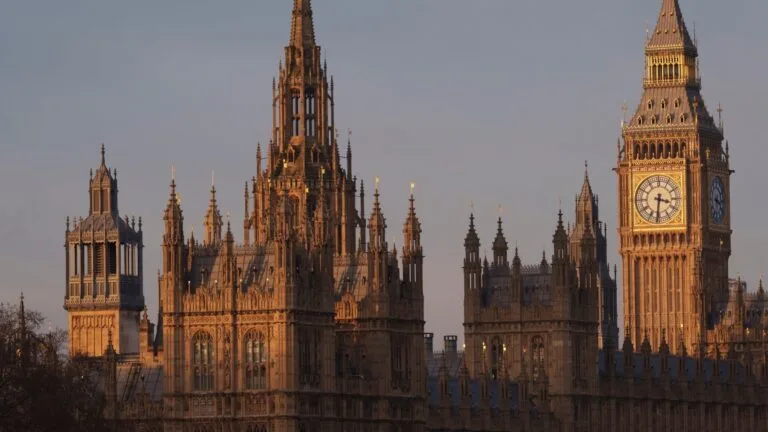
Market data suggests that corporate America is becoming increasingly intolerant of perceived ideological misalignment among its global partners. A 2023 survey of C-suite executives indicated that 74% of major firms have tightened their social media policies for senior leadership over the past two years. This is driven partly by the rise of "stakeholder capitalism," where brands are expected to embody the values of their consumers and partners. For a PR firm representing U.S. interests in London, maintaining a harmonious relationship with the embassy at Nine Elms is not just a courtesy; it is a core business requirement.
The incident also invites a global comparison. In markets like Singapore or the United Arab Emirates, the alignment between private sector conduct and state policy is often explicitly mandated. In Western liberal democracies, the relationship has historically been more laissez-faire. However, the "weaponization" of information and the prevalence of digital misinformation have led Western governments to adopt a more vigilant posture. The U.S. State Department’s decision to flag the executive’s posts can be seen as part of a wider strategy to ensure that those who interpret or influence public policy on behalf of corporate clients are not working at cross-purposes with official diplomatic objectives.
Industry experts suggest that this case will likely lead to a "chilling effect" across the London-based consulting sector. "We are entering an era of the ‘sanitized executive,’" notes one veteran crisis management consultant. "The expectation now is that if you want to sit at the table where the big transatlantic deals are made, you must forfeit the right to a provocative online presence. Your digital identity is now a corporate asset—or a corporate liability."
The economic impact of this shift is nuanced. On one hand, it may lead to a more stable and predictable environment for international business, free from the volatility of individual-led controversies. On the other, it risks hollowing out the intellectual diversity of the PR and advisory sectors, as firms prioritize "safe" candidates who lack any discernible public profile. For the UK, which positions itself as a global hub for professional services, the intervention of the U.S. Embassy is a reminder that its "soft power" is deeply interconnected with the personal conduct of its leading practitioners.
As the dust settles on this particular departure, the broader implications for the "Special Relationship" remain. The U.S. Embassy’s willingness to exert pressure on a private firm over a personnel matter signals a new level of assertiveness in protecting the American brand abroad. For British firms, the message is clear: the price of doing business with the world’s largest economy includes a high degree of digital discipline. The PR executive’s exit is not merely a headline about a lost job; it is a case study in the new geopolitics of the information age, where a tweet can be as impactful as a trade tariff, and where the embassy’s gaze is never far from the screen.
Looking forward, we can expect a surge in the use of AI-driven social media monitoring tools by major agencies to "pre-vet" their own leadership teams. The goal will be to identify potential diplomatic landmines before they can be stepped on. In the high-stakes world of international public relations, the most valuable commodity is no longer just access or influence—it is the absence of controversy. As this executive learned, in the modern economy, your past posts are not just history; they are a live balance sheet that can be liquidated at any moment by the stroke of a diplomatic pen.