The global economic order is bracing for a seismic shift as the prospect of a universal baseline tariff—a cornerstone of the "America First" 2.0 agenda—threatens to dismantle decades of multilateral trade norms. While the stated objective of a flat-rate levy on all imports is to revitalize domestic manufacturing and shrink the perennial United States trade deficit, a granular analysis of global supply chains and geopolitical alignments suggests a counterintuitive outcome. Rather than isolating rivals and repatriating industry, a blanket tariff policy may inadvertently provide a strategic tailwind to China and Brazil, two nations that have increasingly synchronized their economic engines to bypass the traditional dominance of the dollar-denominated West.
The proposed policy framework involves a radical departure from the targeted trade enforcement of the past century. By moving toward a universal baseline tariff, likely ranging between 10 and 20 percent on all imported goods, the United States is effectively signaling an end to the era of preferential trade treatment for allies and adversaries alike. For Beijing, this shift represents a "least-worst" scenario in a deteriorating relationship. While a 60 percent specific tariff on Chinese goods remains a looming threat, the imposition of a flat tax on all other nations erodes the relative competitive advantage of US allies in Europe and East Asia. If a Mercedes-Benz from Germany and a BYD electric vehicle from China both face escalating barriers, the relative price gap that previously favored "friendly" nations begins to compress, potentially leaving China’s low-cost manufacturing base as the only viable option for price-sensitive American consumers.
In the southern hemisphere, Brazil stands poised to capitalize on the resulting trade diversion. As the world’s largest exporter of soybeans, corn, and iron ore, Brazil has spent the last decade positioning itself as the primary alternative to American agribusiness. The 2018 trade war provided a blueprint for this transition; when China retaliated against US agricultural duties, it shifted its massive purchasing power toward the Cerrado and the Amazonian ports. A renewed and expanded tariff regime in Washington would likely cement this shift into a permanent structural reality. By forcing a wedge between the US and its agricultural export markets, a universal tariff acts as a de facto subsidy for Brazilian farmers, who are already expanding acreage and infrastructure to meet the insatiable demand of the Chinese middle class.
The economic synergy between China and Brazil is not merely a matter of convenience but a strategic alignment within the expanding BRICS+ framework. China’s "Belt and Road Initiative" has funneled billions into Brazilian logistics, from deep-water ports to rail networks designed to whisk commodities to the Pacific. If the United States moves toward a protectionist crouch, it risks ceding its influence in the Americas, allowing Beijing to deepen its role as the lender and buyer of first resort for South America’s largest economy. This deepening relationship creates a "commodity-for-infrastructure" loop that functions largely independently of Western financial sentiment or trade policy.
From a macroeconomic perspective, the implementation of a flat-rate tariff introduces significant "cost-push" inflationary pressures within the United States. Modern manufacturing is characterized by complex, multi-stage global value chains. An American-made tractor, for instance, may rely on Brazilian steel components and Chinese electronic sensors. By taxing these inputs at the border, the policy raises the cost of production for the very domestic industries it seeks to protect. This phenomenon, known as "input-cost escalation," could render American exports even less competitive on the global stage, further widening the trade gap that the tariffs were intended to close.
Moreover, the currency markets are likely to react with volatility that favors exporters with diversified baskets. If the US dollar strengthens due to anticipated interest rate hikes to combat tariff-induced inflation, American goods become more expensive for foreign buyers. Conversely, Brazil and China have been increasingly exploring local currency settlement systems to bypass the greenback. A universal US tariff would accelerate the development of these alternative payment rails, such as China’s CIPS (Cross-Border Interbank Payment System), reducing the efficacy of US financial sanctions and trade barriers over the long term.
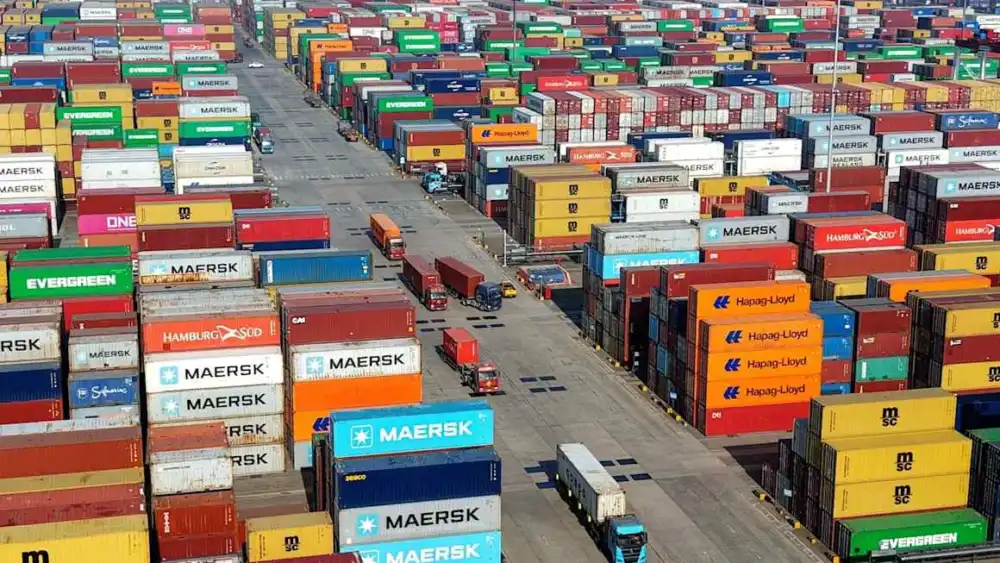
The impact on global logistics and "friendshoring" cannot be overstated. For the past four years, the prevailing trend has been the relocation of supply chains from China to "friendly" nations like Mexico, Vietnam, and India. However, a universal tariff treats these partners with the same suspicion as adversaries. If a factory in Monterrey, Mexico, faces the same baseline tariff as a factory in Shenzhen, the economic incentive to move production disappears. This "indiscriminate protectionism" could alienate key geopolitical partners, pushing them toward a more pragmatic, non-aligned stance where they hedge their bets between Washington and Beijing. For China, this is a strategic win; it prevents the formation of a cohesive, US-led economic bloc designed to contain its rise.
In the agricultural sector, the stakes are particularly high for the American Midwest. Statistics from the previous round of trade tensions show that US soybean exports to China plummeted by nearly 75 percent at the height of the dispute. During that same period, Brazil’s share of the Chinese soy market surged to over 80 percent. Once these trade routes are established and long-term contracts are signed, they are notoriously difficult to reverse. Brazilian producers have used the windfall from previous trade disputes to invest in precision agriculture and high-yield technology, narrowing the productivity gap with American farmers. A new round of tariffs would likely be the final catalyst for China to achieve "food security" by fully decoupling its caloric needs from US soil.
Expert insights from trade economists suggest that a universal tariff acts as a regressive tax on the American consumer. Estimates from various non-partisan think tanks suggest that a 10 percent universal tariff could cost the average American household upwards of $1,500 per year in increased costs for basic goods. This reduction in purchasing power could dampen domestic demand, leading to a cooling of the very economy the policy aims to stimulate. In contrast, China’s state-led model allows it to absorb some of these costs through currency devaluation or direct industrial subsidies, maintaining its export edge despite the barriers.
The geopolitical fallout extends to the World Trade Organization (WTO) and the rules-based international order. A universal tariff would be a flagrant violation of the "Most Favored Nation" (MFN) principle, which has been the bedrock of global trade since the end of World War II. By unilaterally discarding these rules, the United States may find itself increasingly isolated in international forums. This vacuum of leadership provides an opening for China to present itself as the new champion of "globalization" and "free trade," a narrative it has already begun to cultivate through the Regional Comprehensive Economic Partnership (RCEP) and its bid to join the Comprehensive and Progressive Agreement for Trans-Pacific Partnership (CPTPP).
Brazil’s role in this new landscape is that of a "swing state" in the global economy. Under its current leadership, Brasilia has pursued a policy of "active non-alignment," seeking to maximize its benefits from both Washington and Beijing. However, the economic gravity of the Chinese market is becoming difficult to ignore. As the US moves toward protectionism, Brazil finds its most lucrative opportunities in the East. The synergy is perfect: China needs resources to fuel its urbanized population and its high-tech industries, while Brazil needs a reliable market for its vast natural wealth. A universal US tariff merely accelerates this courtship, turning a temporary trade shift into a permanent strategic alliance.
In conclusion, while the optics of a flat-rate tariff may appeal to a domestic electorate weary of deindustrialization, the structural realities of the 21st-century economy suggest a different outcome. By raising the cost of doing business globally, the United States may find that it has not built a wall to protect its industries, but a cage that limits its own growth. Meanwhile, China and Brazil—connected by a mutual need to bypass Western trade barriers—will likely continue to build a parallel economic ecosystem. The "America First" strategy, in its attempt to reset the terms of global trade, may inadvertently serve as the architect of a new, multipolar world where the most vital trade corridors no longer pass through American ports. The ultimate irony of the new tariff regime may be that its greatest beneficiaries are the very competitors it sought to constrain.