The global economic landscape is undergoing a profound transformation, driven by an accelerating energy transition and the relentless march of advanced technologies. At the heart of this shift lies a crucial dependence on a finite group of materials: critical minerals and rare earth elements. These resources, indispensable for everything from electric vehicles and renewable energy infrastructure to high-tech electronics and defense systems, have become central to geopolitical and economic security. In a significant strategic maneuver, India has recently deepened its engagement in this vital sector, announcing a comprehensive collaboration with Brazil on critical minerals and rare earths, just one day after formally joining the US-led Pax Silica alliance for global critical mineral supply chain resilience. This dual approach underscores India’s determined playbook to diversify its access to these essential raw materials, mitigate supply chain vulnerabilities, and fuel its ambitious domestic manufacturing and green energy goals.
India’s evolving strategy marks a pivotal shift from an aspiration of complete self-reliance to one of "strategic resilience," as outlined in its Economic Survey for Fiscal Year 2026. This paradigm recognizes that no single economy can unilaterally build every component of an intricate global value chain, particularly in high-tech and nascent industries like semiconductors or green energy technologies. Instead, the focus is on positioning India as a crucial, resilient node within global supply networks, ensuring reliable access to raw materials and advanced technologies, and guarding against potential market failures or concentrations of power. This pragmatic approach is critical for India to achieve its "Make in India" manufacturing objectives, accelerate its ambitious energy transition targets, and establish itself as a credible player in the global technology landscape.
The formalization of India’s membership in Pax Silica represents a significant step in this multilateral diversification strategy. This US-led alliance aims to create a robust, secure, and transparent global supply chain for critical minerals, fostering cooperation among member nations. The alliance’s core principle is to leverage distinct national strengths across the entire value chain—from mining and processing to advanced manufacturing and R&D. For instance, Australia, a prominent member, commands approximately half of the world’s lithium production, a critical component for EV batteries. By participating in such a coalition, India stands to gain access to advanced technologies, collaborative research and development initiatives, and a shared framework for investment, effectively reducing potential choke points and enhancing its overall supply chain security. This collaborative model provides a collective defense against disruptions and price volatility, which have become increasingly prevalent in the wake of geopolitical tensions and past supply shocks.

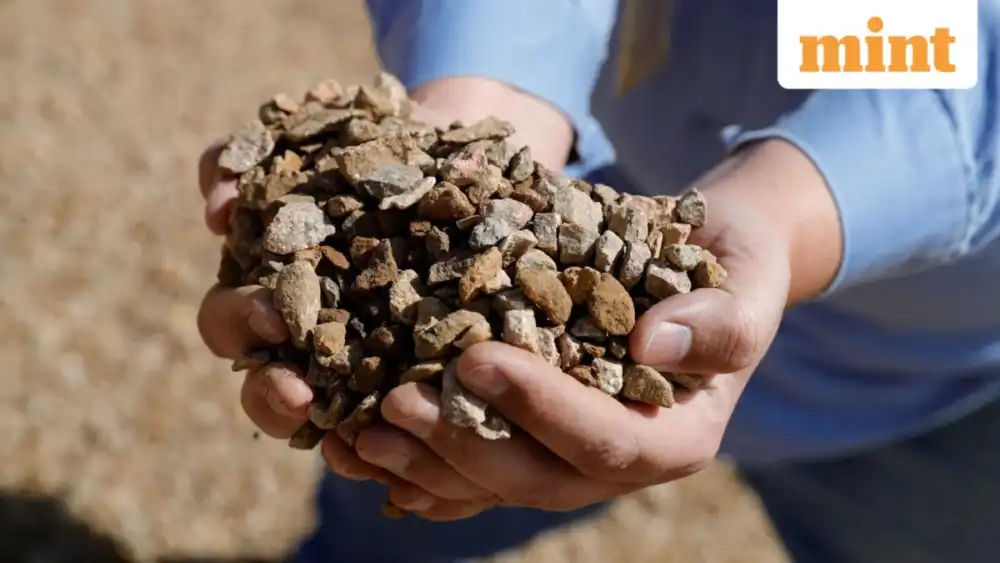
Complementing this multilateral engagement is the strategic bilateral pact with Brazil, a move that broadens India’s diversification efforts beyond the immediate Pax Silica framework. Brazil holds the world’s second-largest rare earth reserves, estimated at 21 million tonnes, trailing only China’s 44 million tonnes. This makes Brazil an exceptionally attractive partner for India, which, despite possessing the third-largest rare earth reserves globally at 6.9 million tonnes, significantly lags in processing capabilities. China currently controls an estimated 90% of the world’s rare earth processing capacity, a dominance that led to considerable alarm among global manufacturers, including in India, following China’s rare-earth magnet export restrictions last year.
The agreement with Brasilia is anticipated to unlock several critical benefits for India. Firstly, it promises direct access to a significant source of raw rare earth ores and other vital critical minerals, reducing India’s reliance on a single dominant supplier or indirect market channels. Secondly, and perhaps more crucially, the collaboration is expected to facilitate technology transfers and expertise sharing, particularly in processing and recycling technologies, where Brazil may hold valuable experience. This is vital for India, as building indigenous processing capabilities is paramount to moving beyond mere extraction and developing a value-added manufacturing ecosystem. Joint exploration efforts and collaborative R&D are also on the agenda, which could accelerate the discovery of new reserves and the development of more efficient and sustainable processing methods. Furthermore, the pact acts as a magnet for investments, potentially drawing Indian capital into Brazil’s mining and processing sectors, while also attracting Brazilian technological know-how and investment into India’s emerging critical mineral industry. This bilateral alignment with a non-Pax Silica member also adds another layer of geopolitical hedging, offering an independent supply route and further reducing over-reliance on any single bloc.
India’s domestic critical mineral landscape presents both immense potential and significant challenges. While the nation boasts substantial rare earth reserves, along with deposits of other critical minerals such as lithium, cobalt, and graphite, its processing infrastructure remains nascent. The lack of advanced separation and refining technologies, coupled with the substantial capital investment required and the stringent environmental regulations associated with these processes, has historically hindered India’s ability to capitalize on its geological wealth. This processing deficit makes India highly susceptible to global market fluctuations and geopolitical leverage, as evidenced by the ripple effects of China’s past export controls. Recognising this vulnerability, the Indian government has initiated reforms, including the auctioning of critical mineral blocks, to spur domestic exploration and mining. However, bridging the processing gap will require sustained investment, international technological partnerships, and a robust regulatory framework.
The strategic and economic implications of India’s dual-track approach are far-reaching. For India, securing diversified and reliable supplies of critical minerals is not merely about industrial growth; it is fundamental to its national security and strategic autonomy. It will directly bolster key initiatives such as the expansion of electric vehicle manufacturing, the ambitious deployment of solar and wind energy projects, and the establishment of a robust semiconductor industry. By mitigating the risks of supply chain disruptions and volatile commodity prices, India can foster a more stable environment for domestic and foreign investment, driving innovation and job creation across these high-growth sectors. Economically, reducing import dependence for these vital inputs could lead to more competitive manufacturing costs and insulate the economy from external shocks.

On a global scale, India’s proactive engagement contributes significantly to the broader objective of de-risking critical mineral supply chains, which have long been dominated by a few players. By adding new, reliable sources and fostering alternative processing hubs, India helps to inject greater resilience into the global system, promoting healthier competition and potentially more stable pricing. This strategic pivot also reinforces India’s growing stature as a responsible and influential player in global economic governance, actively shaping frameworks for resource security and sustainable development. The partnerships forged, whether multilateral or bilateral, underscore a broader trend towards collaborative solutions for shared economic vulnerabilities, fostering new economic corridors and strengthening South-South cooperation.
Looking ahead, the successful implementation of this dual strategy will hinge on several factors. Significant financial investment will be required to develop India’s processing capabilities and enhance its domestic mining infrastructure. Effective technology transfer mechanisms, coupled with robust R&D, are essential to catch up with global leaders in critical mineral processing. Environmental sustainability will also be a critical consideration, given the often-intensive nature of mining and refining operations. Furthermore, navigating the complex geopolitical landscape, where critical minerals are increasingly intertwined with national interests, will demand astute diplomacy and consistent policy. India’s commitment to "strategic resilience" over "complete self-reliance" positions it well to meet these challenges, aiming to transform from a consumer heavily reliant on imports to a value-added manufacturer and a key contributor to a diversified, secure, and sustainable global critical mineral ecosystem.