For decades, the European Union operated under the optimistic assumption that global trade was a self-regulating mechanism for peace, a "Wandel durch Handel" (change through trade) philosophy that presumed economic interdependence would naturally discourage conflict. However, the seismic shifts of the early 2020s—characterized by the weaponization of energy by Russia and the aggressive industrial subsidies of China—have shattered this illusion. In this new era of geoeconomic competition, Europe finds itself at a crossroads. To maintain its relevance and protect its sovereignty, the continent must transition from a defensive posture of "de-risking" to an offensive strategy that identifies and utilizes its own strategic chokepoints. By weaponizing the unique bottlenecks it controls within the global economy, Europe can ensure that its voice remains decisive in an increasingly bipolar world dominated by Washington and Beijing.
The concept of "weaponized interdependence" is not new, but it has historically been a tool associated with the United States’ control over the dollar-based financial system or China’s dominance in rare earth minerals. Europe, however, possesses a more subtle but equally potent set of levers. The most prominent of these is the "Brussels Effect"—the phenomenon where EU regulations become the de facto global standard. In sectors ranging from data privacy (GDPR) to artificial intelligence and environmental sustainability, European standards dictate the operating procedures for multinational corporations. By tightening these standards and linking market access to strict compliance, Europe can exert pressure on foreign actors who seek to bypass international norms. The recent implementation of the Carbon Border Adjustment Mechanism (CBAM) is a prime example of this strategy in action, effectively forcing global manufacturers to decarbonize if they wish to sell into the world’s largest integrated market.
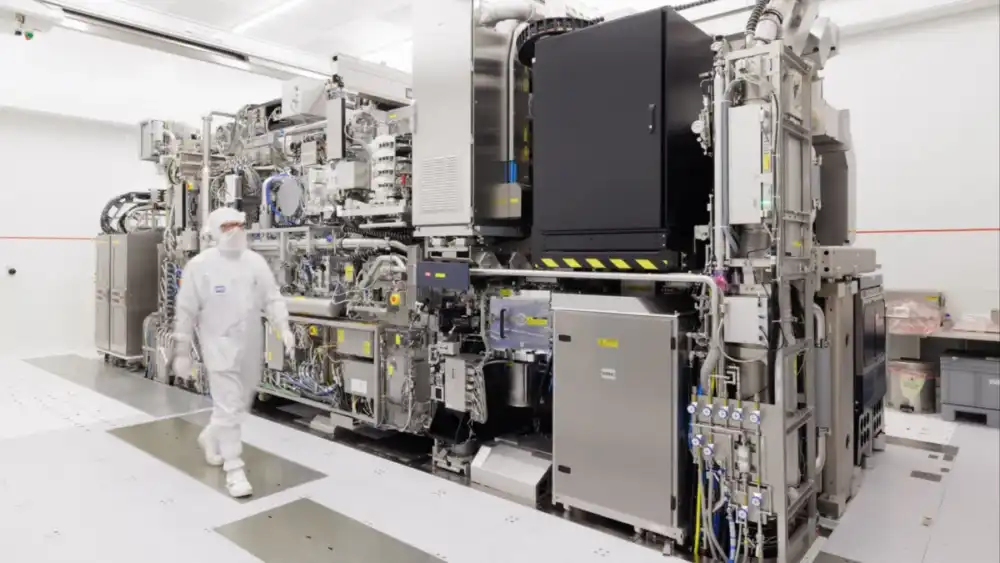
Beyond regulation, Europe’s most critical hard-power chokepoint lies in its high-end technological manufacturing, specifically in the semiconductor supply chain. While the United States leads in chip design, the world’s ability to actually produce the most advanced logic chips depends entirely on European machinery. ASML, the Dutch firm that holds a near-monopoly on extreme ultraviolet (EUV) lithography machines, represents perhaps the most significant single-point bottleneck in the modern global economy. Without these machines, the production of sub-5nm chips—the brains of everything from advanced AI to modern fighter jets—grinds to a halt. By coordinating more closely on export controls and leveraging this technological edge, Europe can participate as an equal partner in the global security dialogue, rather than merely following the lead of the U.S. Department of Commerce.
The financial sector provides another avenue for European leverage, though it remains underutilized compared to the U.S. Treasury’s reach. The European financial architecture, including clearing houses like Euroclear and the Brussels-based SWIFT messaging system, serves as the plumbing of global commerce. The unprecedented decision to freeze and potentially seize the interest from Russian central bank assets held within the EU demonstrated a newfound willingness to use this infrastructure as a tool of foreign policy. However, for Europe to truly weaponize its financial chokepoints, it must complete the Capital Markets Union and enhance the international role of the euro. A more robust and unified European financial market would provide a credible alternative to the dollar, giving the EU the power to impose secondary sanctions—a move that would fundamentally alter the global balance of power.
However, the path to "strategic autonomy" through the use of chokepoints is fraught with internal and external risks. Internally, the EU must contend with the divergent interests of its 27 member states. While some nations, like France, have long championed a more muscular industrial policy, others, particularly the more frugal or trade-dependent northern states, fear that weaponizing trade could lead to a protectionist spiral that damages the EU’s export-led growth model. The challenge lies in creating a unified framework that allows for rapid response to economic coercion without devolving into a closed economy. The recently introduced Anti-Coercion Instrument (ACI) is a step in the right direction, providing a legal mechanism for the EU to retaliate against third countries that use economic pressure to influence the sovereign choices of member states.
The global competition for critical raw materials further underscores the need for a proactive European strategy. Currently, Europe is heavily dependent on China for the processed minerals essential for the green transition, including lithium, cobalt, and magnesium. To counter this vulnerability, the EU’s Critical Raw Materials Act aims to diversify supply chains. But the real leverage comes not just from finding new suppliers, but from dominating the high-value processing and recycling segments of the value chain. If Europe can establish itself as the global hub for circular economy technologies and high-purity mineral processing, it creates a "reverse chokepoint" where other nations become dependent on European expertise and infrastructure to achieve their own climate goals.
Statistics highlight the scale of the economic stakes involved. The EU remains the world’s largest exporter of manufactured goods and services, and it is the top trading partner for approximately 80 countries. This massive market footprint is a chokepoint in itself. Access to 450 million high-income consumers is a privilege that few global companies can afford to lose. By making market access contingent on reciprocity—ensuring that European firms have the same level of access in foreign markets—the EU can dismantle the asymmetric trade relationships that have allowed competitors to grow at its expense. This "reciprocity as a weapon" approach is increasingly visible in the EU’s stance on Chinese electric vehicle subsidies and public procurement rules.
Global comparisons illustrate the urgency of this shift. The United States has increasingly used the "Foreign Direct Product Rule" to prevent any company in the world from selling products to China if those products contain even a fraction of American technology. China, meanwhile, has used its "Belt and Road Initiative" to gain control over physical chokepoints like ports and railway hubs across Eurasia and Africa. Europe’s approach must be distinct; it cannot match the raw military spending of the U.S. or the state-directed capitalism of China. Instead, it must rely on its "integrated power"—the combination of regulatory dominance, technological niches, and its role as a global financial hub.
Economic impact analysis suggests that a failure to weaponize these chokepoints could lead to a slow decline in European living standards. As global trade fragments into regional blocs, a "passive" Europe risks being squeezed. If the EU does not control its own essential technologies and supply lines, it will be forced to choose sides in every dispute between the U.S. and China, often to its own economic detriment. Conversely, a Europe that can credibly threaten to withhold critical technology or close off financial channels becomes an indispensable "third pole" in the global order. This is not about starting trade wars, but about ensuring that the rules of the 21st-century economy are not written entirely in Washington or Beijing.
In conclusion, the era of the "neutral trader" is over. For the European Union, the transition to a geoeconomic power requires a psychological shift as much as a policy shift. It requires acknowledging that interdependence is a vulnerability when it is one-sided, but a source of power when it is mutual. By identifying and strategically utilizing its chokepoints—from the lithography machines of Veldhoven to the regulatory halls of Brussels—Europe can protect its social model and its values. The goal is a resilient, assertive Europe that uses its economic weight not just to participate in the global market, but to shape it. The weaponization of chokepoints is the necessary price of sovereignty in a world where trade is no longer just about profit, but about power.