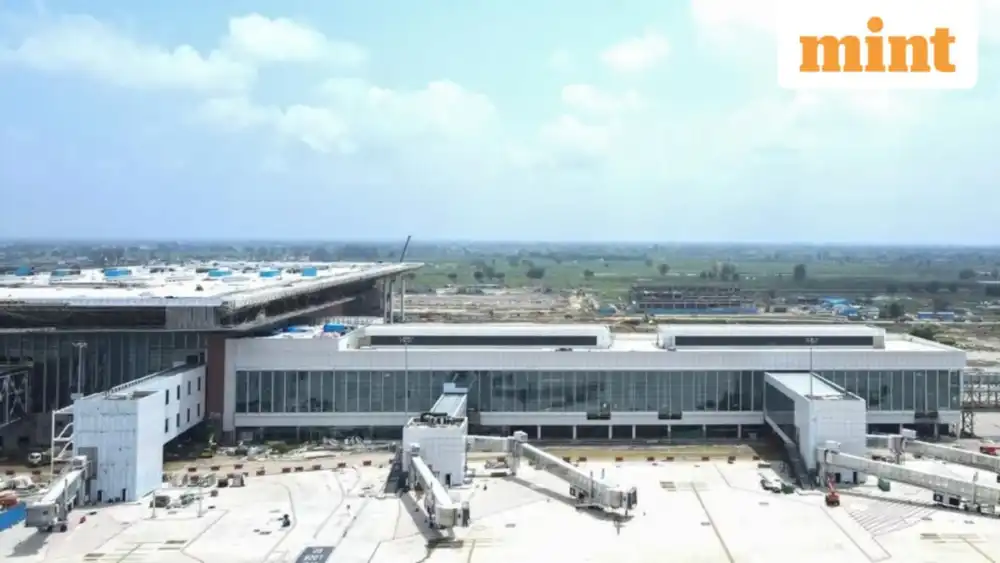
The Department of Telecommunications (DoT) has intensified its mandate for critical infrastructure, directing the Noida International Airport authority to facilitate unimpeded access for telecom service providers (TSPs) to deploy mobile network infrastructure, mirroring a recent directive issued to the operator of the Navi Mumbai International Airport. This decisive intervention underscores the government’s commitment to ensuring robust digital connectivity across public facilities, a cornerstone of India’s ambitious digital transformation agenda and a critical component for enhancing both passenger experience and operational efficiency in burgeoning aviation hubs.
The core of the dispute, which initially surfaced at the Navi Mumbai International Airport (NMIA), revolved around allegations by telecom operators that airport authorities were demanding exorbitant charges for the Right of Way (RoW) to install essential mobile network infrastructure. These charges, reportedly reaching upwards of ₹92 lakh monthly per operator, or an estimated annual aggregate of ₹44.16 crore for four major TSPs, were deemed commercially unviable and contrary to the spirit of national telecommunication policies. Passengers, in turn, bore the brunt of this impasse, frequently reporting significant mobile network blackouts and poor call quality within airport premises, a growing concern given the increasing reliance on digital communication for travel logistics, entertainment, and business.
This regulatory push is firmly anchored in the provisions of the landmark Telecommunications Act, 2023, and the subsequent Telecommunications (Right of Way) Rules, 2024. These legislative instruments are designed to streamline and standardize the process of infrastructure deployment, classifying entities that own, control, or manage "public property" – a category now explicitly deemed to include airports – as obliged to grant RoW to licensed TSPs. Crucially, the legislation mandates that such access must be granted on "reasonable, transparent, and non-discriminatory terms." The charges levied by public entities are strictly limited to administrative or restoration costs, emphatically prohibiting their use as a source of commercial revenue. This paradigm shift aims to prevent monopolistic practices and ensure that the deployment of vital digital infrastructure is not hindered by prohibitive financial demands.
The DoT’s classification of airports as "public entities" carries significant implications for future infrastructure projects across India. It sets a precedent that prioritizes public utility and widespread digital access over potential commercial gains from RoW fees. Industry experts highlight that this clarification will cap prices on three critical fronts: the initial fees for laying infrastructure, recurring operational charges, and potential fees for sharing existing in-building solutions. By standardizing these costs, the government intends to reduce the financial burden on TSPs, thereby encouraging greater investment in network expansion and quality improvements.
From an economic perspective, the timely deployment of high-quality mobile networks at major airports is not merely a convenience but an economic imperative. Airports serve as vital gateways for trade, tourism, and business, contributing significantly to a nation’s GDP. According to recent projections, India’s aviation sector is poised for exponential growth, with passenger traffic expected to double in the coming decade. As passenger volumes swell, the demand for seamless digital connectivity – for everything from e-boarding passes and real-time flight updates to video conferencing and digital payments – will only intensify. A lack of reliable mobile services can deter business travelers, frustrate tourists, and ultimately detract from the overall perception of India as a digitally advanced nation.

For telecom service providers, the ability to deploy infrastructure without facing undue financial or bureaucratic hurdles is crucial for their CapEx planning and service delivery models. The high cost of spectrum acquisition, coupled with the capital-intensive nature of network rollout, already places significant pressure on their balance sheets. Unreasonable RoW charges add another layer of complexity, potentially delaying or even derailing network expansion plans in critical areas. By ensuring equitable access, the DoT is enabling TSPs to optimize their network investments, extend 5G coverage, and deliver on their commitment to provide world-class connectivity. This also fosters a competitive environment among operators, as they can vie for subscribers based on service quality rather than being constrained by exclusive agreements or exorbitant access fees.
Globally, major international airports often adopt various models to ensure robust mobile connectivity. Many engage in public-private partnerships, where TSPs collaboratively invest in shared in-building distributed antenna systems (DAS) or small cell networks. Others have airport-owned neutral host systems that TSPs can access on fair and transparent terms. The Indian regulatory move aligns with international best practices that emphasize shared infrastructure and non-discriminatory access to facilitate pervasive connectivity. For instance, airports in Singapore, Dubai, and major European hubs typically offer excellent mobile coverage, often leveraging advanced 5G technologies, precisely because the underlying infrastructure access is managed efficiently and equitably.
The broader significance of this regulatory intervention extends beyond airports. The Telecommunications Act, 2023, is a comprehensive piece of legislation designed to modernize India’s telecom sector, address contemporary challenges, and lay the groundwork for future digital growth. By establishing a clear framework for RoW across various public entities – including railway stations, seaports, and government buildings – it seeks to accelerate the deployment of digital infrastructure nationwide. This is particularly vital as India pushes towards ubiquitous 5G coverage and prepares for the advent of 6G, which will demand even denser network deployments and a significantly expanded fiber optic backbone.
The DoT’s proactive stance also signals a strong commitment to consumer protection. Passenger complaints about poor network coverage at airports directly led to the regulatory body’s intervention, highlighting its role in safeguarding consumer interests. In an era where digital dependency is paramount, the expectation for seamless connectivity in high-traffic public areas like airports is no longer a luxury but a fundamental necessity. The intervention by the Telecom Regulatory Authority of India (TRAI), which is also examining the pricing concerns at Navi Mumbai, further underscores the multi-pronged governmental effort to resolve these issues.
Looking ahead, this development sets a critical precedent. As India continues to invest heavily in infrastructure development, with numerous new airports and public facilities planned, the clear directive on RoW will prevent similar disputes from arising. It provides a legal and operational blueprint for harmonious collaboration between infrastructure developers and telecom operators. The focus on administrative and restoration costs, rather than commercial revenue generation, ensures that the deployment of essential digital services remains affordable and accessible, ultimately benefiting the millions of citizens and international visitors who traverse these modern gateways. This strategic alignment of regulatory policy with national digital aspirations is instrumental in propelling India towards its vision of a truly connected, digitally empowered society and economy.