The specter of a renewed trade war between the United States and the European Union has moved from the realm of campaign rhetoric to a central concern for policymakers in Brussels and Paris. As the prospect of a more protectionist American administration looms, France has taken a leading role in signaling that the European Union is no longer the "naïve" trade partner it was once accused of being. French officials have recently underscored that the bloc has spent the last several years fortifying its legislative and economic defenses, creating a sophisticated "toolbox" designed specifically to repel unilateral trade aggression and protect the integrity of the Single Market.
The tension stems primarily from the proposed "universal baseline tariff" of 10% to 20% on all imports into the United States, a policy cornerstone of the "America First" economic platform. For the European Union, which exports more than $500 billion in goods to the U.S. annually, such a move would represent a seismic shift in the global order. France, often the most vocal proponent of European "strategic autonomy," has been quick to remind both its allies and its domestic audience that the EU possesses the legal and economic mechanisms to retaliate in kind, should Washington choose to dismantle the status quo of transatlantic commerce.
Central to this defensive strategy is the EU’s Anti-Coercion Instrument (ACI), which entered into force in late 2023. This landmark legislation was designed to allow the bloc to respond to economic blackmail or "coercive" trade measures from third countries. Unlike traditional trade disputes that can languish in the World Trade Organization’s (WTO) appellate body for years, the ACI provides the European Commission with the authority to impose swift countermeasures. These include restricted access to EU public procurement markets, the suspension of intellectual property protections, and the imposition of targeted tariffs on specific American sectors. French leadership views the ACI not just as a reactive tool, but as a deterrent intended to force bilateral negotiations before a full-scale trade war erupts.
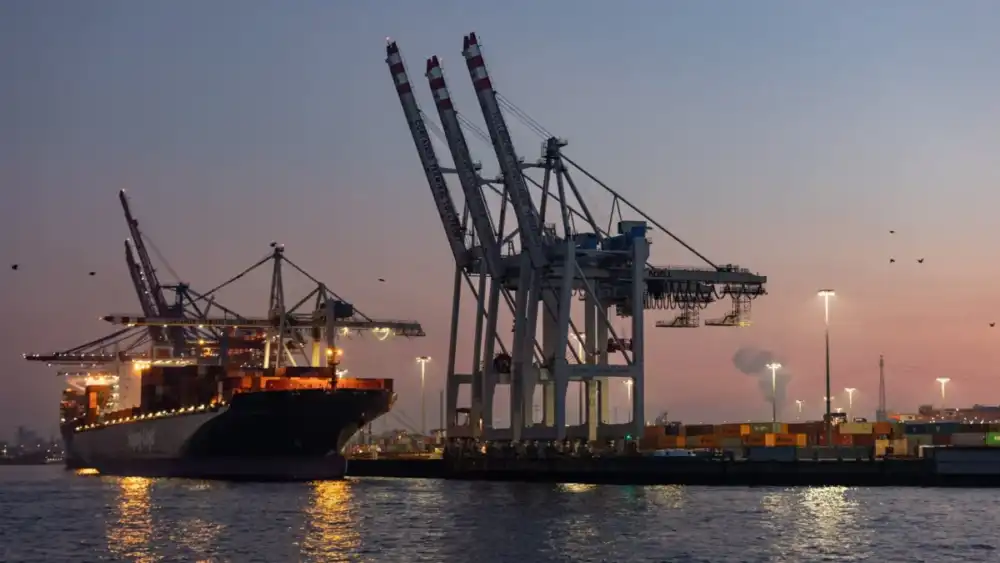
The economic stakes of this potential confrontation cannot be overstated. The transatlantic relationship is the largest and wealthiest in the world, accounting for roughly one-third of global GDP and supporting millions of jobs on both sides of the Atlantic. According to data from the European Commission, the EU and the U.S. have a combined investment stock of over $5 trillion. Any disruption to this flow of capital and goods would likely result in increased consumer prices, disrupted supply chains, and a significant cooling of the global economy. For France, the impact would be particularly acute in high-value sectors such as aerospace, luxury goods, and agriculture—industries that are frequently the first targets in retaliatory tariff cycles.
In previous trade skirmishes, most notably the 2018 dispute over steel and aluminum tariffs, the EU demonstrated a willingness to strike at politically sensitive American industries. Retaliatory tariffs were placed on iconic American products such as bourbon, Harley-Davidson motorcycles, and Florida orange juice—goods often produced in states that were critical to the then-administration’s political base. Analysts suggest that a "Version 2.0" of this strategy would be far more expansive. The EU’s updated Trade Enforcement Regulation now allows the bloc to act even when the WTO process is stalled, ensuring that Europe can hit back with precision and speed.
However, the French push for a firm stance is not merely about retaliation; it is part of a broader vision for a "geopolitical" European Union. President Emmanuel Macron has long argued that Europe must be able to defend its own interests without relying on the security or economic whims of external powers. This philosophy has gained traction in Brussels, where the European Commission has pivoted toward a "de-risking" strategy. This approach aims to reduce dependencies on single suppliers—historically aimed at China—but now increasingly applied to the volatility of American trade policy. The French Ministry of Economy has emphasized that while the EU prefers a cooperative partnership with the U.S., it must be prepared for a scenario where the U.S. treats its allies as economic competitors.
The potential for conflict is further exacerbated by the EU’s Carbon Border Adjustment Mechanism (CBAM) and the U.S. Inflation Reduction Act (IRA). The IRA, which provides massive subsidies for American-made green technology, has already drawn the ire of European manufacturers who argue it creates an unlevel playing field. France has been a vocal critic of the IRA’s "local content" requirements, viewing them as a violation of international trade norms. If the U.S. adds a universal tariff on top of these existing subsidies, the EU may feel compelled to respond not just with tariffs, but with its own massive industrial subsidy programs, potentially triggering a race to the bottom in fiscal spending.
Economists warn that the "weaponization" of trade could lead to a fragmentation of the global market. A 10% universal tariff by the U.S. would likely trigger a reciprocal 10% tariff from the EU, creating a cycle of escalation that could shave several percentage points off global growth. For a Eurozone economy already struggling with sluggish growth in Germany and high debt levels in France, such a shock would be devastating. The European Central Bank has noted that trade uncertainty is a primary "downside risk" to the continent’s recovery, as businesses delay investment decisions in the face of unpredictable export markets.
Despite the firm rhetoric from Paris, there is an underlying desire for a negotiated settlement. French diplomats have signaled that the "toolbox" is a means to an end—the end being a fair and stable trade environment. There is hope in some quarters that the threat of a unified European response will bring American negotiators to the table to discuss exemptions or a "peace treaty" on trade. The EU’s strength lies in its collective market power; as the world’s largest single market, it remains an indispensable customer for American tech giants and energy exporters.
The coming months will be a test of European unity. While France is leading the charge for a robust response, other member states with deep industrial ties to the U.S., such as Germany, may be more cautious. The German automotive industry, in particular, is highly vulnerable to American tariffs and may prefer a more conciliatory approach. However, French officials argue that any sign of division will only encourage more aggressive trade tactics from Washington. The prevailing sentiment in Paris is that Europe’s best defense is a clear, unwavering commitment to its own economic sovereignty.
As the international community watches the shifting political winds in the United States, the European Union is busy calibrating its response. The message from France is clear: the EU is no longer a passive observer of global trade dynamics. With a robust legal framework, a unified market, and a newfound willingness to exercise its economic weight, the bloc is preparing for a new era of transatlantic relations where cooperation is desired, but confrontation is prepared for. The "tools" mentioned by French officials are sharpened and ready, marking a definitive end to the era of European trade passivity and the beginning of a more assertive, and perhaps more volatile, chapter in global commerce.