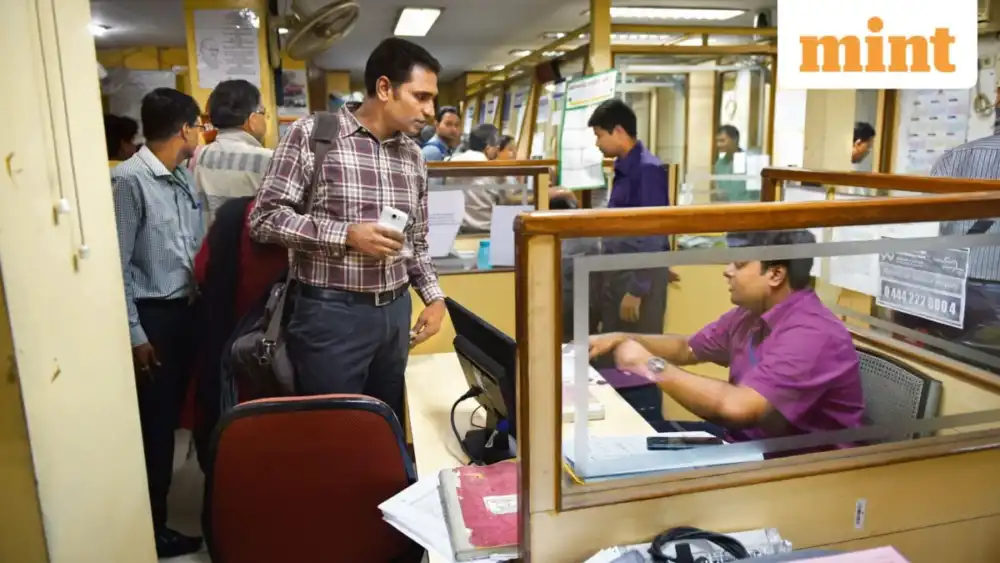
February 21st, falling on the third Saturday of the month, serves as a timely reminder of the intricate rhythm governing India’s vast financial landscape, with all public and private sector banks, including behemoths like the State Bank of India, HDFC Bank, Punjab National Bank, ICICI Bank, and Axis Bank, maintaining full operational status. This particular Saturday’s activity underscores a crucial distinction within the Reserve Bank of India’s (RBI) meticulously structured holiday calendar: only the second and fourth Saturdays of each month are designated as non-working days for the nation’s banking institutions. This policy, alongside the universal closure on Sundays and a host of national, regional, and religious observances, forms a complex mosaic that dictates the flow of commerce and personal finance across the subcontinent.
The genesis of the "second and fourth Saturday" rule, implemented in 2015, marked a significant shift in India’s banking sector. Prior to this, banks operated on all Saturdays, albeit with reduced hours. The change was largely driven by a demand for improved work-life balance for banking employees, a critical workforce numbering in the millions. While offering a much-needed respite for staff, this regulatory amendment also necessitated a re-evaluation of how businesses and individuals conduct their financial affairs. The RBI, as the central banking authority, leverages powers derived primarily from the Negotiable Instruments Act of 1881 to declare holidays, classifying them into categories such as those under the Negotiable Instruments Act, Real-Time Gross Settlement (RTGS) holidays, and bank account closing days. This legal framework ensures uniformity and predictability, yet regional variations for festivals and state-specific observances mean that the precise list of holidays can differ significantly from one state to another, adding layers of complexity for nationwide businesses and migrant populations.
The economic implications of these scheduled closures are substantial, influencing everything from daily retail transactions to large-scale corporate financing. For small and medium-sized enterprises (SMEs), which often rely on timely cash deposits, withdrawals, and cheque clearances, a bank holiday can mean a temporary halt in their operational liquidity. A manufacturing unit might face delays in paying its suppliers or receiving payments from distributors if a critical transaction falls on a non-working day. While larger corporations often have sophisticated treasury management systems and established credit lines that mitigate the immediate impact, even they can encounter bottlenecks, particularly in areas like trade finance or cross-border transactions where synchronisation with international banking calendars is crucial. The cumulative effect of multiple regional holidays can fragment the national market, potentially slowing down economic activity in specific sectors or geographies. Analysts frequently point out that while employee welfare is paramount, the frequency and regional disparity of bank holidays in India, compared to some other major economies, can pose minor frictional costs to business efficiency, estimated to shave fractions of a percentage point off regional economic output during peak holiday seasons.

However, the disruptive potential of physical bank closures has been significantly curtailed by the meteoric rise of digital banking services. India’s digital payments ecosystem, particularly the Unified Payments Interface (UPI), stands as a global benchmark for instantaneous, interbank transactions. On any given bank holiday, while brick-and-mortar branches remain shuttered, the digital infrastructure operates seamlessly. Customers can withdraw cash from an expansive network of Automated Teller Machines (ATMs), make payments to merchants via UPI, transfer funds using internet banking, or manage their accounts through mobile banking applications. This robust digital backbone ensures that daily financial transactions, from paying utility bills to transferring funds to family, continue without interruption. The sheer volume of digital transactions underscores this resilience: UPI alone processes billions of transactions monthly, far surpassing the combined volume of traditional payment methods. This digital transformation has not only enhanced convenience but has also injected a remarkable degree of continuity into the financial system, effectively decoupling many essential banking services from physical branch operating hours.
Comparing India’s approach to bank holidays with other major global economies reveals distinct philosophies. In the United States, federal holidays lead to bank closures, but the number is generally lower than India’s, and the focus is more on national observances. European countries, while having their own set of national and religious holidays, often see a more harmonised approach within the Eurozone, though individual nation-states retain specific dates. Japan, known for its numerous national holidays, also sees banks close on these days, but its highly automated and integrated financial system largely mitigates major disruptions. China’s banking sector observes national holidays, particularly during the Lunar New Year, which can lead to extended closures, yet its advanced digital payment platforms like WeChat Pay and Alipay ensure widespread financial accessibility. What sets India apart is the combination of a large number of regional holidays, the unique second and fourth Saturday rule, and the simultaneous rapid adoption of cutting-edge digital payment technologies. This blend creates a dynamic environment where traditional schedules coexist with a hyper-modern digital financial infrastructure.
The evolving customer expectations are also reshaping the future of banking in India. With millennials and Gen Z increasingly preferring digital channels for almost all their financial needs, the reliance on physical branches is gradually diminishing for routine transactions. Branch visits are now often reserved for complex services like loan applications, wealth management advice, or resolving intricate account issues. This shift empowers individuals and businesses to conduct their banking at their convenience, regardless of bank holidays, driving higher financial inclusion and fostering greater economic participation, especially in remote areas where physical bank presence might be sparse. The ongoing development in areas like Artificial Intelligence (AI) and Machine Learning (ML) is further enhancing digital banking capabilities, offering personalized services and proactive financial management tools that are available 24/7, irrespective of any holiday calendar.
In conclusion, while the specific opening of banks on the third Saturday of February 21st might appear to be a minor operational detail, it intricately weaves into the broader narrative of India’s sophisticated financial system. The deliberate policy of staggered Saturday closures, alongside a multitude of national and regional holidays, represents a delicate balance between ensuring employee welfare and maintaining economic momentum. The remarkable surge in digital banking, championed by platforms like UPI, has acted as a formidable buffer, largely insulating the economy from the potential slowdowns associated with physical branch closures. As India continues its trajectory towards becoming a digitally empowered economy, the interaction between regulatory frameworks, traditional banking schedules, and technological innovation will remain a critical area of focus, shaping how financial services are delivered and consumed, ultimately influencing the nation’s economic rhythm on every calendar day.