India’s ambitious Production Linked Incentive (PLI) scheme, designed to invigorate domestic manufacturing and foster economic self-reliance, has emerged as a cornerstone of the nation’s industrial strategy, attracting substantial investments and generating significant sales across 14 strategic sectors. With an aggregate outlay of ₹1.91 trillion, the initiative has successfully drawn cumulative investments exceeding ₹2.16 trillion, leading to remarkable sales volumes upwards of ₹20.41 trillion since its inception. This robust performance underscores the scheme’s pivotal role in repositioning India as a competitive global manufacturing hub, driving job creation, and substantially reducing import dependencies.
Launched in 2020 amidst global supply chain disruptions and a renewed emphasis on localized production, the PLI scheme represents a strategic pivot from traditional input-based subsidies towards a performance-driven incentive model. This innovative design links financial incentives directly to incremental sales achieved over a predefined base year, compelling participating companies to focus on scale, technological adoption, and deeper domestic value addition. This approach ensures that public funds are disbursed against measurable outputs, fostering accountability and efficiency in achieving policy objectives. Over 830 applications have received approval under the scheme’s purview to date, demonstrating widespread industry participation.
The macroeconomic impact of the PLI framework is evident across several key indicators. Beyond the impressive investment figures, the scheme has propelled cumulative exports exceeding ₹8.3 trillion, signaling India’s enhanced integration into global value chains and its growing capacity to serve international markets. Crucially, this industrial resurgence has translated into tangible employment opportunities, with more than 1.44 million direct and indirect jobs created, bolstering economic stability and skill development across various segments. To date, incentives totaling ₹28,748 crore have been disbursed, reflecting the tangible support provided to qualifying manufacturers for their incremental production.
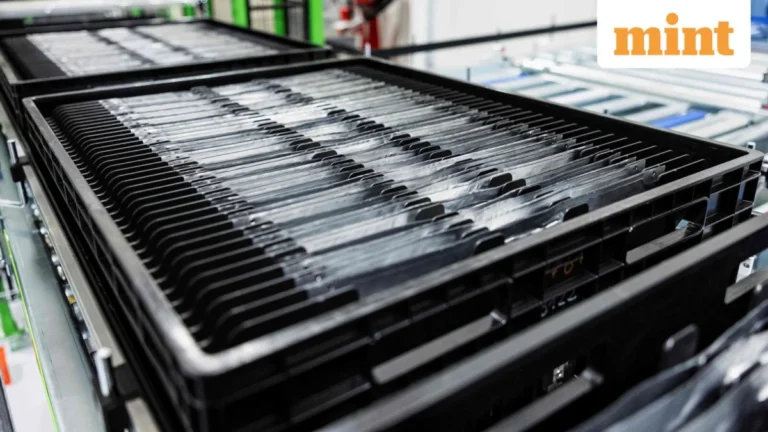
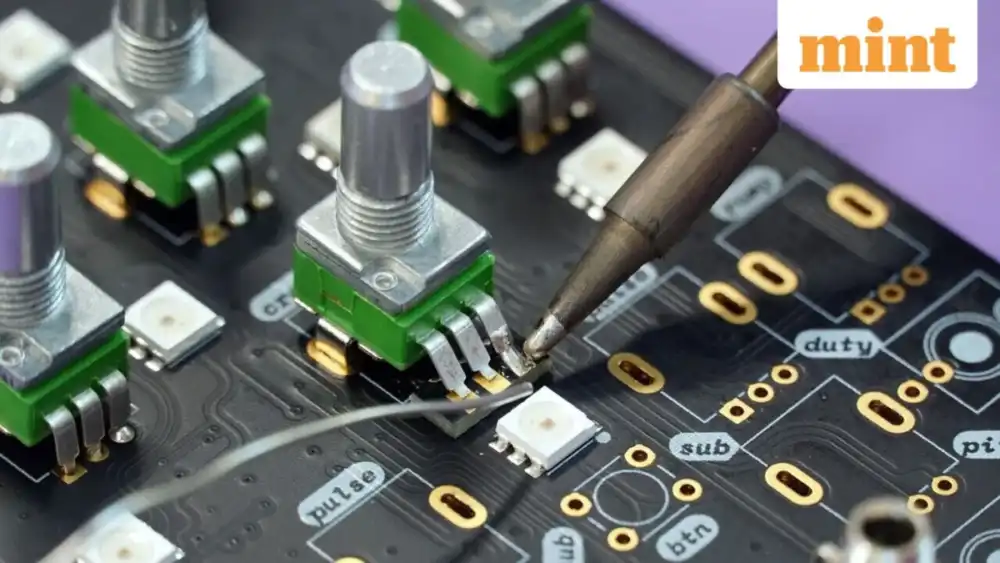
One of the most notable successes of the PLI scheme is observed in the electronics manufacturing and IT hardware sector. India has rapidly transformed into a major global hub for mobile phone production, with the scheme supporting the expansion of manufacturing capabilities for products such as laptops, tablets, and servers. This strategic intervention has led to a remarkable decline in mobile phone imports, which have fallen by nearly 77% since the financial year 2021. Concurrently, domestic production now satisfies over 99% of India’s mobile phone demand, marking a significant stride towards self-sufficiency. The growth in this sector extends beyond final assembly, with an expanded ecosystem now encompassing the localized manufacturing of printed circuit board assemblies (PCBAs), batteries, camera modules, display units, and other critical sub-assemblies, fostering a more resilient and integrated supply chain.
In the pharmaceutical sector, a global powerhouse for generics, the PLI scheme has addressed critical vulnerabilities exposed during the pandemic, particularly the reliance on imported bulk drugs (Active Pharmaceutical Ingredients – APIs). The initiative has facilitated the domestic manufacturing of 191 bulk drugs, leading to import substitution valued at approximately ₹1,785 crore. This strategic shift has not only strengthened India’s pharmaceutical supply chain resilience but also boosted domestic value addition to an impressive 83.7%. Furthermore, the indigenous production of complex biologics such as biosimilars and monoclonal antibodies, alongside advanced medical devices, enhances India’s healthcare security and positions it as a leader in specialized pharmaceutical manufacturing.
The food processing industry has also witnessed significant upliftment, with investments surpassing ₹9,200 crore reported across approved projects. Companies in this sector are actively adopting advanced packaging and processing technologies, enhancing product quality, shelf life, and market competitiveness, both domestically and internationally. This directly benefits agricultural value chains, farmers, and export potential for processed food products. Similarly, the white goods segment, encompassing air conditioners and LED lights, has initiated domestic manufacturing of previously imported critical components like compressors and LED drivers. The targeted domestic value addition for this sector is an ambitious 75-80% by 2028-29, signaling a concerted effort to reduce import dependence in consumer durables.
The scheme’s reach extends to the textile sector, promoting a strategic shift towards value-added man-made fibre (MMF) and technical textiles, which are crucial for specialized industrial applications and high-fashion apparel. In the renewable energy domain, specifically high-efficiency solar photovoltaic (PV) modules, the PLI scheme is driving the creation of 48 GW of fully integrated solar PV manufacturing capacity across two tranches. This massive undertaking is backed by substantial investment commitments of nearly ₹52,942 crore, vital for India to achieve its ambitious renewable energy targets and reduce reliance on imported solar components, largely from China.
Economists and industry experts laud the PLI framework for its forward-thinking design. Dr. Dharmveer, an assistant professor in the department of economics at Delhi School of Economics, highlights that "the PLI framework has played an important role in reducing import dependence across key sectors while simultaneously improving India’s integration into global value chains. By tying incentives to incremental production rather than upfront subsidies, the scheme creates clear performance benchmarks. This design enhances accountability and helps deliver tangible gains in output, exports and employment." This performance-centric approach differentiates the PLI from earlier industrial policies, ensuring that incentives translate directly into increased output and economic activity.
The 14 strategic sectors covered under the PLI scheme are diverse and critically important for India’s long-term economic growth. They include mobile manufacturing and specified electronic components, alongside IT hardware such as laptops, tablets, servers, and all-in-one personal computers. The pharmaceutical segment covers bulk drugs, high-value biopharmaceuticals, and medical devices. The advanced automotive technology sector focuses on components and vehicles of the future, including electric vehicles. Other key areas encompass telecom and networking products, food processing, white goods (air conditioners and LED lights), and textiles (man-made fibre apparel, MMF fabrics, and technical textiles). Further, specialty steel, high-efficiency solar photovoltaic modules, advanced chemistry cell (ACC) battery storage, and drones and drone components are also beneficiaries, indicating a comprehensive strategy to bolster manufacturing across emerging and traditional industries.
The successful implementation of the PLI scheme is already generating significant ripple effects across the Indian economy. It is fostering an environment conducive to higher capital expenditure, technological upgrades, and skill development, which are essential for sustained economic growth. The reduction in import dependence in critical sectors not only strengthens the nation’s economic resilience but also contributes positively to the trade balance. Furthermore, by attracting global players and encouraging domestic champions, the scheme is enhancing India’s overall manufacturing competitiveness on the international stage, transforming the "Make in India" vision into a tangible reality for the global market. While the initial results are promising, the long-term success will also depend on complementary reforms in areas such as logistics, land acquisition, labor laws, and ease of doing business, ensuring that India remains an attractive destination for manufacturing investment well into the future.