A profound, yet often unseen, crisis is unfolding across India’s agricultural landscape, threatening both national food security and the long-term health of its population. Beneath the fertile topsoil, decades of imbalanced nutrient application and systemic economic distortions have led to widespread soil depletion, diminishing the nutritional value of staple crops and trapping millions of farmers in a cycle of diminishing returns. This phenomenon, often termed "invisible hunger," refers to the widespread micronutrient deficiencies in human populations resulting from crops grown in nutrient-poor soils, even when calorie intake is sufficient. For India, a nation where agriculture employs nearly half its workforce and contributes approximately 15% to its Gross Domestic Product (GDP), this environmental and economic challenge demands urgent, comprehensive reform.
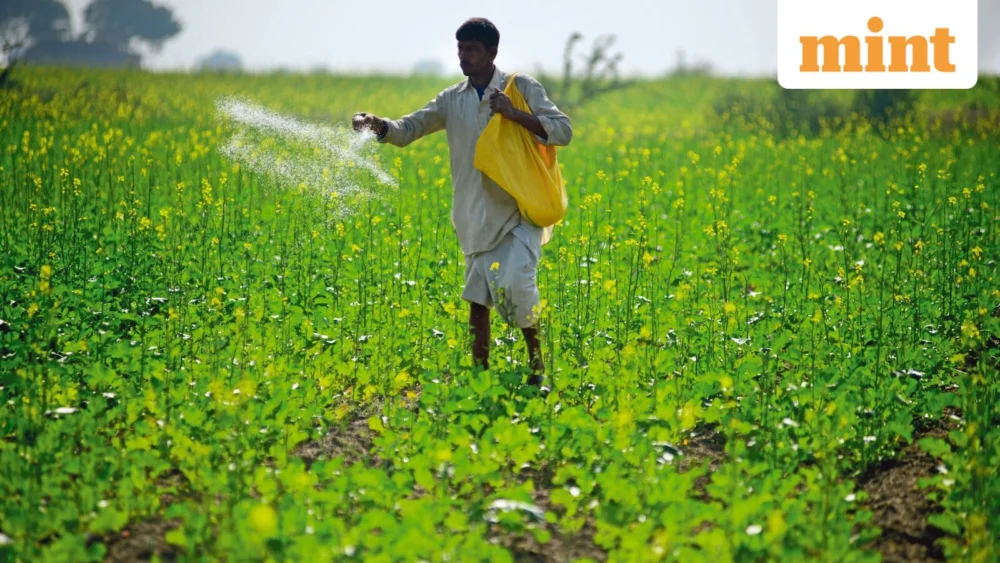
The core of the problem lies in a complex interplay of economic necessity, policy incentives, and ecological degradation. Farmers, many operating small landholdings, face immense pressure to maximize yields in the face of low crop prices and increasing climate variability. With limited surplus to invest in long-term soil health measures, they often resort to readily available and heavily subsidized chemical fertilizers, particularly urea. This short-term solution, however, creates a vicious cycle: over-reliance on urea, often applied without precise knowledge of soil parameters, leads to an imbalance of nutrients, further degrading soil fertility and necessitating even greater fertilizer use for equivalent yields. A recent internal survey by an Indian fertilizer manufacturer highlighted a stark sentiment among older farmers: a pervasive feeling that they are bequeathing a diminished asset to the next generation, a plot of land less productive and healthy than they inherited.

The fiscal burden of India’s fertilizer subsidy program is staggering. In the financial year 2025-26, the federal government’s fertilizer subsidy bill is projected to reach an estimated ₹1.9 trillion (approximately $23 billion USD). This figure dwarfs the entire budget allocated for the agriculture, livestock, and fisheries sectors combined, which stands at ₹1.5 trillion. A disproportionate ₹1.3 trillion is earmarked solely for urea subsidies, a policy decision that severely constrains public investment in other critical areas such as agricultural research and development, modern irrigation infrastructure, farmer insurance, and market price support mechanisms. This fiscal imbalance underscores a significant opportunity cost, diverting funds that could otherwise drive innovation, enhance resilience, and diversify the agricultural economy.
India’s acute dependence on imported fertilizers exacerbates this financial vulnerability. The nation relies on imports for roughly 75% of its urea, 90% of its diammonium phosphate (DAP), and 100% of its potash requirements. This dependency makes the domestic market highly susceptible to global price volatility, as vividly demonstrated in 2022-23 following Russia’s invasion of Ukraine. During that period, a surge in global energy and fertilizer prices forced India’s subsidy bill to a record high of over ₹2.5 trillion, eclipsing the entire agriculture sector budget of ₹1.25 trillion for the same year. This illustrates how geopolitical events can translate directly into domestic fiscal strain, compelling the government to absorb international price shocks to shield farmers, often at the expense of other developmental priorities.
The environmental ramifications of imbalanced fertilizer use are equally concerning. With urea prices remaining largely unchanged for nearly two decades due to heavy subsidies (where approximately 90% of the retail price is subsidized), farmers are incentivized to over-apply this nitrogen-rich nutrient while underutilizing more expensive but equally essential macro and micronutrients. This leads to a severe reduction in nitrogen use efficiency (NUE), which, according to experts like Avinash Kishore, a senior fellow at IFPRI, can be as low as 40% for applied urea. The unabsorbed excess nitrogen is not merely wasted; it leaches into groundwater, contaminating vital water sources, and is released into the atmosphere as nitrous oxide (N₂O). Nitrous oxide is a potent greenhouse gas, possessing a global warming potential 272 times that of carbon dioxide over a 100-year period, contributing significantly to climate change. India’s Niti Aayog reported in 2026 that agricultural soil emissions constitute over a fifth of all greenhouse gas emissions from agriculture in the country, with these emissions rising by approximately 7% between 2011 and 2019, mirroring the 10% increase in nitrogenous fertilizer consumption during the same period.

On the ground, the consequences are tangible. Farmers like Ashok Danoda from Haryana, cultivating three acres, routinely apply 30% more urea than recommended for his wheat crop, often without any knowledge of his soil’s specific nutrient deficiencies. Despite government initiatives like the Soil Health Card Scheme, designed to provide farmers with tailored nutrient recommendations, implementation has been inconsistent, with sample results often extrapolated broadly rather than providing precise, individualized data. This lack of granular information, coupled with the affordability of urea, perpetuates practices that degrade soil health. Research by the Delhi-based think tank ICRIER indicates that only about a quarter of Indian soils possess sufficient soil organic carbon (SOC), a critical indicator of soil structure, microbial activity, and nutrient retention capacity. Indian soils also suffer from widespread deficiencies in crucial micronutrients such as sulfur, iron, zinc, and boron, directly impacting crop quality and, consequently, human nutrition. The ICRIER study alarmingly notes that despite the overuse of nitrogenous fertilizers, over 90% of Indian soils remain deficient in nitrogen, primarily because low organic carbon reduces the soil’s ability to retain and make available applied nutrients.
Attempts at reform have faced significant political hurdles. Governments have historically been wary of increasing urea retail prices, fearing backlash from the powerful farmer lobby and being labeled "anti-farmer." This political inertia has allowed the subsidy regime to persist, despite its growing economic and ecological costs. Even technological innovations intended to reduce reliance on traditional urea have faltered. For instance, the nano urea product launched in 2021 by Iffco, a major fertilizer cooperative, promised self-sufficiency and significant subsidy savings. Marketed as an "innovation of the century," a 500-ml bottle was claimed to be as effective as a 45-kg bag of granular urea. However, widespread adoption was hampered by farmer skepticism, efficacy concerns (a 2024 Punjab Agricultural University study reported significant yield drops in rice and wheat with nano urea use), and allegations of forced sales, with farmers often compelled to purchase nano urea alongside traditional bags. The projected annual subsidy saving of ₹20,000 crore from a 25% replacement of granular urea never materialized, and fertilizer subsidies continued their upward trajectory.
The Economic Survey released recently offers a potential path forward, recommending a modest increase in the retail price of urea, coupled with a direct transfer of an equivalent amount to farmers’ accounts on a per-acre basis. This direct benefit transfer (DBT) approach aims to empower farmers by providing cash that can be used to purchase a balanced array of nutrients, incentivizing judicious use and reducing the appeal of cheap, imbalanced urea. However, implementing such a system effectively presents its own challenges, including ensuring the reliability of cash transfers, indexing them to inflation, and crucially, finding a mechanism to reach the vast numbers of informal tenant farmers who cultivate land but may not be recognized in official land records.

Experts advocate for a multi-pronged approach. Suresh Kumar Chaudhari, Director General of the Fertilizer Association of India (FAI), emphasizes the need for a gradual increase in urea prices alongside robust farmer awareness campaigns and advisories on soil nutrient balance. He also highlights the perverse incentives created by existing agricultural policies, particularly the assured purchases at Minimum Support Price (MSP) for cereals like rice and wheat. This encourages monoculture and a higher demand for fertilizers, even when farmers could diversify into less fertilizer-intensive crops like pulses and oilseeds if market dynamics were more favorable. Encouraging natural farming practices, which focus on improving soil organic matter and reducing chemical inputs, is another vital component in restoring soil health.
Ultimately, addressing India’s invisible hunger and its spiraling fertilizer subsidy crisis requires a paradigm shift. As the late Rattan Lal, 2020 World Food Prize Laureate, eloquently stated, "I believe soil is a living thing. The health of soil, plants, animals, people and the environment is one and indivisible. If soils are not restored, crops will fail even if rains do not…and humanity will suffer even with great scientific strides." This profound insight underscores the urgency: without fundamental reforms that rationalize fertilizer use, promote soil health, and empower farmers with both knowledge and equitable economic incentives, India risks jeopardizing its agricultural future, the nutritional well-being of its population, and its broader environmental sustainability goals. The path forward demands political courage, technological innovation, and a holistic vision that prioritizes the long-term vitality of the very foundation of its food system: the soil.