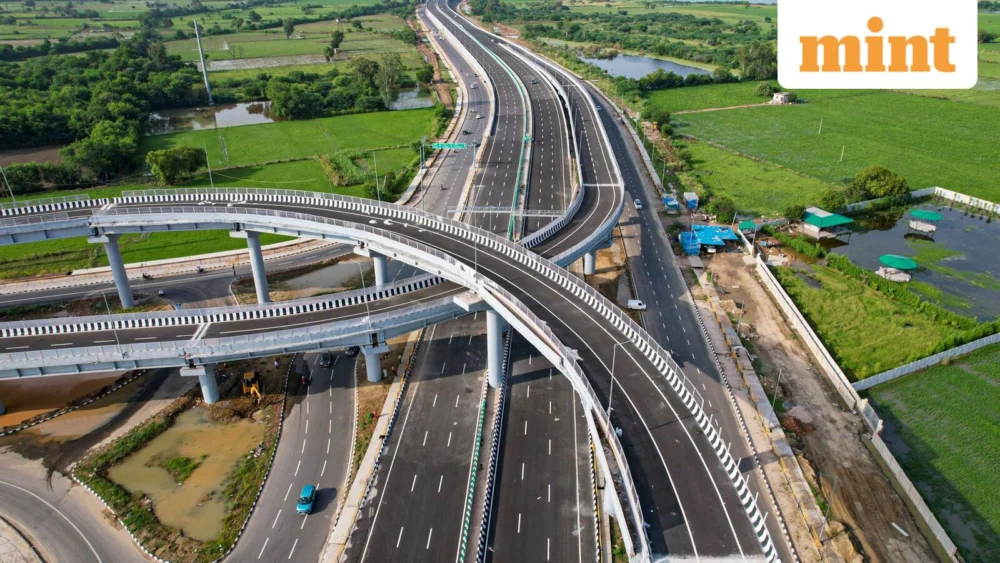
After nearly a decade of cautious retreat from projects carrying significant construction and demand risks, major global fund houses and private equity firms are demonstrably re-engaging with greenfield Build-Operate-Transfer (BOT) highway projects across India. This strategic pivot marks a crucial evolution in infrastructure financing, signaling a renewed appetite for risk-adjusted returns within one of the world’s most ambitious infrastructure development programs. The shift is not merely cyclical; it is underpinned by a confluence of structural reforms, robust economic fundamentals, and evolving market dynamics that are fundamentally altering the risk-reward calculus for long-term capital.
For much of the 2010s, greenfield BOT projects, particularly in the road sector, became synonymous with financial stress and investor disillusionment. The BOT model, where private entities develop, operate, and then transfer ownership of infrastructure assets to the government after a concession period (typically 20-30 years, during which they recover costs via user tolls), was once the bedrock of India’s highway expansion. Between 2007 and 2014, it dominated contract awards, accounting for as much as 96% of new projects in fiscal year 2011-12. However, this period was also characterized by aggressive bidding, often based on overly optimistic traffic projections, coupled with protracted challenges in land acquisition, environmental clearances, and a cumbersome dispute resolution mechanism. Many projects faced liquidity crises, leading to delays, cost overruns, and eventual non-performing assets for lenders. This environment drove institutional investors, particularly those with a strong fiduciary duty to manage capital prudently, towards less risky avenues such as the Hybrid Annuity Model (HAM), where the government provides substantial de-risking through upfront grants and annuity payments, or the Toll-Operate-Transfer (TOT) bundles for operational assets, and the burgeoning Infrastructure Investment Trusts (InvITs) which offer stable, yield-generating income streams. Indeed, in fiscal years 2019, 2020, 2024, and 2025, BOT projects virtually disappeared from the National Highways Authority of India (NHAI) awards roster, underscoring the severity of the capital flight.
The current resurgence of interest is primarily a response to a comprehensive recalibration of the underlying framework for these projects. The Ministry of Road Transport and Highways, in conjunction with the NHAI, has embarked on a significant overhaul of the Model Concession Agreement (MCA). These proposed revisions are designed to address the systemic imbalances in risk allocation that previously deterred sophisticated financial sponsors. Key changes under discussion include a more equitable sharing of risks related to force majeure events and changes in law, which can significantly impact project viability. Furthermore, efforts are underway to institute faster, more transparent, and predictable dispute resolution mechanisms, moving away from protracted litigation. Enhanced transparency in traffic data provided to bidders, along with more predictable premium payment structures and streamlined processes for equity exits, are also pivotal reforms aimed at boosting investor confidence and reducing the perceived information asymmetry and operational hurdles. The overarching intent is to transform BOT from a high-risk, speculative venture into a structured, long-term infrastructure investment.

Beyond policy adjustments, compelling macroeconomic and market forces are driving this renewed engagement. India’s sustained economic expansion, consistently among the fastest-growing major economies, provides a robust backdrop for infrastructure investment. This growth directly translates into increased commercial freight movement and passenger traffic, which are the lifeblood of toll-based road projects. According to industry experts like Zafar Khan, Joint CEO of Vertis Infrastructure Trust, average traffic growth on operational corridors has comfortably exceeded 5% over the past year, fueled by escalating economic activity and an expanding road network. More notably, newer access-controlled expressways are witnessing even stronger traffic growth rates, often in the range of 10-15%, offering compelling long-term revenue visibility. This robust demand profile significantly mitigates one of the primary historical risks associated with BOT projects – traffic shortfalls. The expansion of industrial corridors, logistics hubs, and urban centers further reinforces the predictability of future traffic volumes, allowing for more conservative yet attractive revenue projections.
Simultaneously, the competitive landscape for operational infrastructure assets has intensified, leading to what market participants term "yield compression." The influx of capital from pension funds, sovereign wealth funds, and global asset managers into de-risked brownfield assets and TOT bundles has driven down equity Internal Rates of Return (IRRs) in these segments. Where mature InvIT assets might offer yields of 9-11% and high-grade corporate bonds 7-8%, the diminishing returns from these traditional safe havens are pushing investors further up the risk curve in search of higher yields. This environment makes the projected equity IRRs of 14-16% for well-structured greenfield BOT projects, even under conservative traffic assumptions, increasingly attractive. This premium is deemed a fair compensation for the inherent construction and demand risks, offering a compelling proposition for patient capital seeking double-digit cash yields in steady-state operational years.
A significant paradigm shift is the enabling of direct participation by financial investors in project bidding. Historically, developers and EPC (Engineering, Procurement, and Construction) companies often led bids, sometimes with aggressive financial structuring that prioritized winning the contract over long-term project viability. The revised framework is expected to allow financial sponsors to partner directly with EPC companies, enabling a more disciplined and financially sound underwriting process from the outset. As Bhavik Vora, Partner and Transport and Logistics Industry Leader at Grant Thornton Bharat, highlights, infrastructure investment platforms such as Brookfield, I Squared Capital, the National Investment and Infrastructure Fund (NIIF), and Edelweiss have already demonstrated their capacity to deploy substantial capital across various transport and logistics assets. By opening greenfield BOT projects to these fund houses, the government is poised to significantly expand the universe of potential bidders and diversify the sources of private capital. Institutional investors bring not only patient, long-duration capital but also sophisticated governance standards, robust risk management frameworks, and a long-term asset management approach, all of which are critical for strengthening project oversight from conception through construction and operation. This direct involvement allows fund managers to shape the capital structure and risk allocation from the ground up, rather than inheriting legacy issues, ultimately capturing better lifecycle returns.
The global experience with infrastructure financing offers valuable precedents for India’s evolving BOT model. In mature markets like Australia and Canada, pension-backed funds and superannuation funds have long been direct investors in toll roads and other transport assets, frequently partnering with contractors during the development phase and later recycling these assets into listed trusts or other yield-generating platforms. Global asset managers, such as the Macquarie Group, have pioneered an "originate-to-own" or "build-to-core" strategy, investing across the entire infrastructure lifecycle – from greenfield development and construction to operations and eventual monetization into yield platforms. The key lessons from these international models emphasize the critical importance of disciplined underwriting, the use of conservative traffic assumptions, and the deployment of long-duration capital within a balanced risk allocation framework. India’s revised MCA framework aims to replicate this equilibrium, fostering an environment where greenfield exposure is not just viable but strategically attractive.

The implications of this calibrated BOT comeback are profound for India’s ambitious infrastructure agenda. For the government, greater institutional participation in BOT projects significantly reduces the upfront fiscal pressure, allowing public funds to be reallocated to social sectors or other critical infrastructure areas that may not immediately attract private capital. This "crowding in" of private investment is crucial for sustaining the pace of highway expansion, especially given the monumental targets outlined in initiatives like the National Infrastructure Pipeline, which envisages investments exceeding $1.4 trillion across various sectors. Furthermore, the involvement of sophisticated financial sponsors and global EPC players can bring enhanced efficiency, innovative technologies, and best practices in project management, contributing to higher quality infrastructure and faster project delivery. This, in turn, boosts regional connectivity, reduces logistics costs, enhances supply chain efficiencies, and ultimately fuels economic competitiveness and job creation across the nation.
While the momentum for BOT appears strong, it is a calibrated re-emergence, not an unbridled return to the past. The HAM model will likely remain a stability anchor for projects where demand risk is higher or government support is critical, and TOT and InvIT routes will continue to attract yield-seeking capital for operational assets. BOT is now positioned as the higher-risk, higher-return component within a diversified infrastructure ecosystem. The government’s expectation to award approximately a quarter of the ₹3 trillion to ₹3.5 trillion worth of projects lined up for fiscal year 2027 under the BOT route underscores its strategic importance. However, sustained commitment to reforms, vigilant oversight to prevent the return of aggressive bidding practices, and robust implementation of the revised MCA provisions will be paramount. In essence, BOT is not merely making a comeback; it is being re-engineered as a structured, sophisticated, and long-term infrastructure play, essential for propelling India’s growth trajectory forward into the next decade.