India’s vibrant digital entertainment landscape, characterized by an unprecedented surge in mobile internet consumption, is witnessing a pivotal strategic shift among providers of micro-drama content. These short-form, vertical video narratives, designed for quick, immersive viewing, are increasingly turning to aggregation models—a strategy previously instrumental in scaling long-form Over-The-Top (OTT) platforms—to overcome fragmentation and enhance user discovery in a fiercely competitive market. The move signals a maturation of the micro-drama segment, transforming it from a niche, experimental format into a potentially mainstream component of India’s vast digital economy.
The proliferation of affordable smartphones and low-cost data plans has ignited a digital revolution across India, creating one of the world’s largest and most engaged mobile-first audiences. With hundreds of millions of internet users, the demand for "snackable" content—entertainment that can be consumed quickly and conveniently, often during commutes or short breaks—has soared. Micro-dramas, typically comprising episodes lasting just a few minutes, perfectly cater to this consumption pattern, offering compelling narratives without requiring significant time commitment. However, this burgeoning market, rich in linguistic diversity and cultural nuances, has also led to a fragmented ecosystem where numerous standalone applications compete for limited user attention, making content discovery a significant bottleneck for growth.
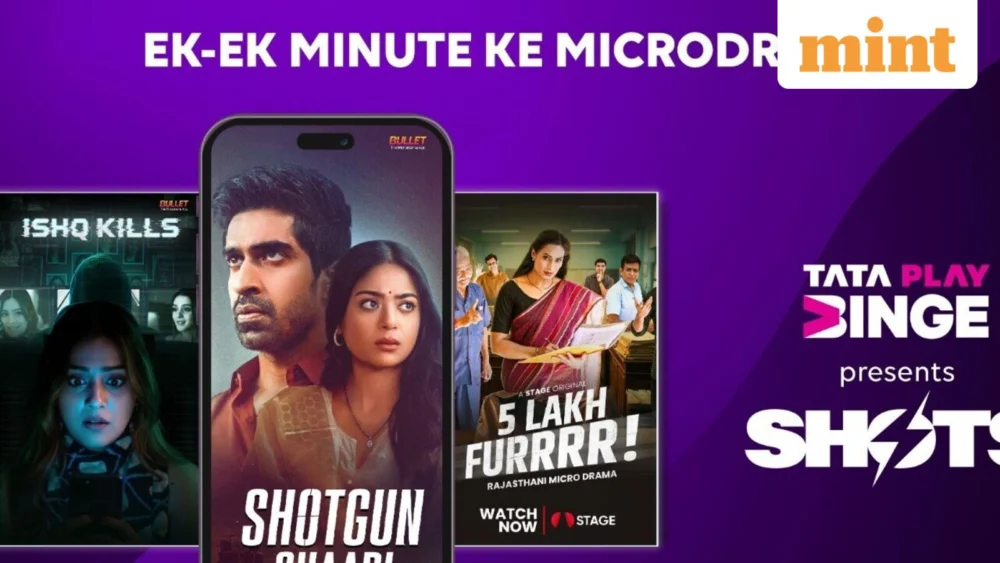
Recognizing this challenge, major players are beginning to build aggregation layers, much like how telecom operators and multi-content platforms bundled long-form OTT services to simplify access and drive subscriptions. Tata Play Binge, a prominent content aggregator, recently launched "Shots," a dedicated category featuring curated, mobile-only, vertical micro-dramas. This initiative allows its subscribers to access content from multiple micro-drama providers within a single interface, signaling a concerted effort to streamline the user experience and improve content visibility. This strategic pivot mirrors the journey of long-form OTT platforms, which found exponential growth by being bundled with internet service providers or offered through consolidated apps, effectively lowering the barrier to entry for millions of Indian consumers.

Industry experts underscore that while the underlying aggregation model draws parallels with long-form OTT, the usage dynamics for micro-dramas are fundamentally distinct. Pallavi Puri, Chief Commercial and Content Officer at Tata Play, highlights that micro-dramas thrive on rapid, repeat viewing and algorithm-led discovery, contrasting with the planned, immersive sessions typically associated with feature films or series. This necessitates a "lighter, faster product experience" within the aggregation framework, where intuitive navigation and instant access are paramount. The initial integration of platforms like Bullet and Stage, offering a mix of Hindi and regional micro-dramas, has yielded promising results, paving the way for further integrations throughout the fiscal year 2026 to broaden content choice and deepen engagement.
Globally, the micro-drama phenomenon, often originating from short-video platforms, has largely developed within siloed, platform-specific ecosystems. India, with its unparalleled linguistic diversity and varied content consumption habits, presents an even more complex environment. Any successful aggregation effort must contend with the challenge of curating content across over 22 official languages and numerous regional dialects, ensuring not just discoverability but also cultural relevance and consistent quality. Monetization expectations, ranging from advertising video-on-demand (AVoD) to subscription video-on-demand (SVoD) and hybrid models, further complicate the landscape, demanding flexible and adaptable pricing strategies.
For content creators like Bullet, aggregation offers a crucial avenue for enhanced visibility, brand building, and incremental AVoD revenue. Azim Lalani, co-founder and chief business officer at Bullet, notes that by making six-month-old titles available on aggregator platforms, they aim to allow users to sample their library and eventually migrate to their standalone service for premium or newer content. This tiered approach could foster a robust ecosystem where aggregators serve as discovery engines, while individual platforms retain the ability to cultivate dedicated subscriber bases for exclusive offerings. Lalani suggests that subscription-led partnerships for newer shows could be a future evolution of this model, enabling more predictable revenue streams.
The efficacy of aggregation, however, hinges on a strict adherence to the micro-drama format’s core principles. Anshita Kulshrestha, founder of TukTuki Entertainments, cautions that simply stacking large content libraries, akin to traditional OTT, would dilute the unique experience of micro-dramas. The format demands "strong discipline around short episode lengths, sharp storytelling, and vertical, mobile-first viewing." She emphasizes that micro-drama consumption is often instinctive and moment-led, with audiences making swift decisions to engage or swipe away. Therefore, technology, particularly AI-led recommendations, sophisticated audience segmentation, and rapid feedback loops, becomes critical in ensuring the right story reaches the right viewer at the opportune moment, maximizing discovery and retention.

Many industry observers view aggregation as an inflection point for micro-dramas, akin to its transformative impact on long-form OTT platforms. Nahush Gulawani, co-founder of Wit & Chai Group, posits that this shift, particularly with major players like Tata Play stepping in, moves the format from an experimental stage to an ecosystem-led growth trajectory. Once effective discovery mechanisms are established, scale is expected to follow organically. However, significant structural challenges persist. Ankush Sachdeva, CEO and co-founder of ShareChat & Moj, points to the need for content differentiation beyond conventional melodrama, addressing fragmented platforms, catering to price-sensitive audiences, managing multilingual production complexities, and achieving monetization at scale. Success, he argues, will ultimately depend on strong curation, deeply resonant local storytelling, sustainable revenue models, and a discovery-driven rather than purely volume-led expansion strategy.
Looking ahead, the evolution of micro-drama aggregation in India will likely involve closer collaboration between content creators, technology platforms, and telecom operators. The potential to integrate interactive elements, foster user-generated content, and leverage advanced data analytics for hyper-personalization remains largely untapped. As India continues its trajectory as a global digital powerhouse, the ability of micro-drama platforms to effectively aggregate, curate, and monetize their content will not only determine their individual success but also shape a significant segment of the nation’s burgeoning digital entertainment economy, offering a compelling case study for other emerging markets grappling with similar challenges of content overload and discovery.