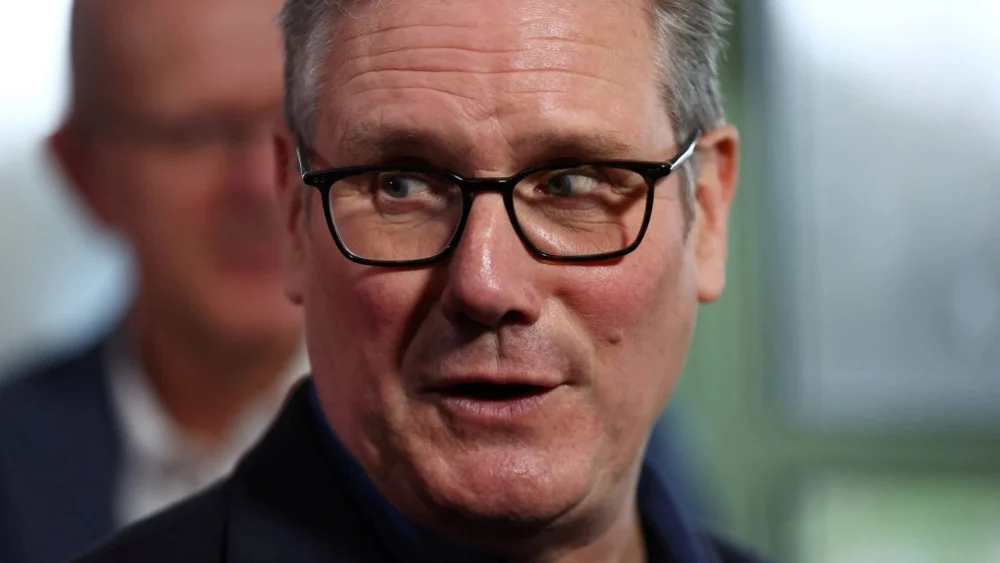
In the wake of shifting global power dynamics and the persistent threat of geopolitical instability, British Prime Minister Keir Starmer has signaled a profound shift in the United Kingdom’s foreign policy, advocating for a fundamental "remaking" of the Western alliance. This vision, articulated against a backdrop of the ongoing conflict in Ukraine, the rise of an assertive China, and the economic aftershocks of a post-pandemic world, suggests that the traditional pillars of Western cooperation require more than mere maintenance; they necessitate a comprehensive structural overhaul. For Starmer, the objective is to transition the UK from a period of perceived isolation toward a role as a central "connector" within a modernized network of democratic nations, blending traditional defense commitments with a new era of "securonomics."
The cornerstone of this proposed transformation lies in a renewed and expanded commitment to NATO. While the UK has historically been one of the alliance’s most significant contributors, Starmer’s administration is pushing for a recalibration of how European security is funded and managed. The Prime Minister has committed the UK to a path toward spending 2.5% of its Gross Domestic Product (GDP) on defense, a figure that exceeds the current 2% target set by many NATO members. This is not merely a budgetary increase but a strategic signal to both allies and adversaries. In 2023, only 11 of the 31 NATO members met the 2% threshold; by advocating for a higher baseline, the UK is positioning itself as a leader in European security, urging neighbors like Germany and France to accelerate their own "Zeitenwende" or historic turning points in defense policy.
However, the "remaking" of the alliance extends far beyond military hardware and troop deployments. At the heart of Starmer’s strategy is the concept of "progressive realism"—a foreign policy framework that acknowledges the world as it is, rather than as leaders wish it to be. This approach prioritizes the protection of national interests and global stability through pragmatic partnerships. Central to this is the "reset" of the relationship between the United Kingdom and the European Union. After years of post-Brexit friction, the Starmer government is seeking a security pact with Brussels that would formalize cooperation on everything from illegal migration and energy security to intelligence sharing. This is not a move to rejoin the Single Market or the Customs Union, but rather an effort to reduce trade barriers and harmonize standards in a way that bolsters collective Western resilience against economic coercion.
From an economic perspective, the drive to remake Western alliances is inextricably linked to the concept of "securonomics," a term popularized by Chancellor of the Exchequer Rachel Reeves. This doctrine posits that national security and economic security are two sides of the same coin. In an era where supply chains can be weaponized—as seen with European dependence on Russian gas or global reliance on Taiwanese semiconductors—the Western alliance must move toward "friend-shoring." This involves shifting critical supply chains to allied nations to mitigate the risks of disruption from hostile actors. For the UK, this means deepening ties within the AUKUS framework (Australia, the UK, and the US) not just for nuclear submarine technology, but for quantum computing, artificial intelligence, and cyber defense.
The economic stakes of this strategic pivot are significant. The UK remains the world’s sixth-largest economy, but it has struggled with sluggish productivity and low business investment since the 2016 referendum. By stabilizing its relationship with the EU—which still accounts for roughly 47% of total UK exports—and strengthening ties with the G7, the government hopes to create a more predictable environment for foreign direct investment (FDI). Market analysts suggest that a more integrated security and trade posture could help narrow the "uncertainty premium" that has dogged British assets for nearly a decade. If the Western alliance is successfully remade to include more robust economic safeguards, it could lead to a more synchronized regulatory environment, benefiting sectors ranging from aerospace to green finance.
Global comparisons illustrate the urgency of Starmer’s call. The United States, under both the Biden administration and during the previous Trump era, has moved toward a more protectionist "America First" or "worker-centric" trade policy. This shift has left many European allies concerned about the reliability of the Transatlantic partnership. By calling for the alliance to be remade, Starmer is essentially proposing a more balanced burden-sharing arrangement where Europe takes greater responsibility for its own neighborhood, thereby ensuring that the US remains engaged in the Euro-Atlantic theater while it simultaneously pivots toward the Indo-Pacific. This "European pillar" within NATO is seen as essential for the long-term viability of the alliance, regardless of the political winds in Washington D.C.
Furthermore, the Prime Minister’s vision incorporates a "Clean Energy Alliance" intended to decouple Western economies from fossil fuel dependencies that often empower autocratic regimes. The UK’s commitment to becoming a "clean energy superpower" by 2030 is not just an environmental goal but a core component of its national security strategy. By investing in offshore wind, nuclear, and hydrogen technology, and by coordinating these efforts with G7 partners, the UK aims to lead a Western transition that undermines the leverage of petrostates. The economic impact of this transition is estimated to require hundreds of billions in private capital, making international cooperation on green subsidies and carbon border adjustment mechanisms a diplomatic priority.
The challenges to this ambitious agenda are, however, formidable. Domestically, the UK faces a strained fiscal landscape, with a debt-to-GDP ratio hovering near 100%. Finding the "fiscal space" to increase defense spending to 2.5% while simultaneously investing in public services and the green transition will require delicate political maneuvering. Internationally, the "remaking" of alliances requires consensus among nations with divergent interests. France’s vision of "strategic autonomy" often clashes with the more NATO-centric views of Eastern European nations like Poland and the Baltics. Bridging these gaps while maintaining a unified front against Russian aggression in Ukraine remains a Herculean task for British diplomacy.
Moreover, the rise of the BRICS+ bloc (Brazil, Russia, India, China, South Africa, and newly joined members) presents a competing pole of global influence. As these nations seek to create alternative financial systems and trade routes, the Western alliance must demonstrate that its "remade" version is not an exclusive club of the wealthy, but a functional partnership that offers tangible benefits to the "Global South." Starmer has hinted at a more respectful and transactional engagement with these emerging powers, moving away from the "lecturing" tone that has sometimes characterized Western diplomacy in the past.
The integration of technology into this new alliance structure is perhaps the most forward-looking aspect of the Prime Minister’s proposal. The rapid advancement of generative AI and autonomous systems has fundamentally altered the nature of modern warfare and economic competition. Starmer’s call for a remade alliance includes the establishment of shared ethical standards and technical protocols for AI, ensuring that the West maintains a qualitative edge over authoritarian models of technological surveillance. This involves not only state-to-state cooperation but also deeper integration with the private sector, where much of this innovation resides.
In conclusion, Keir Starmer’s call to remake the Western alliance represents a high-stakes gamble on the future of multilateralism. It is an acknowledgment that the post-1945 order is no longer sufficient to meet the complexities of the 21st century. By weaving together defense, trade, energy, and technology into a single strategic tapestry, the UK is attempting to redefine its global relevance. Success will depend on the government’s ability to deliver economic growth at home while navigating an increasingly fractured international landscape. If successful, this "remaking" could provide the stability needed for a new era of democratic prosperity; if it fails, the West risks a fragmented future where individual nations are left to navigate the storms of the 21st century alone. The coming years will determine whether this vision of a revitalized Atlantic and European partnership is a realistic blueprint or a nostalgic hope for a unity that has already passed.