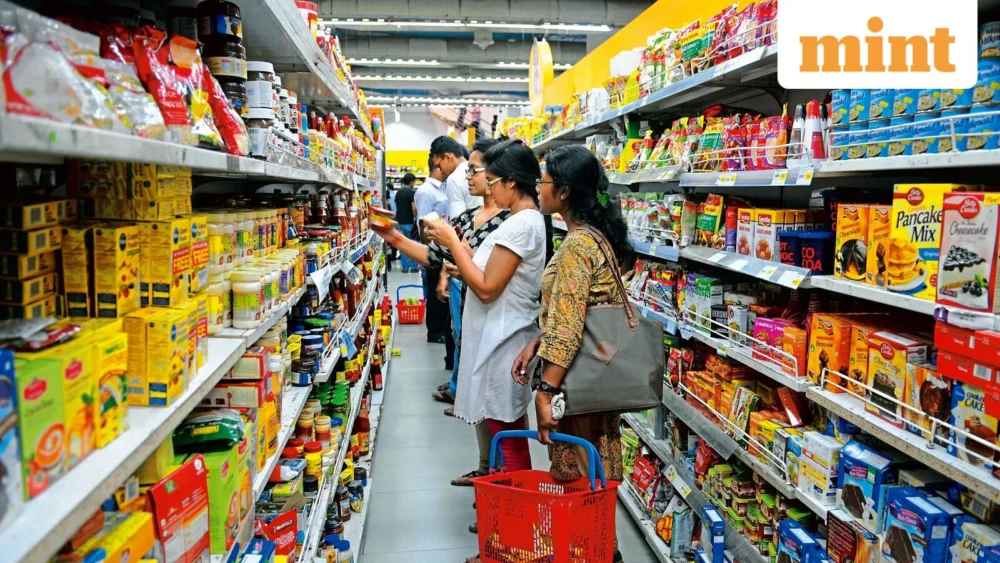
India’s fast-moving consumer goods (FMCG) sector, a pivotal barometer for the nation’s economic health and consumer sentiment, has recently navigated a period of significant policy-induced volatility. The implementation of Goods and Services Tax (GST) rate rationalization, dubbed "GST 2.0," alongside new labour codes, presented both immediate challenges and a promising long-term outlook for major industry players. While the initial quarter following these reforms witnessed operational friction and mixed financial results, industry leaders are increasingly optimistic about sustained recovery and growth driven by enhanced affordability and market formalization.
The sweeping GST reforms, enacted just prior to the December quarter, represented a strategic move by the government to stimulate domestic consumption. These revisions notably reclassified over 375 items, shifting approximately 90% of goods from the highest 28% tax bracket down to 18%, and downgrading many items previously taxed at 12% to a more accessible 5%. The primary expectation was that these substantial indirect tax cuts would translate into lower retail prices, encouraging consumers to increase spending, potentially fostering a shift towards premium products and facilitating the transition from unbranded to branded goods, particularly in segments like consumer electronics and automobiles. While some big-ticket purchases did experience an immediate uplift, the broader consumption uptick across the essential consumer goods landscape proved more elusive in the short term.
For FMCG behemoths, the immediate aftermath of the GST rate cuts was characterized by considerable transitional turbulence. Companies faced the complex task of adjusting pricing strategies, recalibrating supply chain logistics, and managing inventory cycles that now had to reflect the new tax structure. This period of recalibration led to temporary disruptions in sales and distribution channels, as retailers and consumers alike grappled with the implications of the revised pricing. Sunil D’Souza, Managing Director and CEO of Tata Consumer Products, articulated this sentiment, noting that an overnight shift in demand, particularly for staples, was unrealistic. The inherent inertia in consumer purchasing habits, coupled with the time required for price reductions to fully permeate the market and for consumers to perceive these benefits, contributed to a slower-than-anticipated demand surge.
Moreover, the actual monetary savings for the average middle-class consumer on individual FMCG items, despite significant percentage cuts in GST rates, often translated to relatively small absolute amounts. Anil Kumar, CEO of Redseer Strategy Consultants, highlighted that these marginal savings were often insufficient to materially alter purchasing behaviour for everyday necessities. This observation underscores a key economic principle: the elasticity of demand for staples is typically low, meaning price changes have a less dramatic impact on consumption volumes compared to discretionary goods. Consequently, the intended boost in consumption, especially among price-sensitive segments, did not immediately materialize as expected.

The financial performance of FMCG companies during this transition quarter reflected these challenges. Revenue growth for the sector generally ranged from a modest 2-6% for some players, though outliers achieved up to 27%, indicating a highly segmented market response. A notable impact was observed on companies’ margin profiles. For instance, Colgate Palmolive, with nearly 90% of its product portfolio affected by the GST reduction, saw its EBITDA margin contract to 30% from 31.1% in the prior year. This margin compression was a direct consequence of companies passing on the tax benefits to consumers, either through price reductions or increased grammage at popular price points (e.g., ₹5 and ₹10 packs), coupled with persistent input cost pressures and the one-time provisions related to the new labour codes. Marico similarly reported a 234 basis points year-on-year decline in EBITDA margin to 16.7%, primarily due to escalating input costs.
Despite the short-term headwinds, a prevailing sense of optimism permeates the sector regarding the medium to long-term outlook. Industry executives largely view the GST rationalization as a transformative policy with significant structural tailwinds. Saugata Gupta, Managing Director and CEO of Marico, emphasized that easing absolute consumer prices, driven by the GST cuts, would gradually support a recovery in volume growth. He highlighted the particular benefit for categories like personal care, where rates shifted from 18% to 5%, significantly enhancing product affordability for a wider consumer base. This increased affordability is expected to not only stimulate demand but also accelerate the formalization of the economy, as branded products become more competitive against unbranded or informal alternatives. The shift towards packaged foods, driven by aspirations for hygiene and quality, is another structural trend expected to gain momentum, allowing companies like Marico to target sustained double-digit growth.
Rakshit Hargave, CEO of Britannia Ltd., while acknowledging the temporary dip in demand during October due to the GST transition, confirmed that subsequent months saw routine business based on sellout and consumption. Britannia strategically passed on tax benefits by increasing grammage at key price points, a move aimed at driving volume growth and market share. However, the market experienced some "flux" due to inconsistent adoption of these changes by all players, leading to temporary dual pricing issues. Nonetheless, Hargave lauded the GST reduction as a "very good move," expressing confidence in its long-term benefits for consumers and the industry.
Beyond the tax reforms, several other dynamics shaped the sector’s performance. Volume growth, a critical indicator of underlying demand, varied from 3% to mid-teens across different companies during the reporting quarter. Tata Consumer Products, for instance, reported a robust 15% underlying volume growth in its India branded business, while Dabur also noted healthy volume-led expansion. For companies like ITC, volume trajectory remains a key monitorable, particularly given the impact of excise duty hikes on cigarette demand. Mohit Malhotra, Dabur’s CEO, confirmed a "gradual recovery" in demand trends, post the initial transient headwinds of the GST transition, attributing it to improved consumer sentiment across food, over-the-counter, and personal care categories.
The rural market continued to be a significant growth engine for FMCG companies. Firms like Hindustan Unilever (HUL) and Dabur reported that rural growth outpaced urban markets, though the differential had narrowed to approximately 300 basis points from nearly double that figure a year prior. This narrowing gap suggests an improving performance in urban centres, but rural consumption, often influenced by agricultural income and government initiatives, remains crucial for overall sector expansion. Mohan Goenka, Vice-Chairman of Emami Ltd., noted the resurgence of growth from rural areas, which had previously lagged.

In urban markets, quick commerce has emerged as a transformative channel. Companies are aggressively investing in this segment, recognizing its potential for rapid sales growth and enhanced consumer convenience. Emami reported a doubling of sales from quick commerce, now contributing 20% to its e-commerce revenue. Tata Consumer Products observed a similar trend, while HUL established a dedicated organizational unit to manage its quick commerce operations, underscoring its strategic importance. This channel caters to the growing demand for instant gratification and plays a vital role in reaching digitally savvy urban consumers.
The implementation of new labour codes also presented a new layer of financial adjustments for businesses. These codes mandate that wages account for at least 50% of remuneration, increasing statutory payouts such as gratuity and provident fund contributions. This structural change added to the operational costs for companies, impacting bottom lines in the short term, as evidenced by Dabur’s need for calibrated price increases and cost efficiencies to maintain operating profit growth ahead of topline.
Looking ahead, while companies generally project a better outlook for the next fiscal year, the macroeconomic landscape presents potential challenges. Inflation, a persistent concern, saw the headline retail print reaching an eight-month high in January. Rising input costs due to inflationary pressures could force companies to undertake further price hikes, potentially offsetting the affordability gains from GST cuts and dampening consumer demand. Companies like HUL have already initiated calibrated price increases on products not directly affected by GST rate cuts, such as detergents, indicating a proactive approach to cost management. The delicate balance between absorbing costs, passing them on to consumers, and stimulating demand will define the strategic imperatives for FMCG players in the coming quarters. The sector’s ability to successfully navigate these evolving dynamics will be crucial for its sustained recovery and contribution to India’s broader economic growth trajectory.