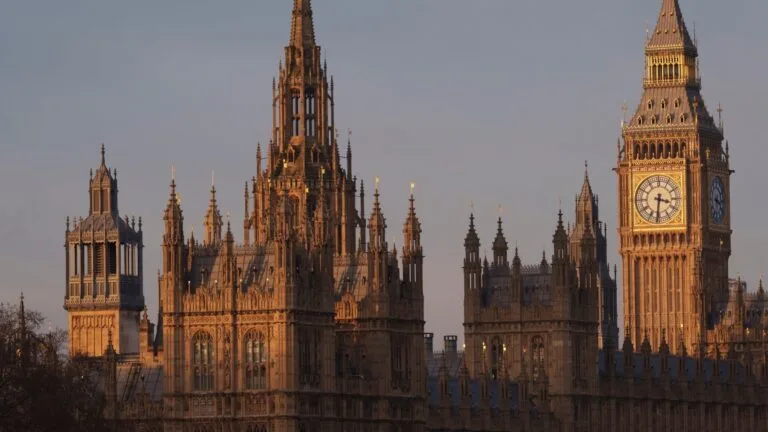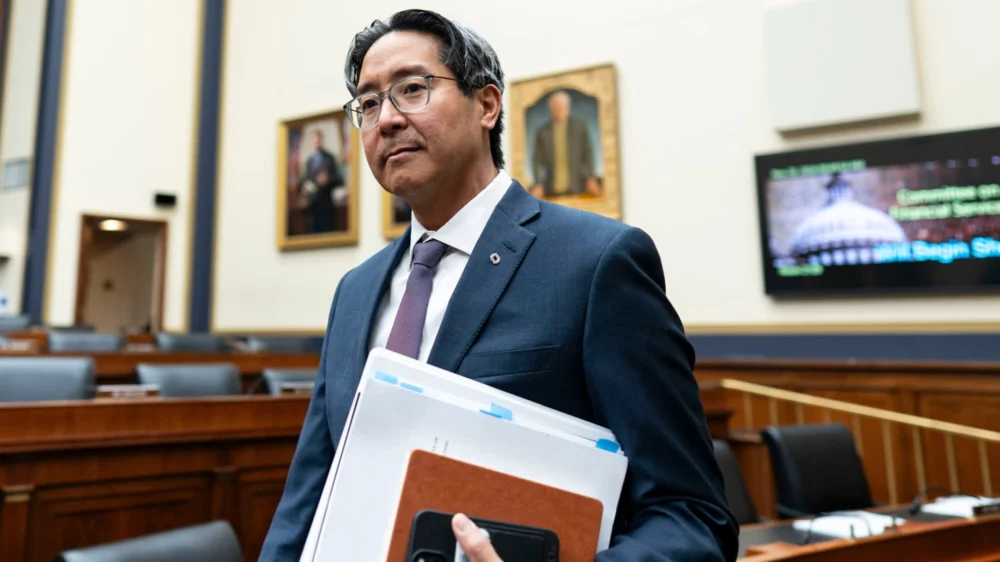
The delicate equilibrium of global financial regulation is facing a transformative challenge as British bankers and policymakers mount a coordinated resistance against what they perceive as an overreach by United States regulators. At the heart of this burgeoning dispute is a fundamental question of jurisdictional authority: should the sprawling London-based operations of American investment giants be governed primarily by the United Kingdom’s Prudential Regulation Authority (PRA), or should the U.S. Federal Reserve exert a more direct, "hands-on" influence over these foreign subsidiaries? This friction highlights a growing anxiety within the City of London that the post-Brexit dream of a nimble, autonomous financial center is being undermined by the extraterritorial ambitions of Washington’s regulatory apparatus.
For decades, the relationship between "home" and "host" regulators has been governed by a spirit of mutual deference. Under this system, the U.S. Federal Reserve would largely trust the UK’s regulators to oversee the London branches of firms like JPMorgan Chase, Goldman Sachs, and Morgan Stanley, provided the standards were broadly equivalent. However, in the wake of recent global banking instabilities and the collapse of several mid-sized American lenders in early 2023, U.S. authorities have signaled a desire for more granular control. The push for increased oversight is seen by Washington as a necessary safeguard for global financial stability, but in London, it is viewed as an affront to the UK’s regulatory competence and a threat to its competitive edge.
The economic stakes of this jurisdictional tug-of-war are immense. The financial services sector remains the crown jewel of the British economy, contributing approximately £175 billion annually and accounting for roughly 8% of the UK’s total economic output. London serves as the primary international hub for U.S. banks, acting as their gateway to European and Middle Eastern markets. For these institutions, the prospect of "dual regulation"—where they must satisfy two different masters with potentially conflicting rules on capital buffers, liquidity ratios, and reporting standards—represents a significant operational burden. Industry analysts estimate that redundant compliance requirements could add hundreds of millions of dollars in annual costs for the largest systemic banks, potentially driving capital away from the UK toward more "regulatory-friendly" jurisdictions or back to the United States.
Central to the bankers’ concerns is the concept of "substituted compliance." This mechanism allows a firm to satisfy the regulatory requirements of one country by adhering to the rules of another, provided the outcomes are substantially similar. British bankers argue that the UK’s "Basel III Endgame" implementation is already among the most rigorous in the world, often exceeding the standards set by international peers. By attempting to bypass this equivalence and impose direct U.S. supervisory practices on UK soil, American regulators are effectively signaling a lack of confidence in the PRA’s ability to manage risk. This perceived vote of no confidence comes at a sensitive time for the UK, which is currently attempting to leverage its "Edinburgh Reforms" to deregulate certain aspects of its financial sector to stimulate growth.
The divergence in regulatory philosophy between the two sides of the Atlantic is becoming increasingly pronounced. While the UK has sought to move toward a "secondary objective" for its regulators—requiring the PRA and the Financial Conduct Authority (FCA) to consider the international competitiveness and growth of the British economy—the U.S. remains focused on a more rigid, stability-centric approach. The Federal Reserve’s move to tighten the "living wills" and stress-testing requirements for the foreign subsidiaries of U.S. banks is a clear manifestation of this philosophy. From the American perspective, if a London-based subsidiary of a U.S. bank fails, the ultimate backstop and systemic risk reside with the U.S. taxpayer and the American financial system. Therefore, they argue, the U.S. must have the final word on how those subsidiaries are managed.
However, this logic creates a "ring-fencing" problem that worries global economists. If every major economy insists on extraterritorial control over its banks’ foreign branches, the global financial system could fragment into a series of isolated "capital silos." This fragmentation reduces the efficiency of global capital markets, making it harder for banks to move liquidity where it is most needed during a crisis. Data from the Bank for International Settlements (BIS) suggests that such regulatory fragmentation can lead to a "trapped capital" effect, where billions of dollars in liquidity are held in local subsidiaries to satisfy various national regulators rather than being deployed productively in the global economy.
Expert insights suggest that the current tension is also a byproduct of the UK’s changed status post-Brexit. When the UK was part of the European Union, it carried the weight of a 28-nation bloc in regulatory negotiations with the U.S. Now, as a standalone actor, the UK must navigate these bilateral relationships with less collective leverage. This has emboldened U.S. regulators to take a firmer line. Some observers suggest that Washington is using the current environment to ensure that the UK does not engage in a "race to the bottom" by slashing standards to attract business—a fear that has persisted in the U.S. Treasury since the 2016 referendum.
The pushback from the banking community has been both public and private. Senior executives from the "Wall Street on the Thames" contingent have held numerous high-level meetings with both the UK Treasury and the Federal Reserve. Their message is clear: if the U.S. insists on taking charge of the British supervisor’s traditional domain, it will stifle innovation and make the UK a less attractive destination for global talent. There is also a fear of a "reciprocity war." If the U.S. expands its reach into the UK, there is nothing to stop the PRA from demanding similar direct oversight of British banks’ operations in New York, such as those of Barclays or HSBC. This would lead to a chaotic web of overlapping authorities that would be a nightmare for compliance departments.
Market data underscores the importance of a resolution. US-domiciled banks currently hold trillions of dollars in assets through their UK subsidiaries. These entities are not just satellites; they are massive financial institutions in their own right, often larger than the domestic banks of mid-sized European nations. Any shift in how these entities are governed has immediate repercussions for the London Stock Exchange, the sterling exchange rate, and the broader liquidity of the Eurobond markets. The uncertainty surrounding the regulatory landscape has already contributed to a cooling of the IPO market in London, as firms wait for clarity on what the future "rules of the road" will look like.
Looking ahead, the resolution of this dispute will likely require a high-level diplomatic "grand bargain" between the UK Chancellor of the Exchequer and the U.S. Treasury Secretary. Such an agreement would need to codify the boundaries of supervisory reach, perhaps through a more robust and transparent framework for mutual recognition. It would involve the U.S. acknowledging the high standards of the UK’s post-Brexit regime in exchange for the UK providing greater transparency and data-sharing regarding the health of U.S. subsidiaries.
Ultimately, the struggle is about more than just balance sheets and capital ratios; it is a test of the UK’s ability to maintain its status as a global financial powerhouse in an era of increasing protectionism and regulatory nationalism. If the City of London allows itself to become a mere "regulatory colony" of the United States, it risks losing the very autonomy that was promised as a benefit of its exit from the European Union. Conversely, if it pushes too hard and creates a rift with Washington, it risks alienating the very American institutions that provide the lifeblood of its financial ecosystem. For now, the bankers are standing their ground, hoping that a middle path can be found that preserves the sovereignty of the British supervisor while satisfying the safety concerns of the American regulator. The outcome will define the trajectory of the "Special Relationship" in the financial sphere for the next decade.