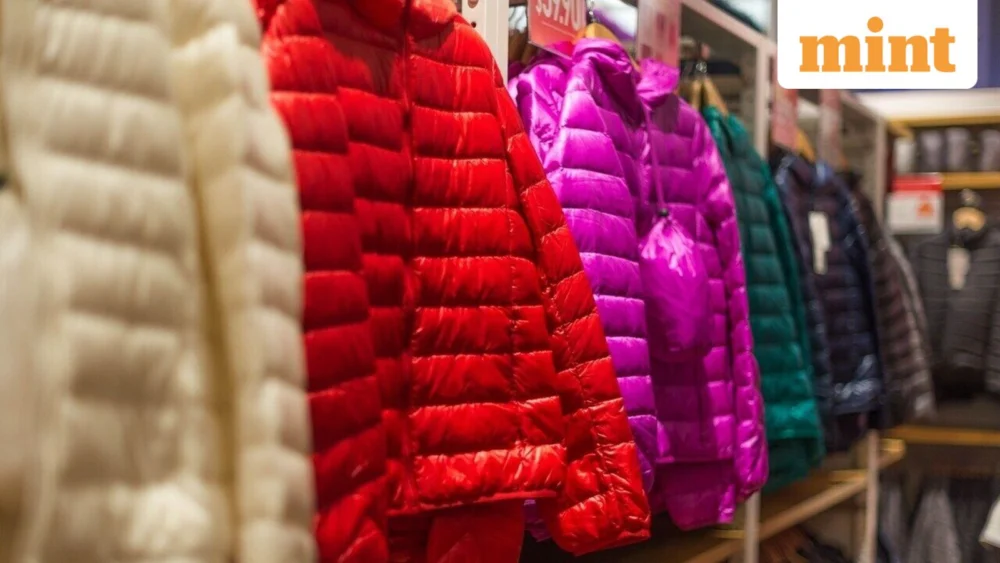
Initial forecasts for the recent winter season had sparked considerable optimism among retailers. Early indicators of a La Niña weather phenomenon, historically associated with colder temperatures across India, prompted significant upfront purchasing and inventory stocking in the preceding September quarter. This anticipation, however, quickly turned to disappointment as the winter months unfolded with unseasonably high temperatures and delayed cold spells, especially across the crucial northern and western regions of the country. Compounding these challenges, parts of eastern and southern India experienced abnormal rainfall and cyclonic activity during the critical festive period, further dampening consumer footfall and spending on seasonal apparel. The Indian apparel market, projected to exceed ₹9 trillion in fiscal year 2025 with 41% being organized retail, is now confronting the tangible economic consequences of climate variability.
Leading domestic apparel retailers have openly acknowledged the severe impact. V-Mart Retail, a prominent player, reported a revenue growth of just over 10% year-on-year, reaching ₹1,126.4 crore in Q3 FY26, up from ₹1,026.7 crore in Q3 FY25 and ₹889.05 crore in Q3 FY24. While this growth was partly bolstered by robust wedding and festive season demand, the core winter wear segment faced significant headwinds. Lalit Agarwal, Managing Director of V-Mart Retail, noted a "delayed and erratic" demand for heavy winter wear in Northern India. The company consciously prioritized margin protection over aggressive volume chasing, a strategic pivot reflecting the uncertain demand visibility. Anand Agarwal, V-Mart’s Chief Financial Officer, elaborated on the "lull post-Diwali" caused by delayed peak winters, despite the earlier optimistic forecasts. Despite these challenges, V-Mart reported maintaining "strong inventory health," suggesting that the eventual, albeit brief, dip in temperatures led to a sudden pick-up in specific winter categories, preventing a significant build-up of unsold stock. Winter and pre-winter categories typically comprise 40-45% of V-Mart’s quarterly mix, escalating to over 60% during peak December weeks, underscoring the segment’s critical importance and vulnerability to weather anomalies.

Rival retailer Vishal Mega Mart experienced similar fluctuations but managed to navigate the season with resilience. Gunender Kapur, Managing Director and CEO of Vishal Mega Mart, highlighted the industry-wide pressure to clear merchandise when winters are delayed, often through promotions. Despite this, Vishal Mega Mart reported a substantial revenue increase of approximately 17%, reaching ₹3,670.4 crore in Q3 FY26, compared to ₹3,135.9 crore in Q3 FY25 and ₹2,623.5 crore in Q4 FY24, primarily driven by strong festive and wedding season sales. Kapur indicated that winter sales ultimately achieved robust double-digit same-store growth for the entire season and quarter, largely due to a significant rebound in demand during January. He emphasized that maintaining pricing discipline helped safeguard profit margins, noting that merchandise sold earlier in the season typically fetches higher prices.
In contrast to these trends, V2 Retail emerged as an outlier, posting a strong performance in Q3, with revenue surging nearly 60% year-on-year to ₹929.2 crore from ₹590.9 crore. This divergence is likely attributable to V2 Retail’s stronger presence in eastern and north-eastern Indian markets, including Bihar, Jharkhand, Odisha, and Assam, where an earlier onset of winter may have catalyzed demand more effectively than in V-Mart and Vishal Mega Mart’s more concentrated northern and central Indian footprints. Akash Agarwal, Managing Director of V2 Retail, reported a "very good" season, driven by higher sales of jackets and sweaters. These high-average selling price (ASP), high-margin winter garments significantly boosted the company’s average bill value and contributed substantially to same-store sales growth.
The persistent challenge of erratic winters for two consecutive years underscores a broader, more systemic problem rooted in climate change. Apparel retailers traditionally rely on predictable seasonal shifts to plan inventory, production cycles, and marketing campaigns. Devangshu Dutta, founder of consulting firm Third Eyesight, observes that while seasonal unpredictability has always existed, the challenge has intensified dramatically over the past 15-20 years. As apparel businesses have scaled up and expanded their retail footprints globally, product development and supply chains now stretch over several months, making accurate forecasting an increasingly elusive goal. Dutta emphasizes that winter wear, with its higher value per unit, shorter selling window, and niche market, presents a "humongous problem" when weather patterns deviate. This leads to either costly inventory shortages or, more commonly, debilitating surpluses that necessitate aggressive discounting, eroding profit margins and potentially damaging brand equity.

Globally, the impact is mirrored across continents. Retailers in Europe and North America have also reported slower sales of heavy winter apparel during unusually warm periods, leading to inventory backlogs and promotional cycles that began much earlier than usual. A World Meteorological Organization report, published in January 2026, reinforced that 2025 was among the three warmest years on record globally, continuing a decade-long pattern of exceptional heat. This trend, despite a cooling La Niña phase, is a stark indication that background warming from greenhouse gases is increasingly overriding natural climatic variability. The report projects that climate change will intensify seasonal shifts and extreme weather events in the coming decades, rendering industries deeply intertwined with seasonal demand, such as winter apparel, exceptionally vulnerable to unpredictable temperature swings and diminishing cold spells.
The economic ramifications extend far beyond individual retailers. Disrupted sales cycles can lead to decreased manufacturing orders, impacting textile producers and garment factories, particularly in developing economies heavily reliant on the apparel export sector. Inventory holding costs, including warehousing and insurance, escalate for unsold stock. The pressure to clear merchandise often results in significant markdowns, which can compress gross margins by 5-10 percentage points or more, directly impacting profitability and shareholder value. Furthermore, the waste generated by unsold seasonal clothing poses environmental concerns, contributing to landfill accumulation and underscoring the unsustainability of linear fashion models in a volatile climate.
In response to this escalating crisis, the apparel industry is compelled to adopt more agile and resilient strategies. Diversification of product portfolios to include more transitional, multi-season, and layering options is becoming imperative. Retailers are exploring advanced data analytics and artificial intelligence to integrate real-time weather data, long-term climate projections, and consumer behavior patterns into more nuanced forecasting models. Shorter lead times in supply chains, near-shoring production, and smaller, more frequent batch deliveries could enable quicker responses to sudden weather shifts. Additionally, the move towards more sustainable practices, including on-demand manufacturing and circular economy principles, could mitigate the financial and environmental risks associated with overproduction. The era of predictable seasons, upon which the traditional apparel retail model was built, is rapidly fading, forcing an industry-wide transformation where adaptability, data-driven decision-making, and a profound understanding of climate impacts are no longer optional, but essential for survival and future growth.