The rapid metamorphosis of the Arctic landscape, driven by unprecedented thermal shifts and the receding of perennial sea ice, is no longer merely an environmental concern; it has become a primary catalyst for a fundamental realignment of global defense strategies and economic interests. For decades, the High North was characterized by its inhospitable climate and a thick, frozen canopy that served as a natural barrier to commercial transit and military maneuvering. However, as the region warms at nearly four times the global average—a phenomenon known as Arctic amplification—the physical properties of the environment are changing in ways that render traditional defense doctrines obsolete. The transition from a static, ice-bound theater to a dynamic, navigable "blue ocean" is creating a vacuum of power and a rush for resources that the international community is only beginning to navigate.
The core of this defense threat lies in the changing "physics" of the water itself. In the Cold War era, the Arctic provided a reliable "bastion" for nuclear-powered submarines. The thick ice cover created a noisy acoustic environment that masked the movements of sub-surface vessels, while the presence of the halocline—a layer of water where salinity changes rapidly with depth—acted as a shield against sonar detection. As the ice thins and melts, the Arctic Ocean is becoming more "Atlanticized." The influx of warmer, saltier water from the Atlantic and fresher meltwater from the ice creates unpredictable acoustic conditions. For naval commanders, this means that the mathematical models used for decades to track underwater threats are no longer accurate. The loss of the ice canopy also removes the physical protection that once allowed submarines to hide from aerial surveillance and satellite imaging, turning what was once a sanctuary into a transparent and contested battlespace.
This environmental shift has significant implications for the North Atlantic Treaty Organization (NATO) and its primary adversaries. Russia, which possesses the world’s longest Arctic coastline, has moved aggressively to remilitarize the region. Over the past decade, Moscow has refurbished dozens of Soviet-era bases, built new search-and-rescue centers, and deployed advanced S-400 surface-to-air missile systems along its northern periphery. The Kremlin views the Arctic as both a strategic nuclear redoubt and a vital economic artery, specifically through the Northern Sea Route (NSR). By asserting control over these waters, Russia aims to dominate a shipping lane that can reduce the transit distance between Europe and Asia by up to 40% compared to the Suez Canal route.
China, despite having no territorial claims in the Arctic, has declared itself a "near-Arctic state" and integrated the region into its broader Belt and Road Initiative through the concept of the "Polar Silk Road." Beijing’s interests are multifaceted, spanning from scientific research that doubles as dual-use military surveillance to heavy investment in mining and energy projects in Greenland and Russia’s Yamal Peninsula. The entry of China into the Arctic theater complicates the security calculus for the "Arctic Seven"—the democratic nations of the Arctic Council—as they must now contend with a Sino-Russian partnership that seeks to challenge the existing international legal framework, specifically the United Nations Convention on the Law of the Sea (UNCLOS).
Economically, the stakes of the thawing Arctic are staggering. The U.S. Geological Survey estimates that the region holds approximately 13% of the world’s undiscovered oil and 30% of its undiscovered natural gas. Beyond hydrocarbons, the Arctic is a treasure trove of critical minerals essential for the global green energy transition. Deposits of nickel, cobalt, copper, and rare earth elements are becoming increasingly accessible as the permafrost retreats. However, the "physics" of extraction remain daunting. The thawing permafrost, which once provided a stable foundation for infrastructure, is now buckling, threatening pipelines, roads, and buildings. This creates a paradox where the very warming that makes resources accessible also makes the infrastructure required to extract them more expensive and prone to failure.
The race for Arctic dominance is perhaps most visible in the "icebreaker gap." Russia currently operates a fleet of more than 40 icebreakers, including several nuclear-powered vessels capable of smashing through ice three meters thick. These ships are essential for maintaining year-round navigation and projecting power. In contrast, the United States Coast Guard currently operates only two aging polar icebreakers, only one of which is a "heavy" vessel. While the U.S. has initiated the Polar Security Cutter program to revitalize its fleet, the timeline for deployment remains years away. This disparity limits the ability of Western powers to conduct freedom of navigation operations or provide maritime security in waters that are increasingly busy with commercial traffic.
From a trade perspective, the opening of the Northwest Passage and the Northern Sea Route represents a potential revolution in global logistics. For shipping conglomerates, the appeal is clear: shorter routes mean lower fuel consumption and reduced carbon emissions per voyage. However, the economic viability of these routes is tempered by extreme volatility. Even in a warming world, the Arctic remains prone to "rogue ice"—unpredictable chunks of multi-year ice that can shear through the hulls of non-strengthened vessels. Insurance premiums for Arctic transit remain prohibitively high, and the lack of deep-water ports and search-and-rescue infrastructure along the routes creates a high-risk environment for commercial investment.
The defense threat is further exacerbated by the breakdown of diplomatic norms. Following the invasion of Ukraine, the Arctic Council—the primary forum for regional cooperation—effectively paused its high-level engagement with Russia. This diplomatic freeze has hindered collective efforts to manage environmental crises and maritime safety. Without a functional venue for dialogue, the risk of miscalculation increases. A minor fishing dispute or a maritime accident in the Barents Sea could quickly escalate into a military standoff in an environment where communication channels are frayed and military presence is at an all-time high.
Furthermore, the changing physics of the Arctic have a direct impact on global climate stability, creating a feedback loop with profound economic consequences. The "Albedo Effect"—where white ice reflects sunlight and dark open water absorbs it—is accelerating global warming. The release of methane from thawing permafrost and subsea clathrates represents a "carbon bomb" that could derail international climate targets. For global markets, this translates into increased systemic risk, from coastal flooding in financial hubs like New York and London to agricultural disruptions caused by shifting jet streams. The defense of the Arctic is, therefore, not just about protecting northern borders, but about stabilizing the physical systems that underpin the global economy.
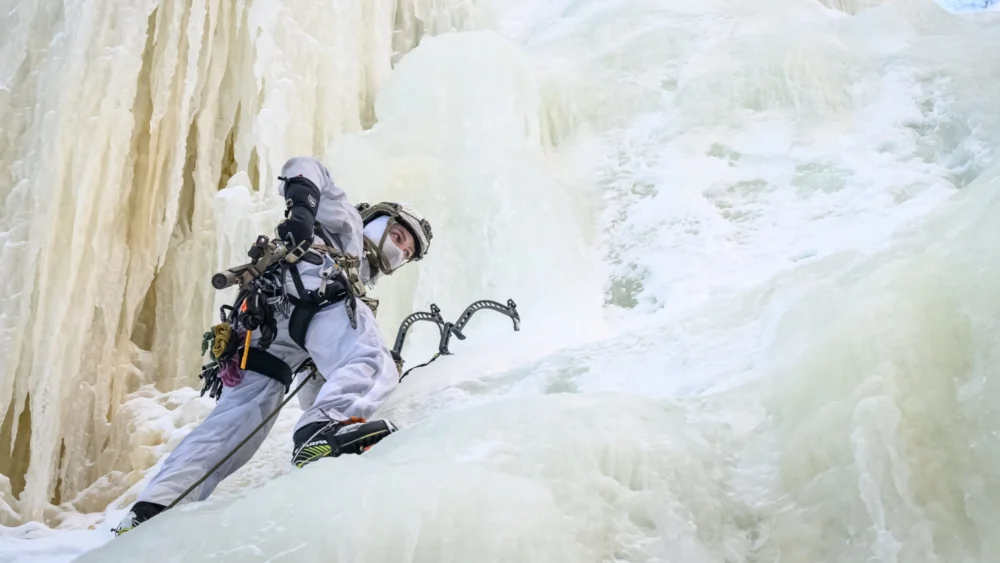
As we look toward the 2030s, the Arctic is poised to become a central pillar of the "Integrated Deterrence" strategy adopted by the Pentagon and its allies. This involves a multi-domain approach that integrates space-based surveillance, unmanned underwater vehicles (UUVs), and cold-weather-capable ground forces. Canada has recently pledged billions in new defense spending to modernize its NORAD capabilities and enhance its presence in the High North, while the recent accession of Finland and Sweden to NATO has effectively turned the Baltic and parts of the European Arctic into a "NATO lake."
In conclusion, the shifting physics of the Arctic represent a complex interplay of environmental decay and geopolitical opportunity. The melting ice is not merely a symptom of a warming planet; it is a structural change that is dismantling the traditional barriers to conflict and commerce. To secure this new frontier, nations must invest not only in hardware like icebreakers and satellites but also in new frameworks for governance and a deeper understanding of the fluid, unpredictable environment of the High North. The battle for the Arctic will not be won by those who simply wish to preserve the status quo, but by those who can best adapt to the new physical realities of a world without a frozen top. The defense of the future is no longer about holding the line against the cold; it is about navigating the uncertainties of a warming, open, and increasingly crowded Arctic.