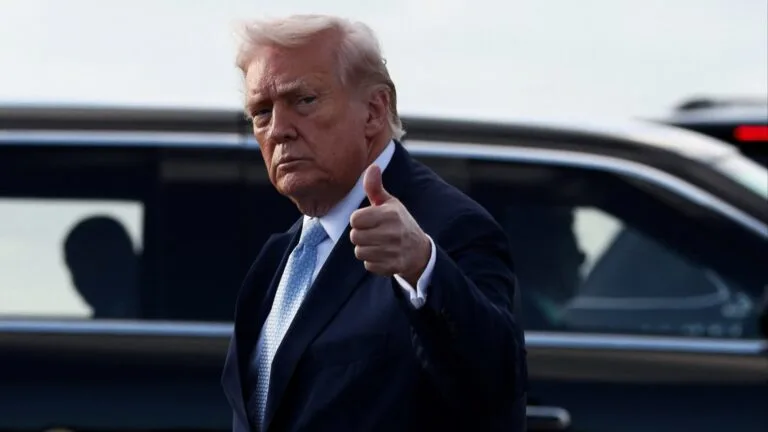
The global geopolitical landscape is bracing for a seismic shift as Ukrainian President Volodymyr Zelenskyy reveals that Donald Trump is actively pushing for a conclusion to the conflict with Russia by June 2025. This timeline, significantly more accelerated than any diplomatic framework currently proposed by European or NATO allies, signals a potential transformation in American foreign policy that could redefine international security architectures and global commodity markets. As the 2024 U.S. presidential election approaches, the prospect of a "fast-track" peace deal has moved from campaign rhetoric to a structured diplomatic pressure point, forcing leaders in Kyiv, Brussels, and Moscow to recalibrate their long-term strategic assumptions.
The urgency of the June deadline reflects a broader shift in the American political appetite for sustained military funding. Since the commencement of the full-scale invasion in February 2022, the United States has committed over $175 billion in total aid to Ukraine, including critical weaponry and budgetary support. However, the domestic political environment in Washington has become increasingly fractured. Analysts suggest that Trump’s insistence on a June resolution is designed to align with the early months of a potential second term, allowing his administration to pivot resources toward domestic economic priorities and the escalating competition with China in the Indo-Pacific.
For Ukraine, the stakes of an accelerated peace process are existential. President Zelenskyy has expressed caution regarding any settlement that does not guarantee long-term security and territorial integrity. The "Peace Formula" previously advocated by Kyiv—which includes the total withdrawal of Russian forces and the restoration of 1991 borders—stands in stark contrast to the pragmatic, "realpolitik" approach favored by the Trump camp. Market observers note that the uncertainty surrounding the terms of such a deal has already begun to influence European defense stocks and the "war risk premium" embedded in global energy prices.
The economic implications of a forced or rapid settlement extend far beyond the front lines. The World Bank, in its most recent Rapid Damage and Needs Assessment, estimated that the cost of reconstruction and recovery in Ukraine has surged to approximately $486 billion over the next decade. A peace deal brokered by June would necessitate an immediate and massive mobilization of private and public capital. However, if the peace is perceived as fragile or if Ukraine is denied a clear path to NATO or European Union membership, the "private sector’s appetite for risk" may remain suppressed, stifling the very investment required to rebuild the nation’s industrial and agricultural base.
In the corridors of European power, the June mandate is viewed with a mixture of skepticism and alarm. The European Union has recently moved to institutionalize its support for Ukraine through the €50 billion Ukraine Facility, intended to provide stable funding through 2027. A sudden withdrawal of U.S. leadership from the conflict would leave a significant financial and military vacuum that Europe is currently ill-equipped to fill. Economic data suggests that while European defense spending has risen—with several NATO members finally meeting or exceeding the 2% GDP target—the continent remains reliant on the American "security umbrella" for logistics, intelligence, and high-end munitions.
From a market perspective, the "Trump Peace Plan" could trigger a volatile revaluation of commodities. Ukraine remains a global powerhouse in the export of neon, sunflower oil, corn, and wheat. The prolonged conflict has disrupted Black Sea shipping routes and forced a costly redirection of logistics through Central Europe. A June resolution could theoretically reopen these trade arteries, potentially lowering global food inflation. Conversely, the lifting or easing of sanctions on Russia—a likely component of any comprehensive settlement—would reintroduce massive volumes of Russian hydrocarbons and minerals into Western markets, potentially depressing oil and gas prices but complicating the West’s transition toward green energy and strategic decoupling.
Experts in international law and diplomacy point out that the "June" target coincides with several major international summits, including the G7 gathering and the NATO 75th Anniversary Summit. These venues are expected to become the primary battlegrounds for defining what a "just peace" looks like. If Trump pursues a deal that involves territorial concessions or a "neutrality" pledge from Kyiv, he may face significant pushback from Eastern European allies like Poland and the Baltic states, who view any Russian gains as a direct threat to their own sovereignty. The economic cost of a "frozen conflict" rather than a definitive resolution could result in a permanent state of high military readiness across the European continent, diverting billions from social programs to border defense.
The impact on the global military-industrial complex is another critical factor. Over the past two years, defense contractors in the U.S. and Europe have seen record order backlogs as nations replenish their own stockpiles after donating equipment to Ukraine. A rapid end to the war could lead to a correction in defense equities, though many analysts argue that the "new Cold War" environment will sustain high demand regardless of the specific outcome in Ukraine. Companies like Lockheed Martin, Rheinmetall, and BAE Systems have already integrated long-term production increases into their forward-looking guidance, betting that global instability will outlast any single conflict.
Furthermore, the "June Mandate" raises questions about the future of the U.S. dollar as the world’s primary reserve currency and the weaponization of finance. The seizure and potential redirection of $300 billion in frozen Russian central bank assets have been a point of contention. A Trump-led negotiation might use these assets as a bargaining chip, either to fund Ukrainian reconstruction or as a concession to bring Moscow to the table. Such a move would have profound implications for international finance, potentially accelerating the "de-dollarization" efforts of the BRICS nations (Brazil, Russia, India, China, and South Africa) who fear similar sanctions in the future.
Domestically, the rhetoric of ending the war by June serves a specific electoral purpose. It positions Trump as a "dealmaker" capable of resolving complex international crises where the current administration has seen a stalemate. However, the logistical reality of enforcing a ceasefire and negotiating complex issues like war crimes tribunals, refugee returns, and security guarantees is immense. Critics argue that a deadline-driven peace risks a "suboptimal settlement" that could lead to a more violent resurgence of hostilities later in the decade, similar to the failure of the Minsk agreements.
The Ukrainian perspective remains focused on "peace through strength." While Zelenskyy acknowledges the pressure from the Trump camp, his administration continues to lobby for the capability to strike deep into Russian territory and for the delivery of advanced F-16 fighter jets and long-range missile systems. The goal is to improve Ukraine’s leverage before any formal negotiations begin in June. If Kyiv enters talks from a position of tactical strength, the economic and political costs of the settlement may be more palatable to the Ukrainian public, which remains largely opposed to territorial compromise.
As the June 2025 horizon approaches, the intersection of high-stakes diplomacy and global economic stability has never been more visible. Whether this push for a rapid resolution results in a lasting stability or a precarious truce remains the central question for the international community. What is certain is that the "business as usual" approach to the war in Ukraine is coming to an end, replaced by a high-velocity diplomatic effort that will test the unity of the Western alliance and the resilience of the global economy. The world now watches to see if the "June Mandate" is a realistic path to peace or a precursor to a new era of geopolitical realignment.