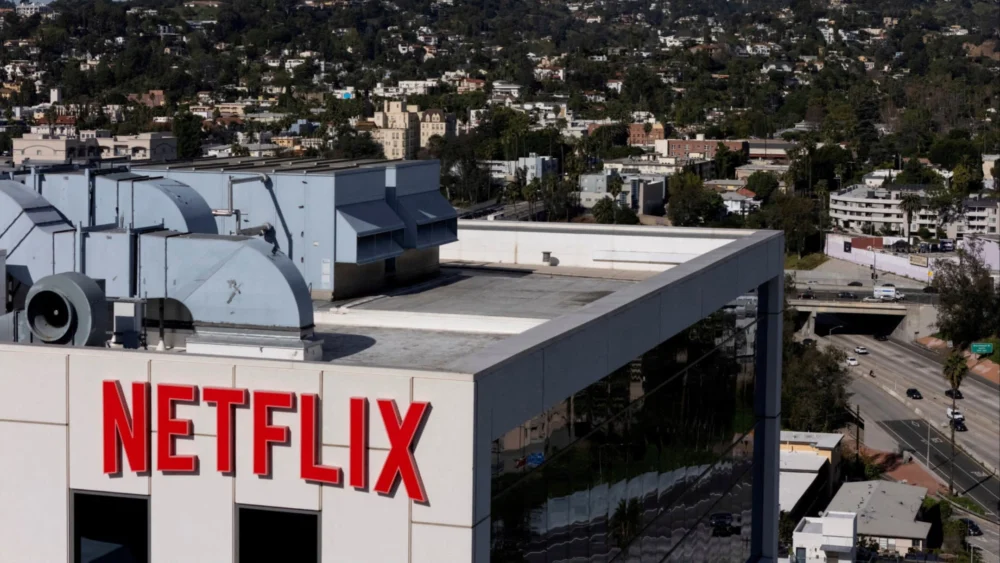
The landscape of global media and digital entertainment faces its most significant regulatory challenge in decades as United States antitrust authorities officially initiated a comprehensive review of Netflix’s proposed $83 billion acquisition of Warner Bros. Discovery. This move by the Department of Justice (DOJ) and the Federal Trade Commission (FTC) signals a high-stakes confrontation between the Biden administration’s aggressive antitrust enforcement and a tech-media behemoth seeking to cement its dominance in an increasingly consolidated market. The deal, which aims to merge the world’s largest streaming platform with one of Hollywood’s most storied content libraries, represents a seismic shift that could redefine how billions of consumers access news, sports, and filmed entertainment.
The federal investigation will focus primarily on whether the combination of Netflix’s unparalleled distribution network and Warner Bros. Discovery’s vast intellectual property—which includes HBO, CNN, the DC Universe, and the Turner Sports portfolio—creates a monopolistic "gatekeeper" that could stifle competition and harm consumers. Analysts suggest that the probe will be one of the most exhaustive in the history of the media sector, reflecting a broader skepticism toward mega-mergers that has characterized the current regulatory era. Under the leadership of FTC Chair Lina Khan and DOJ Antitrust Division head Jonathan Kanter, federal agencies have pivoted away from the traditional "consumer welfare" standard, which focused almost exclusively on short-term price changes, toward a more holistic view of market power, labor impact, and long-term innovation.
The strategic rationale for the $83 billion deal is rooted in the shifting economics of the "streaming wars." For Netflix, the acquisition offers an immediate solution to its most pressing challenge: the need for a deeper, more diverse content library to combat subscriber churn and justify price increases. While Netflix has successfully transitioned from a DVD-by-mail service to a global production powerhouse, it lacks the decades-deep catalog of a legacy studio. By absorbing Warner Bros. Discovery, Netflix would gain ownership of iconic franchises such as Harry Potter, The Lord of the Rings, and Game of Thrones, alongside a massive archive of prestige television and classic cinema. Furthermore, the inclusion of CNN and TNT Sports would allow Netflix to pivot into live news and sports broadcasting—territories currently dominated by legacy cable providers and burgeoning rivals like Amazon Prime Video and Apple TV+.
Conversely, for Warner Bros. Discovery, the deal provides a vital exit strategy from a period of financial turbulence. Since the 2022 merger of Discovery and AT&T’s WarnerMedia, the company has been burdened by a debt load exceeding $40 billion. Despite aggressive cost-cutting measures and the rebranding of its streaming service to "Max," the company has struggled to achieve the scale necessary to compete with the sheer capital expenditure of Silicon Valley’s tech giants. An $83 billion buyout would represent a significant premium for shareholders and offer a lifeline to a studio that has spent the last two years navigating layoffs and project cancellations in a desperate bid for profitability.
However, the very "synergies" touted by the companies are precisely what have raised red flags in Washington. Antitrust regulators are expected to examine the "monopsony" power such a merger would create in the labor market. The entertainment industry is still reeling from the dual strikes by the Writers Guild of America (WGA) and SAG-AFTRA, which highlighted concerns over fair compensation in the streaming era. A combined Netflix-WBD would effectively reduce the number of major buyers for scripts, acting talent, and production services, potentially driving down wages and limiting the diversity of content produced. "When you reduce the number of doors a creator can knock on, you inevitably reduce the bargaining power of the creative class," noted one senior economist specializing in media markets. "This isn’t just about what the viewer pays; it’s about who controls the cultural output of the nation."
Market data further illustrates the potential for market concentration. Currently, Netflix holds approximately 25% of the U.S. streaming market share by viewership, while Warner Bros. Discovery’s platforms account for roughly 12%. A combined entity would command more than a third of all domestic streaming minutes, a figure that dwarfs competitors like Disney+ and Hulu. Regulators will also investigate the impact on the advertising market. As Netflix expands its ad-supported tier, the acquisition of WBD’s sophisticated advertising infrastructure and vast viewer data could create an "ad-tech" juggernaut capable of marginalizing smaller broadcasters and digital publishers.
The international implications of the deal are equally profound. The European Commission and the United Kingdom’s Competition and Markets Authority (CMA) are expected to launch their own parallel investigations. In recent years, European regulators have been increasingly protective of local cultural industries against American "digital imperialism." There are concerns that a Netflix-WBD entity would have the leverage to demand preferential treatment from internet service providers and device manufacturers, potentially violating net neutrality principles or fair-competition rules in the EU’s Digital Markets Act.
Beyond the regulatory hurdles, the deal faces significant economic headwinds. The $83 billion price tag comes at a time of fluctuating interest rates and cooling venture capital sentiment. Financing such a massive acquisition would require Netflix to take on substantial new debt or dilute its equity, a move that could spook investors who have recently rewarded the company for its focus on free cash flow and margin expansion. Wall Street remains divided; while some see the deal as a masterstroke that ends the streaming wars, others fear it is a "winner’s curse" that saddles Netflix with the legacy liabilities of a declining linear television business.
The investigation is also likely to scrutinize the future of live sports. Warner Bros. Discovery holds lucrative rights to the NBA, MLB, and NHL. If these rights were to move behind a Netflix paywall, it could accelerate the "cord-cutting" trend that is already decimating the traditional cable bundle. This has significant ramifications for local sports networks and the broader ecosystem of televised athletics. Regulators may demand divestitures—forcing Netflix to sell off CNN or specific sports assets—as a condition for approval. Such requirements could diminish the deal’s value and lead to protracted negotiations that could last well into next year.
The political dimension cannot be ignored. With a presidential election on the horizon, the merger has become a focal point for populist rhetoric on both sides of the aisle. Progressives argue that the deal represents the "financialization" of culture, where art is sacrificed for shareholder returns. Meanwhile, some conservatives have expressed concern over the consolidation of news media, fearing that a Netflix-owned CNN could further polarize the national discourse.
As the DOJ and FTC begin the process of issuing "second requests" for internal documents and communications, the media industry enters a period of profound uncertainty. The outcome of this antitrust review will serve as a bellwether for the future of corporate consolidation in the digital age. If the deal is blocked, it may signal the end of the era of the "mega-merger" in Hollywood, forcing companies to seek growth through organic innovation rather than acquisition. If it is approved, it will likely trigger a fresh wave of consolidation, as rivals like NBCUniversal’s Comcast and Paramount Global seek their own partners to survive in a world dominated by a singular streaming superpower.
For now, the $83 billion question remains unanswered. The legal battle ahead will not only determine the fate of two corporate giants but will also set the rules of engagement for the global attention economy. As federal investigators begin sifting through millions of pages of data, the world watches to see if the government will allow the creation of a media empire the likes of which has never been seen, or if it will draw a definitive line in the sand against the encroachment of digital monopolies.