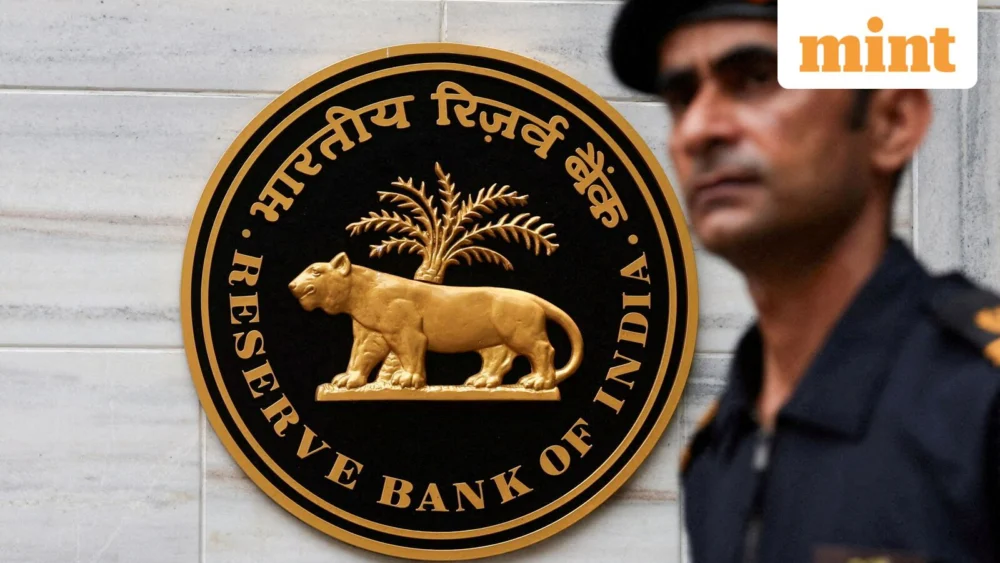
The Reserve Bank of India (RBI) is poised to conclude its assertive cycle of monetary easing, with strong indications that its Monetary Policy Committee (MPC) will opt for a prolonged pause on interest rates at its upcoming meeting. This strategic shift marks a significant pivot from the cumulative 125 basis points (bps) reduction in the policy repo rate seen over the past year, including a 25 bps cut as recently as December. The consensus among financial analysts and economists points towards the current repo rate of 5.25% remaining unchanged, as the central bank reorients its focus from price signals to addressing persistent liquidity tightness within the banking system.
A recent poll of ten leading economists revealed an overwhelming expectation for a pause, with nine out of ten anticipating no change in the policy rate. This sentiment underscores a broad market belief that the era of aggressive rate cuts, initiated to stimulate growth amidst economic headwinds, has reached its natural conclusion. While inflation remains benign and largely aligned with the RBI’s medium-term target of 4%, an improving domestic growth trajectory, coupled with external pressures on the Indian rupee and the subdued transmission of previous rate cuts, has considerably narrowed the scope for further easing. Economists like Gaura Sengupta, chief economist at IDFC FIRST Bank, emphasize that the expected average inflation for FY27 aligns with the monetary policy target, and domestic growth is exhibiting broad-based momentum, notably in rural and urban consumption. Sakshi Gupta, principal economist at HDFC Bank, echoed this sentiment, declaring the current juncture as "the end of the rate-cut cycle" given the pickup in growth and inflation’s gradual alignment to the 4% target.
Beyond the immediate rate decision, the MPC is widely expected to maintain its ‘neutral’ policy stance. This flexible posture provides the central bank with the latitude to adjust its policy in either direction should economic conditions warrant, without committing to a specific trajectory. However, the immediate narrative is firmly centered on liquidity management, a critical concern for market participants and the banking sector.
The Evolving Liquidity Landscape
Systemic liquidity in the Indian banking system has been a significant point of contention, despite recent efforts by the RBI to inject funds. The banking system, as of early February, reported a surplus of approximately ₹1.7 trillion. However, this headline figure belies underlying pressures. Key drivers of liquidity tightness include the Indian government’s robust cash surplus and the persistent drain from the RBI’s intervention in the foreign exchange market, primarily aimed at stabilizing the rupee. Furthermore, a widening gap between credit growth and deposit growth has exacerbated the situation, pushing banks’ credit-to-deposit (CD) ratios to historically high levels. This imbalance creates funding pressures for banks, potentially driving up money market rates, such as those for Certificates of Deposit (CDs), and impacting their ability to extend credit efficiently.

In pre-policy interactions with the RBI, economists and market participants strongly advocated for the central bank to prioritize liquidity easing over rate cuts. The preferred tools for this purpose are open market operations (OMOs) and dollar buy-sell swaps. OMOs involve the purchase or sale of government securities by the central bank to inject or absorb liquidity. Dollar buy-sell swaps, on the other hand, allow the RBI to inject rupee liquidity by buying dollars from banks with an agreement to sell them back at a future date, or vice versa, influencing both liquidity and exchange rates.
Deutsche Bank, in a recent research note, projected substantial OMO purchases to address the anticipated liquidity requirements. They estimate another ₹2 trillion of OMO purchases in the remaining part of the current fiscal year (FY26), with a potential additional ₹4 trillion in the first quarter of FY27. This aggressive stance highlights the scale of liquidity support deemed necessary to ensure that reserve money growth does not decline sharply, especially in the absence of significant foreign capital inflows which would naturally bolster rupee liquidity.
The Prospect of a CRR Cut
While OMOs and FX swaps are the primary instruments, the possibility of a more potent liquidity measure – a temporary cut in the Cash Reserve Ratio (CRR) – has also gained traction among some economists. The CRR mandates banks to hold a certain percentage of their net demand and time liabilities as reserves with the central bank, without earning interest. A reduction in the CRR directly frees up a significant amount of funds for banks to lend, acting as a powerful liquidity injection. Madan Sabnavis, chief economist at Bank of Baroda, noted that while OMOs will continue, a stage might be reached where banks, due to Liquidity Coverage Ratio (LCR) requirements, may be less willing to sell their securities, making a CRR cut a more probable intervention. This is not without precedent; in June 2025, the RBI had reduced the CRR by 1%, phased in four equal tranches, ultimately lowering it to 3% from 4% and injecting approximately ₹2.5 trillion into the system. Such a move would be a strong signal of the RBI’s commitment to ensuring adequate systemic liquidity, especially if the credit-deposit gap continues to widen.
Inflation, Growth, and Data Revisions
On the inflation front, the RBI is adopting a cautious, data-dependent approach. Most economists anticipate that the MPC will likely await greater clarity from the new Consumer Price Index (CPI) series, slated for release on February 12, before making any significant alterations to its policy stance or projections. The new CPI series is expected to feature revised weights for various components, notably a reduction in the weight of food items from the current 46% to approximately 41%. Deutsche Bank projects that this re-weighting could technically lower historical CPI readings and future forecasts by about 10-20 bps. While the foreign bank expects the RBI’s current CPI inflation forecast for FY26 to remain unchanged at 2.0%, it anticipates a potential downward revision of 20-30 bps for the January-March quarter projection of 2.9%. For FY27, the CPI forecast is expected to be maintained at 4.5%. Japanese bank Nomura suggests that the RBI is unlikely to react sharply to any technical upward revisions under the new series, preferring to focus on underlying inflationary trends.

Similarly, the central bank is expected to retain its existing Gross Domestic Product (GDP) projections, demonstrating a preference for awaiting the updated GDP series. The broader economic narrative, however, remains robust, with India’s growth expected to remain above 7.6%, even amidst prevailing global uncertainties. This resilience provides the RBI with the flexibility to prioritize financial stability and liquidity management without immediate pressure to stimulate growth through further rate cuts.
Broader Economic Context and Externalities
The recent announcements regarding the government’s borrowing program in the budget and an India-US trade deal, while significant for the broader economy, are not expected to materially influence the MPC’s immediate decision. The higher government borrowing program, while potentially putting upward pressure on bond yields, is unlikely to override the immediate concerns around liquidity. Similarly, while the India-US trade deal could offer some near-term relief to the rupee and potentially reduce the RBI’s need for direct currency market intervention, economists do not foresee a major impact on government bond yields or monetary policy in the short term. The overarching theme remains the careful calibration of monetary policy to support a growing economy while ensuring financial stability and adequate liquidity.
In conclusion, the RBI’s shift towards a pause in its rate-cutting cycle and its intensified focus on liquidity management underscores a mature phase in India’s monetary policy. With inflation largely contained and economic growth exhibiting strength, the central bank’s immediate challenge is to ensure the smooth functioning of the financial system through effective liquidity operations. This recalibration signals a period of watchful waiting, where the RBI will closely monitor incoming data, global developments, and the efficacy of its liquidity measures, ready to adapt its stance as the dynamic economic landscape evolves. For banks, businesses, and investors, this pivot implies a stable interest rate environment, but one where the availability and cost of funds will be significantly influenced by the central bank’s proactive liquidity interventions.