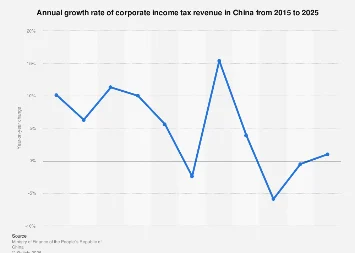
China’s corporate income tax (CIT) revenue is projected to experience a notable surge by 2025, a development that underscores the nation’s ongoing economic dynamism and its capacity for robust fiscal growth. This anticipated increase is not merely a statistical uptick but a significant indicator of the broader economic landscape, reflecting the performance of domestic enterprises, foreign investment trends, and the government’s fiscal management strategies. As a key component of state revenue, CIT collections offer a granular view into the health and trajectory of China’s corporate sector, which serves as a primary engine of its economic expansion.
The forecast for a substantial rise in CIT revenue by 2025 is underpinned by several interconnected economic factors. Foremost among these is the expected continuation of China’s economic recovery and growth momentum. Despite global economic headwinds, including inflationary pressures and geopolitical uncertainties, China has demonstrated a remarkable ability to navigate these challenges. Projections from international financial institutions, such as the International Monetary Fund (IMF) and the World Bank, consistently forecast positive GDP growth for China, albeit with potential variations in pace. This sustained growth translates directly into increased corporate profitability, which, in turn, fuels higher tax contributions.
Furthermore, the Chinese government’s proactive fiscal and monetary policies are instrumental in shaping this positive outlook. Initiatives aimed at stimulating domestic demand, supporting key industries, and encouraging innovation are designed to foster a more resilient and dynamic corporate environment. For instance, tax incentives and relief measures, while initially reducing immediate revenue, are often structured to encourage long-term investment and expansion, ultimately leading to a broader tax base and higher revenue collection in the future. The government’s focus on high-quality development, emphasizing technological advancement and green industries, is likely to spur growth in sectors that are increasingly contributing to the national tax pool.
The performance of the manufacturing and technology sectors, which are central to China’s economic strategy, will be a critical determinant of CIT revenue. As China continues its transition towards a more innovation-driven economy, companies in areas such as artificial intelligence, renewable energy, electric vehicles, and advanced manufacturing are experiencing significant growth. These sectors, often characterized by higher profit margins and substantial investment, are expected to contribute disproportionately to the rise in corporate tax revenues. Data from industry associations and market research firms indicate robust expansion in these areas, suggesting a strong foundation for future tax collections.
Foreign direct investment (FDI) also plays a pivotal role in China’s corporate tax landscape. Despite ongoing global discussions about supply chain diversification, China remains a critical hub for international businesses. The country’s vast market, sophisticated infrastructure, and increasingly skilled workforce continue to attract substantial foreign investment. For multinational corporations operating in China, their profitability directly impacts CIT revenue. While certain geopolitical tensions might influence investment decisions, the fundamental economic attractiveness of the Chinese market is expected to persist, ensuring a steady inflow of capital and a continued contribution to tax revenues from foreign-invested enterprises.
The structure of China’s tax system, with its tiered corporate tax rates and various deductions and exemptions, means that the growth in revenue is as important as the absolute figures. An increase in CIT revenue by 2025 would signify a broadening of the tax base, indicating that more companies are operating profitably and contributing their fair share. It also suggests an effective tax collection mechanism and a reduction in tax evasion. The State Taxation Administration (STA) has been increasingly leveraging technology and data analytics to enhance tax compliance and administration, which contributes to more efficient revenue collection.
Examining global comparisons provides valuable context. Many developed economies rely heavily on corporate income taxes as a significant source of government revenue. However, the dynamics of tax collection can vary widely due to differing economic structures, tax policies, and levels of industrialization. For example, in countries with highly developed service economies, the tax base might be more diversified. In contrast, China’s manufacturing prowess and its rapidly expanding digital economy create unique opportunities and challenges for tax revenue generation. The projected growth in China’s CIT revenue suggests a fiscal strength that many other nations would aspire to achieve, particularly in the current climate of economic uncertainty.
The economic impact of this projected revenue growth extends beyond government coffers. Increased CIT revenue can translate into greater public spending on infrastructure, social services, education, and healthcare, thereby enhancing the quality of life for citizens and fostering further economic development. It also provides the government with greater fiscal flexibility to respond to economic shocks, invest in strategic sectors, and maintain macroeconomic stability. A healthy flow of tax revenue from corporations is a hallmark of a well-functioning and prosperous economy, enabling the government to fulfill its mandates and invest in the nation’s future.
Moreover, the anticipated rise in CIT revenue reflects the success of China’s efforts to foster a more competitive and productive corporate sector. As companies invest, innovate, and expand, they not only generate profits but also create jobs, stimulate consumer spending, and contribute to technological advancement. This virtuous cycle of economic activity, reflected in rising tax revenues, reinforces investor confidence and attracts further domestic and international capital. The government’s focus on creating a favorable business environment, characterized by clear regulations and efficient administration, is crucial in sustaining this positive trajectory.
However, it is also important to acknowledge potential challenges and nuances. Global economic slowdowns, trade disputes, or unexpected domestic policy shifts could influence the actual trajectory of CIT revenue. The evolving nature of global commerce, including the rise of digital services and the potential for tax base erosion through international profit shifting, presents ongoing challenges for tax authorities worldwide, including in China. The effectiveness of tax collection and enforcement mechanisms will be critical in realizing the projected growth.
In conclusion, the projected increase in China’s corporate income tax revenue by 2025 paints a picture of an economy on a solid growth path, driven by robust domestic activity, strategic industrial development, and continued foreign investment. This trend, supported by proactive government policies and effective tax administration, signals a strengthening fiscal position and a resilient corporate sector. As a key indicator of economic health, the growth in CIT revenue will likely empower China to further invest in its development priorities and maintain its significant role in the global economic arena.