A pivotal moment in India’s economic diplomacy has arrived with the recent conclusion of extensive trade negotiations between India and the European Union, an agreement poised to redefine commercial ties across a market encompassing nearly two billion people. While the headline features often focus on tariff reductions for goods like automobiles and spirits, a deeper strategic objective for New Delhi lies within the nuanced details: securing reciprocal recognition for its burgeoning aircraft maintenance, repair, and overhaul (MRO) industry. This ambitious move aims to leverage India’s tariff concessions to the EU as a bargaining chip, pressing for the European Union Aviation Safety Agency (EASA) to accept certifications issued by India’s Directorate General of Civil Aviation (DGCA), a development that could fundamentally transform India’s role in the global aviation ecosystem.
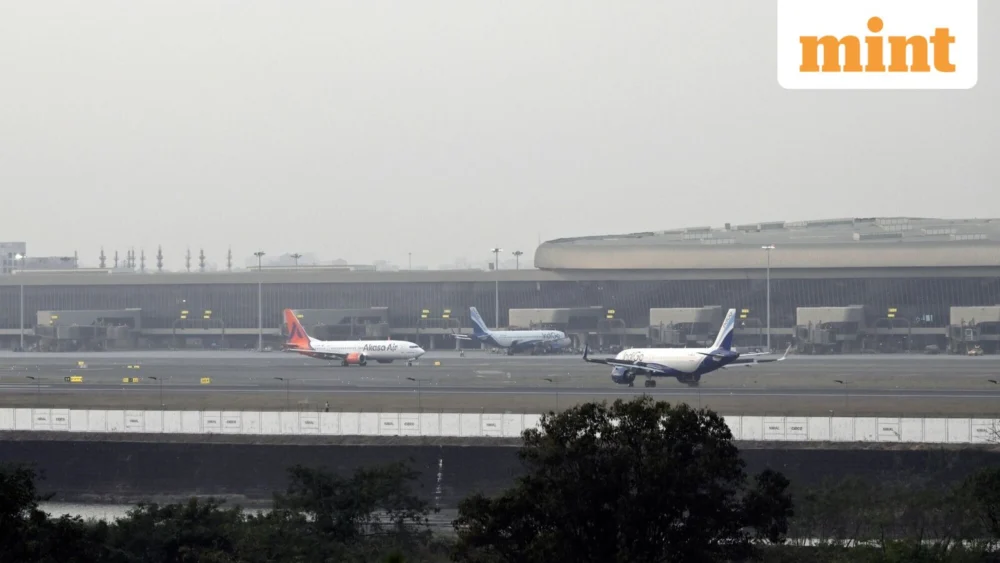
The aviation ministry’s push for harmonized standards is rooted in a clear economic imperative. India’s MRO sector, currently valued at approximately $1.7 billion, is projected to surge to $4 billion by 2031, demonstrating an impressive Compound Annual Growth Rate (CAGR) of 8.9%—significantly outpacing the global average of 5.6%. This rapid expansion is fueled by India’s burgeoning domestic aviation market, which is on track to become the world’s third-largest by passenger traffic. However, despite this robust growth, a significant bottleneck persists: while Indian facilities handle roughly 95% of routine "line and base maintenance" (quick checks and minor repairs at airports), the more complex and lucrative work, such as engine overhauls, component repair, and heavy maintenance for wide-bodied aircraft, is predominantly outsourced overseas. This is largely due to the stringent and often disparate certification requirements between the DGCA and EASA.
Presently, India boasts around 149 DGCA-certified MRO entities. Yet, a stark reality underscores the challenge: only about ten of these hold EASA certification or possess reciprocal approvals from the European regulator. The discrepancy stems from fundamental differences in regulatory approaches. While the DGCA typically certifies an MRO facility as a whole, EASA’s certification process is far more granular and "offering-specific." This means that each facility, every specific engine type, and indeed, the precise nature of every service offered, must undergo separate, rigorous EASA certification. This demanding process translates into substantial investments in time, capital, and specialized expertise, creating a formidable barrier for most Indian MROs seeking to engage with European aircraft or components.

The implications of securing EASA’s reciprocal recognition extend far beyond mere regulatory compliance. Such an agreement would enable Indian MRO facilities to not only service European-made planes operating within India but also to become integrated suppliers of parts and services to the broader global fleet, particularly those manufactured by European aerospace giants like Airbus. This transition from basic checks to comprehensive, high-value maintenance work represents a significant upgrade in capabilities and a crucial step towards becoming a global MRO hub. Economically, this would translate into substantial foreign exchange savings for Indian airlines that currently send their aircraft abroad for major overhauls. While precise figures are proprietary, industry estimates suggest that Indian carriers collectively spend hundreds of millions of dollars annually on overseas MRO, a drain that could be significantly mitigated.
Furthermore, integrating India more deeply into the global aerospace supply chain would foster job creation in a highly skilled sector. The MRO industry demands specialized technicians, engineers, and support staff, contributing to a high-wage, high-tech workforce. This would also encourage technology transfer and indigenous capability building, aligning with India’s broader ‘Make in India’ initiative, extending its reach into the sophisticated aerospace domain. Expert insights from figures like Sharad Agarwal, CEO of AIESL—India’s largest state-backed MRO—underscore the potential: "If harmonized with EASA, more MROs will get certification, unlocking a far larger share by allowing Indian firms to service not just domestic fleets but also foreign aircraft operating in the region."
The proposed mutual recognition agreement (MRA) is a common mechanism in international trade, particularly in highly regulated sectors. For instance, the US and the EU have long-standing MRAs in aviation safety, streamlining processes and reducing duplication of effort for their respective industries. India seeks a similar arrangement, arguing that its DGCA standards, while procedurally different, uphold equivalent levels of safety and quality. The challenge lies in convincing EASA of this equivalency, a process that typically involves thorough audits, technical assessments, and confidence-building measures between the regulatory bodies.
The broader Free Trade Agreement (FTA) with the EU, heralded as the "mother of all deals," forms the strategic backdrop for this aviation push. Signed after years of protracted negotiations, the FTA aims to eliminate or significantly reduce tariffs on over 90% of traded goods. India’s willingness to lower duties on specific European products is now being strategically deployed as a "bargaining chip" to secure reciprocal concessions in services, particularly in the MRO sector. This demonstrates a sophisticated approach to trade negotiations, where access to one’s market is exchanged for critical market access and regulatory harmonization in areas of strategic national interest.

Globally, the MRO market is dominated by established hubs in North America, Europe, and Asia-Pacific, with players like Singapore, Dubai, and Shannon having cultivated robust ecosystems supported by strong regulatory frameworks, advanced infrastructure, and skilled labor. India’s aspirations to join these ranks are not unfounded. Its geographical location, situated at the crossroads of major East-West air routes, provides a natural advantage. Coupled with a vast pool of engineering talent and relatively lower labor costs, India has the potential to emerge as a cost-effective, high-quality MRO destination for airlines operating across Asia, the Middle East, and even parts of Africa.
However, realizing this potential will require more than just regulatory alignment. Significant capital investment in state-of-the-art facilities, advanced tooling, and continuous workforce training will be crucial. While Airbus has already established an extensive MRO presence in India through partnerships with entities like Hindustan Aeronautics Ltd (HAL) and Indamer, catering to its growing fleet, broader industry development hinges on a favorable regulatory environment that encourages both domestic and international players. The Indian government has also shown commitment through domestic policy reforms, including tax rationalization and incentivizing MRO units, to further bolster the sector.
The road ahead involves intricate technical discussions between the DGCA and EASA, likely necessitating detailed comparative analyses of their respective safety regulations, certification procedures, and oversight mechanisms. The goal is not merely to get a rubber stamp but to establish a robust framework of trust and mutual understanding that upholds the highest standards of aviation safety. If successful, this strategic maneuver within the India-EU FTA could be a game-changer, propelling India’s MRO industry onto the global stage, saving valuable foreign exchange, creating high-value jobs, and cementing India’s position as a critical node in the international aerospace value chain. The outcome of these discussions will not only define the future trajectory of India’s MRO sector but also serve as a precedent for how trade agreements can unlock growth in highly technical and regulated industries.