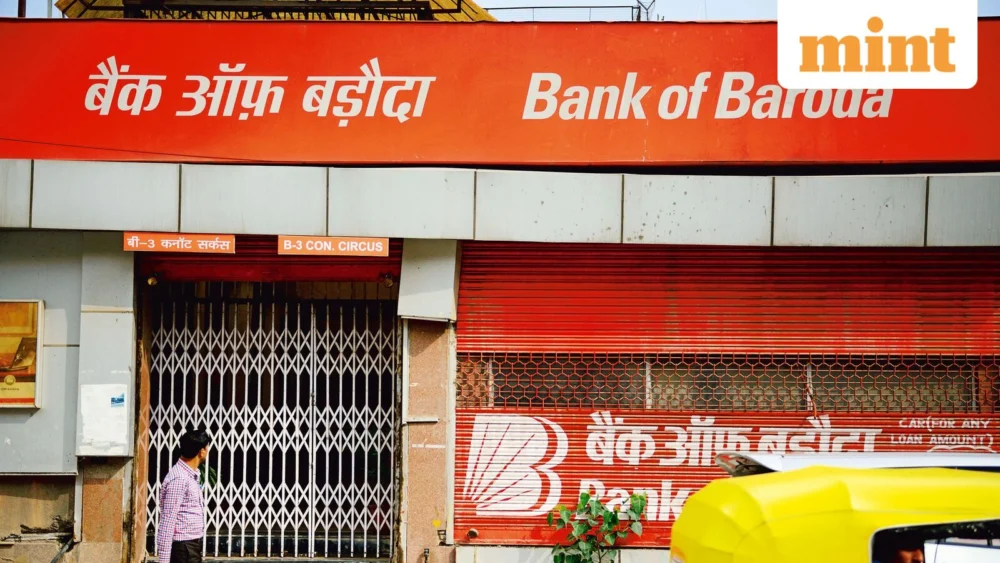
A significant disruption rippled through India’s public sector banking landscape in early 2026, as a consortium of employee unions orchestrated a nationwide strike, demanding the immediate implementation of a five-day work week. The industrial action, spearheaded by the United Forum of Bank Unions (UFBU), an umbrella organization representing nine prominent bank unions across the country, brought essential services to a halt at numerous state-owned financial institutions, including titans like the State Bank of India (SBI), Punjab National Bank (PNB), Bank of Baroda, and Canara Bank. This organized protest compounded challenges for millions of citizens and businesses, coming immediately after an extended three-day public holiday weekend that had already limited access to banking services, intensifying the public’s inconvenience.
The core of the employees’ grievance centers on a long-standing demand for a standardized five-day work week, a norm prevalent in many other sectors and global financial markets. Currently, Indian public sector banks operate on a six-day work week, with closures only on Sundays and the second and fourth Saturdays of each month. Union representatives argue that this schedule places undue strain on employees, impacting their work-life balance and overall well-being. According to Wilbur Anton, General Secretary of the National Confederation for Bank Employees (NCBE) Maharashtra, the protest was conducted in a "calm and disciplined manner," emphasizing the earnestness of their plea for improved working conditions. Sanjay Kuthe, General Secretary of the Indian Bank Officers Association for Maharashtra and Goa, highlighted that this demand had been "pending for a long time" and was "delayed by over two years," underscoring the unions’ growing frustration.
To mitigate concerns about potential loss of productivity, the UFBU had previously proposed a compromise: while advocating for a five-day week, they committed to extending daily working hours by an additional 40 minutes from Monday to Friday. This concession, they argued, would ensure that the total man-hours remained consistent, demonstrating a willingness to negotiate a solution that balances employee welfare with operational efficiency. However, the lack of progress in negotiations ultimately led to the strike call, indicating a perceived impasse with management and government stakeholders.
The ramifications of such an extensive strike are multifaceted, touching various economic strata. Services crucial for daily commerce and individual financial management were severely impacted. Cash deposits and withdrawals, the processing and clearance of cheques, and critical administrative tasks ground to a halt at affected public sector bank branches. Given that public sector banks collectively hold a substantial share of India’s banking assets and cater to a vast customer base, particularly in semi-urban and rural areas, the disruption’s scale was significant. For small and medium-sized enterprises (SMEs) relying on daily transactions for cash flow, or individuals needing urgent access to funds, the timing, immediately after a long weekend, exacerbated difficulties.
In contrast, major private sector lenders such as HDFC Bank, ICICI Bank, Axis Bank, and Kotak Mahindra Bank remained largely unaffected. Their employees are typically not affiliated with the unions participating in the strike, allowing their operations to continue normally. This divergence in operational status highlights a growing divide in India’s financial sector, where private players, often perceived as more agile and technologically advanced, can offer uninterrupted services during periods of public sector industrial action. This situation invariably prompts some customers to consider shifting their banking relationships, potentially accelerating the ongoing trend of market share migration from public to private banks.
While physical branch operations were severely hampered, essential digital banking services largely remained operational. Mobile banking applications, internet banking portals, and the extensive network of Automated Teller Machines (ATMs) continued to function normally. This provided a critical safety net, allowing tech-savvy customers to manage urgent transactions, transfer funds, and withdraw cash, thereby mitigating some of the broader economic paralysis that would have occurred a decade ago. However, a significant portion of India’s population, particularly in rural and elderly demographics, still relies heavily on traditional branch banking for more complex transactions, personalized assistance, or simply due to limited digital literacy, making the strike’s impact acutely felt by these segments.
The demand for a five-day work week is not isolated to India. Globally, a growing number of countries and industries have adopted or are actively exploring shorter work weeks, driven by considerations of employee well-being, productivity gains, and talent retention. Countries like the UK, Iceland, and parts of the US have seen trials of four-day work weeks, with often positive results in terms of employee morale, reduced absenteeism, and even improved output. For the Indian banking sector, which often faces intense pressure and long working hours, aligning with such global best practices could be a significant step towards modernizing its human resources policies and attracting top talent amidst fierce competition from other sectors and private banking entities.
Economically, a single day of banking disruption can translate into substantial losses. With India’s economy heavily reliant on the smooth flow of capital, delayed cheque clearances, halted loan disbursements, and deferred trade finance transactions can create bottlenecks across supply chains and commercial activities. While exact figures are difficult to ascertain for a single-day strike, estimates suggest that the collective value of transactions processed by India’s banking system daily runs into trillions of rupees. Even a partial disruption affects liquidity, delays payments, and can cause ripple effects for businesses dependent on timely financial operations. The State Bank of India, in a prior official statement, had indeed "warned of possible disruption," acknowledging the potential for work to be "impacted by the Strike."
The strike also brings to the forefront the evolving dynamics of labor relations in a rapidly digitizing economy. As banking operations increasingly shift online, the nature of branch-based work is changing. Unions argue that employees are adapting to new technologies and working efficiently, justifying a more balanced work schedule. Conversely, bank management and government entities must weigh employee demands against the imperative of maintaining robust, uninterrupted services to a vast and diverse populace, while also considering the financial implications of operational changes, including potential overtime costs or the need for additional staffing if daily hours are not sufficiently extended.
Looking ahead, the resolution of the five-day work week demand will likely set a precedent for future labor negotiations in India’s financial sector. It underscores the ongoing tension between traditional operational models and the aspirations of a modern workforce seeking better work-life integration. While the immediate impact of the strike highlights the critical role of public sector banks in the Indian economy, it also emphasizes the growing reliance on digital alternatives and the competitive edge held by private sector players during such disruptions. A sustainable resolution will require comprehensive dialogue between unions, bank management, and government, balancing employee welfare with the broader objectives of financial stability, efficiency, and customer service in a rapidly advancing global economy. The incident serves as a stark reminder of the intricate balance required to maintain industrial harmony within a vital economic pillar.