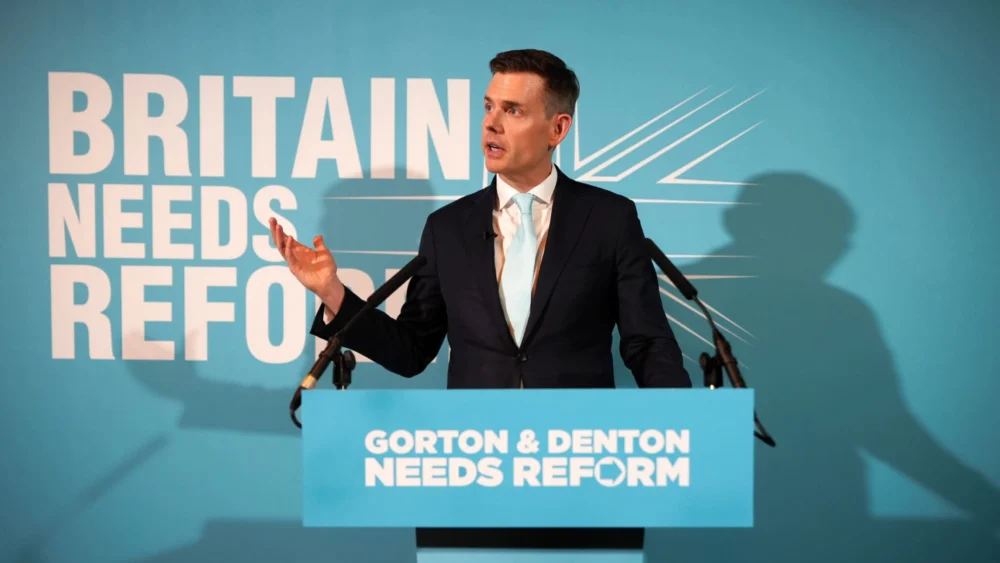
The British political theater is currently witnessing a profound recalibration as the Labour Party, under the leadership of Sir Keir Starmer, pivots toward a strategy of aggressive centrism while simultaneously confronting the resurgence of right-wing populism. This tension reached a boiling point this week when Starmer directed a blistering critique at a Reform UK by-election candidate, characterizing the party’s platform and rhetoric as "toxic." This exchange is not merely a localized skirmish over a single parliamentary seat; rather, it serves as a microcosm of the broader ideological and economic divisions currently fracturing the United Kingdom’s electorate. As the country moves closer to a general election, the clash between Starmer’s vision of "stability and securonomics" and Reform UK’s brand of disruptive populism is becoming the central narrative of British public life.
The specific condemnation from Starmer targets a growing trend in the British political landscape where the traditional binary of Conservative versus Labour is being disrupted by insurgent forces. Reform UK, the spiritual and structural successor to the Brexit Party, has found fertile ground in the "Red Wall" and traditional Tory heartlands alike, capitalizing on a pervasive sense of disenfranchisement. Starmer’s use of the word "toxic" is a deliberate attempt to draw a "cordon sanitaire" around the populist right, positioning Labour as the only viable custodian of institutional integrity and social cohesion. For Starmer, the rhetoric employed by Reform UK candidates—often centered on hardline immigration stances, the abandonment of Net Zero targets, and a radical dismantling of the regulatory state—represents a threat to the pragmatic governance required to navigate the UK’s current economic malaise.
To understand the weight of this political friction, one must examine the underlying economic data that fuels populist sentiment. The United Kingdom is currently grappling with a "productivity puzzle" that has seen stagnant wage growth for nearly fifteen years, exacerbated by a cost-of-living crisis that remains stubbornly persistent despite a slow decline in headline inflation. According to the Office for National Statistics (ONS), real household disposable income is expected to remain below pre-pandemic levels for the foreseeable future. This economic stagnation provides a potent backdrop for Reform UK’s messaging, which often mirrors the "anti-establishment" fervor seen in the United States’ MAGA movement or the rise of the Alternative for Germany (AfD). By framing the political establishment as a monolithic "Blob" that has failed the working class, Reform UK forces Starmer to defend not just his party, but the very concept of mainstream parliamentary democracy.
The rise of Reform UK poses a symmetrical threat to both major parties, albeit in different ways. For the Conservative Party, the threat is existential; polling data suggests that Reform UK is siphoning off between 10% and 15% of the 2019 Tory vote share, effectively acting as a "spoiler" in dozens of marginal constituencies. For Starmer’s Labour, the challenge is more nuanced. While the split on the right makes a Labour majority more likely, the "toxic" politics Starmer decries could force the party into uncomfortable territory regarding immigration and cultural identity. Starmer’s strategy has been to lean into "Securonomics"—a term coined by Shadow Chancellor Rachel Reeves—which emphasizes resilient supply chains and active state intervention in the green energy transition. However, this high-minded economic theory often struggles to compete with the visceral, simplified slogans of populist rivals during a heated by-election campaign.
Global comparisons further illuminate the stakes of this confrontation. Across the G7, centrist leaders are finding it increasingly difficult to maintain a consensus on globalization and liberal internationalism. In France, Emmanuel Macron faces a perennial challenge from Marine Le Pen’s National Rally, while in Canada, the political discourse has sharpened significantly between Justin Trudeau’s Liberals and a more populist-leaning Conservative Party. Starmer’s attempt to brand his opponents as "toxic" is a tactic mirrored by many of these international peers, seeking to delegitimize populism by highlighting its potential for social division. Yet, as seen in the Netherlands with the recent success of Geert Wilders, such labeling can sometimes backfire, reinforcing the "us versus them" narrative that populists thrive upon.
From a business and market perspective, the "toxicity" of political discourse is more than a social concern; it is a matter of sovereign risk. International investors and the City of London have spent much of the last decade navigating the volatility brought on by the Brexit referendum and the subsequent frequent changes in Downing Street leadership. The prospect of a fragmented Parliament or a campaign dominated by extreme rhetoric creates an environment of uncertainty that can deter Foreign Direct Investment (FDI). Starmer’s outreach to the business community—often referred to as the "smoked salmon circuit"—is designed to reassure markets that a Labour government would provide the "boring" stability that capital markets crave. By attacking Reform UK’s rhetoric, Starmer is signaling to the global financial community that he is prepared to be the "adult in the room," protecting the UK’s fiscal framework from the radical tax-cutting or spending-slashing proposals often floated by the populist right.
The impact of this political polarization on social cohesion cannot be overstated. The rhetoric used in recent by-elections has frequently touched upon sensitive issues of national identity and the integration of migrant communities. When Starmer refers to "toxic" politics, he is pointing toward a style of campaigning that risks inflaming community tensions for short-term electoral gain. Economic analysis suggests that social instability correlates negatively with long-term growth; a fractured society is less likely to achieve the consensus needed for major infrastructure projects, housing reform, or educational investment. The UK’s current housing shortage, for instance, requires a decade-long commitment to planning reform that could be easily derailed by populist "not-in-my-back-yard" (NIMBY) sentiment or anti-development rhetoric.
Moreover, the role of the media and digital echo chambers has amplified the reach of the candidates Starmer is criticizing. Reform UK has leveraged social media platforms to bypass traditional journalistic gatekeepers, allowing their message to reach disillusioned voters directly. This digital-first strategy makes the "toxic" label difficult to stick, as the party’s supporters often view such criticisms from the Labour leader as proof that they are successfully challenging the status quo. The economic impact of this digital fragmentation is a more volatile electorate, where swings in public opinion can happen with unprecedented speed, making it difficult for businesses to plan for long-term regulatory environments.
As the UK prepares for the next general election, the "Starmer versus Populism" dynamic will likely intensify. The Labour leader is betting that the British public is exhausted by the "chaos" of the last several years and is ready for a return to technocratic, steady governance. However, the success of Reform UK in by-elections suggests that a significant portion of the population feels that "steady" governance is exactly what has led to their current economic stagnation. To truly neutralize the "toxic" politics he decries, Starmer will need to offer more than just a critique of his opponents’ rhetoric; he will need to demonstrate that his economic model can deliver tangible improvements in the standard of living for those currently tempted by the populist fringe.
In the final analysis, the clash over a by-election candidate is a symptom of a deeper struggle for the soul of the British economy. Will the UK follow the path of many of its Western peers toward a more polarized, populist-driven political cycle, or can Starmer successfully re-establish a centrist consensus built on fiscal discipline and social investment? The "toxic" label may serve as a useful rhetorical tool in the short term, but the long-term health of the British state will depend on whether the political center can address the genuine economic grievances that give populist candidates their power. For now, the markets remain cautious, the electorate remains divided, and the rhetoric continues to sharpen, signaling a transformative and potentially volatile period ahead for the United Kingdom.