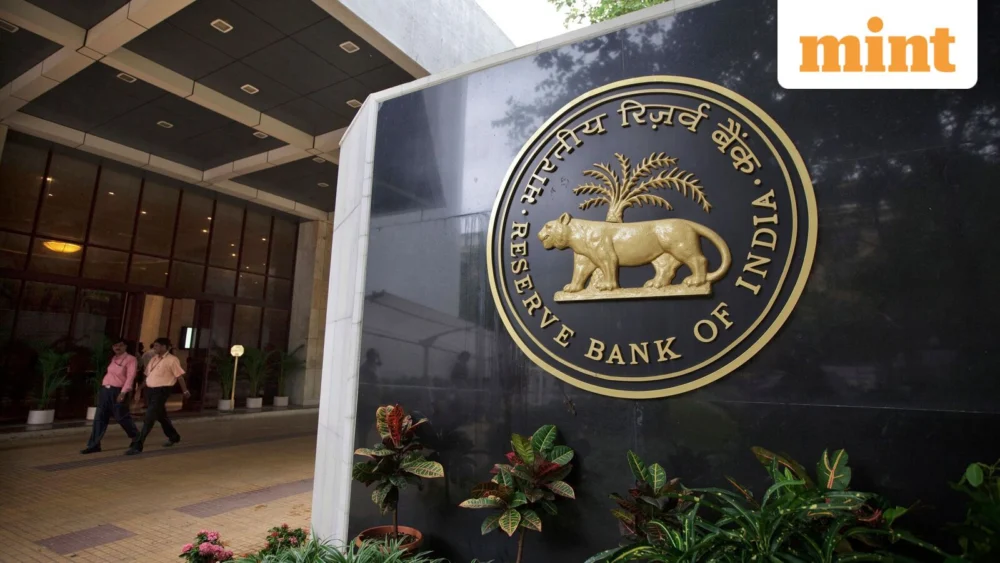
Mumbai witnessed a significant stride in international financial cooperation this week as the European Securities and Markets Authority (ESMA), the European Union’s principal financial markets regulator, announced a renewed information exchange agreement with the Reserve Bank of India (RBI). This landmark accord is poised to restore the recognition of Indian central counterparties (CCPs) for EU clearing members, effectively ending a protracted standoff that spanned over three years and threatened to impede cross-border financial transactions. The resolution underscores a shared commitment to global financial stability and comes on the heels of the finalization of a comprehensive Free Trade Agreement (FTA) between India and the EU, signalling a broader strategic alignment aimed at doubling bilateral trade and fostering deeper economic ties.
The core of the dispute lay in differing interpretations of supervisory jurisdiction over critical financial infrastructure. Central counterparties, or clearing houses, are vital entities in the global financial ecosystem, acting as intermediaries between buyers and sellers to mitigate counterparty risk in derivatives and other financial transactions. Following the 2008 financial crisis, global regulators, including the EU, implemented stringent frameworks to enhance transparency and reduce systemic risks. The European Market Infrastructure Regulation (EMIR), enacted in 2012, mandates that CCPs serving EU clearing members must be approved by ESMA, which typically requires a robust information-sharing agreement and, in some cases, direct supervisory access or reliance on an equivalent regulatory regime.
The disagreement emerged when ESMA sought to revise an earlier Memorandum of Understanding (MoU) that had been in place since February 2017, demanding greater supervisory insights into Indian clearing corporations. The RBI, asserting its sovereign regulatory authority, resisted granting what it perceived as extraterritorial inspection powers to a foreign regulator over domestically supervised entities. This impasse led to the expiry of the previous MoU in March 2022, and despite initial deferrals, ESMA proceeded in October 2022 to withdraw recognition from six prominent Indian clearing houses: Clearing Corp. of India Ltd (CCIL), Indian Clearing Corp. Ltd, India International Clearing Corp. Ltd, NSE Clearing Ltd, NSE IFSC Clearing Corp. Ltd, and Multi Commodity Exchange Clearing Corp. Ltd.
The derecognition had immediate and tangible consequences for European banks and financial institutions operating in India. Under the Basel III capital adequacy framework, exposures to unrecognised CCPs carry significantly higher risk-weighted asset (RWA) charges. For instance, EU banks faced the prospect of applying a punitive 1250% risk weight to uncollateralized exposures to these non-qualified CCPs, or a 4% capital charge on the gross notional amount for cleared derivatives. This regulatory imposition translated directly into a substantial increase in capital allocation requirements, rendering certain India-linked transactions, particularly in the derivatives, government securities, and foreign exchange markets, prohibitively expensive or commercially unviable for EU clearing members.
For a market as dynamic and crucial as India’s, where the Clearing Corp. of India Ltd (CCIL) alone clears the vast majority of transactions in government securities, money market instruments, and foreign exchange, the absence of an ESMA-recognized clearing pathway posed a significant operational hurdle. EU banks active in these segments found themselves in a bind, with no practical alternative to the domestic clearing infrastructure. While the overall impact on the broader Indian market might not have been systemic, the increased cost of capital and regulatory friction undoubtedly constrained the participation of European entities, potentially hindering foreign direct and portfolio investment flows into India’s rapidly growing financial landscape. Analysts estimated that the additional capital burden could run into hundreds of millions of euros for major European banks with substantial Indian exposures, thereby impacting their profitability and strategic decisions regarding their presence in the Indian market.
The renewed agreement, heralded by ESMA as a "significant step towards restoring access," establishes a robust framework for information exchange, allowing ESMA to place reliance on RBI’s regulatory and supervisory activities. This cooperative model respects the sovereignty of the domestic regulator while ensuring that EU financial stability concerns are adequately addressed. Importantly, it paves the way for CCIL, and potentially other Indian CCPs, to re-apply for ESMA recognition, a process that is now expected to proceed smoothly under the new understanding. This diplomatic resolution exemplifies ESMA’s stated commitment to international supervisory cooperation and mutual support in advancing safe, resilient, and open financial markets globally.
From the Indian perspective, the RBI emphasized that the new MoU safeguards the European Union’s financial stability while allowing ESMA to trust the robustness of India’s regulatory oversight. This mutual reliance model avoids the contentious issue of direct foreign supervisory access, opting instead for a framework of trust and information sharing that is increasingly common in cross-border financial regulation. The resolution reflects a maturing approach to international regulatory cooperation, where national interests are balanced with the imperative of global financial stability. The prompt re-recognition of Indian CCPs will provide considerable regulatory relief for European banks, significantly easing their risk-weighted asset burden and making operations in India more cost-effective and attractive.
The timing of this agreement, coinciding with the finalization of the India-EU Free Trade Agreement, is particularly noteworthy. The FTA, which aims to liberalize trade in goods and services, reduce tariffs, and address non-tariff barriers, is a testament to the deepening strategic and economic partnership between India and the 27-member bloc. The resolution of the clearing house impasse removes a critical piece of financial friction, ensuring that the infrastructure for cross-border capital flows is robust and efficient, thereby complementing the broader trade liberalization efforts. A seamless financial clearing mechanism is fundamental to supporting increased trade and investment volumes envisioned under the FTA.
Beyond the immediate relief for European banks and the operational streamlining for Indian clearing houses, this development has broader implications. It signals India’s increasing integration into the global financial architecture and its willingness to engage constructively with international regulatory bodies to foster a more stable and interconnected financial system. For the EU, it reinforces its commitment to maintaining open financial markets with key global partners, even amidst calls for greater strategic autonomy. The agreement could also serve as a template for resolving similar cross-border regulatory challenges, particularly in an era where financial markets are increasingly globalized but regulatory frameworks often remain national.
Looking ahead, while the immediate hurdle has been cleared, the process of formal re-recognition for the Indian CCPs, particularly CCIL, will still require adherence to ESMA’s procedures. The clearing houses, which have been awaiting formal communication, will need to initiate their re-application processes, a step that is now expected to be largely administrative given the overarching agreement. The continued dialogue and robust information exchange between the RBI and ESMA will be crucial in ensuring the long-term stability and effectiveness of this renewed cooperative framework. This landmark agreement not only resolves a critical regulatory dispute but also lays a stronger foundation for enhanced economic cooperation and capital mobility between two of the world’s largest economic blocs.