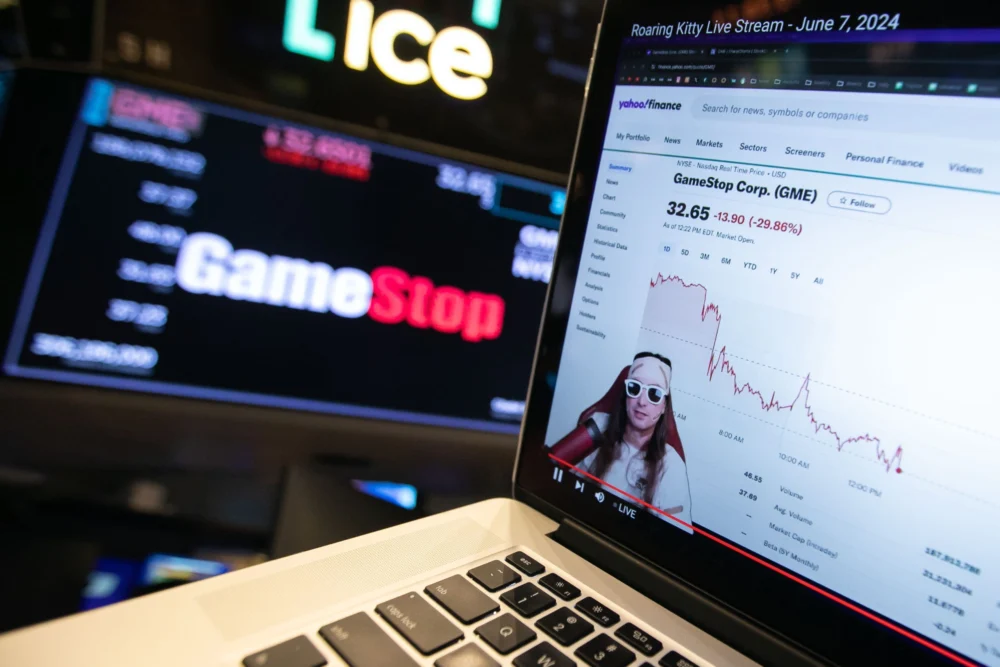
Half a decade has passed since a decentralized collective of digital iconoclasts, organized through the subreddits of the internet, orchestrated a short squeeze on GameStop that reverberated through the marble halls of the New York Stock Exchange. At the time, veteran fund managers dismissed the phenomenon as a fleeting fever dream—a byproduct of pandemic-induced boredom and government stimulus checks. Yet, five years later, the "meme stock" era has not faded into a historical footnote. Instead, it has matured into a sophisticated, permanent, and formidable segment of the global financial architecture. The era of dismissing individual traders as "dumb money" has ended, replaced by a market reality where retail sentiment is a primary variable in institutional risk models.
The evolution of the retail investor from a peripheral participant to a market-moving force is evidenced by a seismic shift in trading volumes. Before the 2020 lockdowns, individual investors accounted for a negligible fraction of daily U.S. equity turnover, often hovering in the low single digits. Today, that participation has stabilized at nearly 20% of daily volume on average. During periods of high volatility, this figure can surge to 40%, while in the high-stakes world of options trading, retail participants frequently represent half of all activity. This is no longer a fringe movement; it is a structural pillar of liquidity that provides a consistent floor for equity prices, often serving as the "buyer of last resort" during institutional sell-offs.
This newfound influence was starkly illustrated during the market turbulence of early 2025. When geopolitical tensions and tariff-related anxieties triggered a sharp drawdown in the broader indices, it was not the hedge funds that stabilized the ship. Instead, a wave of retail "dip-buying" absorbed the selling pressure, preventing a localized correction from spiraling into a systemic rout. Experts at major financial institutions, including BlackRock and JPMorgan, have noted that this "correlated flow"—where millions of individual traders act with a collective, social-media-driven conviction—creates a market force that can overwhelm even the most well-capitalized institutional short positions.
The democratization of finance has been accelerated by a technological and regulatory perfect storm. The pivot to zero-commission trading in 2019 was the opening of the floodgates, but the subsequent introduction of fractional share ownership and the rise of 24/7 trading platforms have fundamentally altered the barrier to entry. In decades past, a single share of a high-flying tech giant might cost thousands of dollars, effectively barring the average worker from direct participation. Today, an investor can deploy five dollars into a fraction of a share, allowing for a level of portfolio diversification previously reserved for the wealthy. This shift has turned the stock market into a digital-first utility, accessible from a smartphone and integrated into the daily social habits of a younger generation.
Furthermore, the quality of information available to the average investor has undergone a radical upgrade. While the 2021 GameStop rally was fueled by raw enthusiasm and skepticism of Wall Street, the 2025 retail cohort is characterized by a higher degree of technical literacy. Retail traders now utilize advanced charting tools, alternative data sets, and sentiment analysis bots that were once the exclusive domain of quantitative hedge funds. This "democratization of intelligence" means that when retail investors move into a sector—such as the massive rotation into silver and energy stocks seen in 2026—they are often doing so based on a sophisticated understanding of macro-economic triggers, such as the U.S. strike on Venezuela or the metal’s surge past the $100 per ounce threshold.
Institutional players have been forced to adapt or face obsolescence. The "short squeeze" risk, once a rare tail event, is now a primary consideration for any fund looking to bet against a popular company. Hedge funds have significantly scaled back their "crowded" bearish positions, knowing that a coordinated retail counter-offensive can move a stock price in defiance of traditional fundamental valuation. Many firms now employ dedicated teams to monitor social media platforms like Reddit, X (formerly Twitter), and Discord, treating digital chatter as a legitimate leading indicator of price action. In the words of industry analysts, the retail investor has become the "villain" in the institutional narrative—a character that refuses to be written out of the script and continually disrupts the established plot.
The economic impact of this shift extends beyond simple price action; it is a fundamental redistribution of market power. We are currently witnessing the early stages of the "Great Wealth Transfer," an era-defining movement of assets from the Baby Boomer generation to Millennials and Gen Z. Over the next two decades, an estimated $120 trillion is expected to change hands. This younger demographic, raised on the volatility of cryptocurrencies and the social connectivity of meme stocks, views the market through a lens of "financial nihilism" and "aggressive participation." They are less likely to hand their capital over to a traditional wealth manager and more likely to manage it themselves through decentralized and digital-first platforms.
This generational shift is already visible in the data. Research from JPMorgan indicates that the percentage of 25-year-olds actively moving significant capital from low-yield checking accounts into brokerage accounts has increased sixfold over the last decade. These investors are not just looking for a 7% annual return; they are looking for engagement, community, and the ability to express a worldview through their capital. This has led to the rise of "thematic" retail investing, where capital flows are directed toward companies that align with social values or emerging technological trends, such as AI-driven energy solutions or decentralized finance.
The resilience of the retail investor is perhaps best exemplified by their behavior in the face of extreme volatility. During the "monster run" of silver in early 2026, retail participants did not panic-sell as prices approached the historic $100 mark. Instead, they utilized leveraged exchange-traded funds (ETFs) and complex options strategies to maximize their exposure, demonstrating a level of risk appetite that often exceeds that of professional treasurers. This "tenacity," as described by exchange executives, has earned the retail sector a level of respect that was unthinkable in 2021. The market is no longer a top-down hierarchy; it is a feedback loop where Main Street and Wall Street are in a constant, high-stakes dialogue.
Looking ahead, the infrastructure of global finance is being rebuilt to cater to this permanent retail presence. Major brokerages are moving toward 24/7 operations to mimic the "always-on" nature of the crypto markets. Prediction markets, where individuals can bet on everything from election outcomes to economic data releases, are booming as investors seek new ways to monetize their insights. Even private equity and venture capital—long the exclusive playground of institutional "accredited" investors—are beginning to open their doors to the general public through new fund structures.
The GameStop saga was not the end of a cycle, but the beginning of a new regime. The retail investor has proven to be a savvy, informed, and highly mobile force capable of providing liquidity when the "pros" flee and creating momentum where none existed. As the $120 trillion wealth transfer accelerates, the influence of the individual trader will only expand, further blurring the lines between the professional and the amateur. In this new world order, the most dangerous thing an institutional investor can do is underestimate the collective power of the person with a smartphone and a brokerage app. The "permanent rebellion" has moved from the forums to the core of the financial system, and it is here to stay.