Across bustling European capitals and North American metropolises, a distinctive new category of alcoholic beverages is emerging, born from the entrepreneurial spirit of the Indian diaspora. From the verdant hills of Ireland to the craft breweries of Maine and the logistical hubs of Central Europe, founders of Indian origin are crafting gins, beers, and spirits that draw deep inspiration from India’s rich culinary and aromatic heritage, yet are produced and perfected for a global palate outside the subcontinent. This phenomenon transcends simple imports; it signifies a sophisticated blending of cultural legacy with modern craft production, creating a potent new force in the international beverage industry.

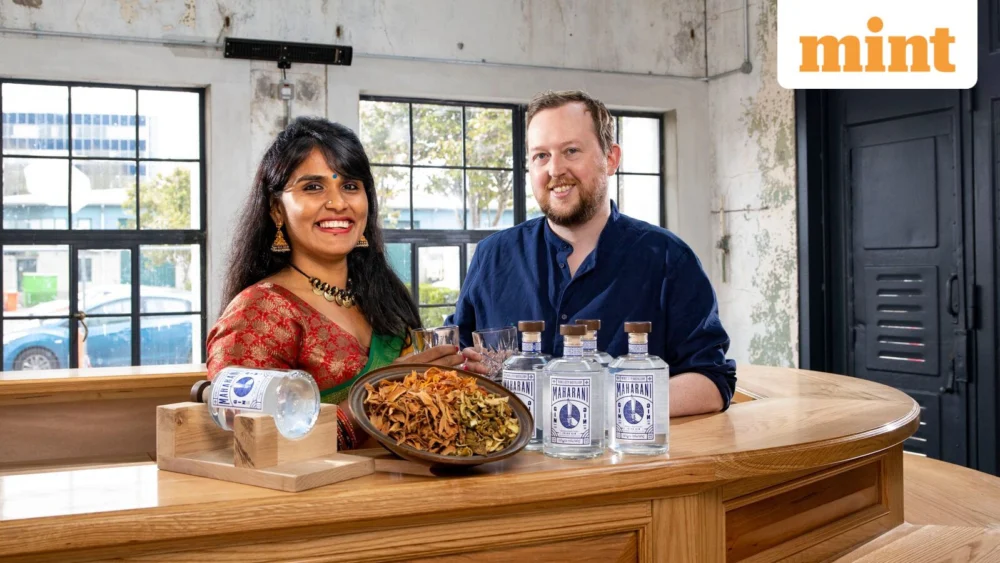
One prominent example of this innovative trend is Maharani Gin, a brand co-founded by Bhagyalakshmi Barrett with her Irish husband, Robert Barrett, at Cork’s Rebel City Distillery. Infused with distinctive Indian botanicals such as Kerala pepper, pomelo, and cassia, Maharani Gin has successfully transitioned from an intriguing niche product to a mainstream offering, securing a coveted nationwide listing with one of Ireland’s largest supermarket chains. This achievement underscores a critical shift: the willingness of European consumers to embrace South Asian flavour profiles in their spirits. Dai Bowes, manager at The Friary pub in Cork, praises Maharani for its smoothness and unique taste, noting its striking bottle design and the subtle yet discernible Indian influence. While some traditional gin drinkers may initially hesitate, the brand’s ability to carve out a loyal following demonstrates a growing appetite for diverse and well-crafted flavour experiences. This success story mirrors a broader trend within the global craft spirits market, which has seen robust growth, with consumers increasingly seeking unique, artisanal products that offer a compelling narrative and distinct flavour profiles beyond established brands. The global gin market alone is projected to reach over $20 billion by 2028, with craft and premium segments driving much of this expansion.
The journey of these diaspora brands is frequently rooted in practical challenges, particularly those exacerbated by recent global disruptions. In Portland, Maine, brothers Vanit and Sumit Sharma, heirs to a family legacy in Indian cuisine, observed first-hand the vulnerabilities of the international supply chain. Their parents’ restaurants, like many others, faced erratic supplies of imported Indian beers, leading to substitutions and customer dissatisfaction. Rather than passively await a return to normalcy, the Sharmas collaborated with veteran brewmaster Alan Pugsley to develop Rupee Beer. This low-carbonation lager, brewed with basmati rice, was meticulously designed to complement Indian and spicy foods, addressing the common issue of overly gassy beers intensifying the heat from curries. Their insight that "if your mouth is on fire, you don’t want a gassy beer" highlights a profound understanding of food pairing that resonates deeply with diners seeking a harmonious culinary experience.

A similar narrative unfolded on Canada’s west coast, where Vivek Taneja, co-founder of Baadshah Beer, identified significant gaps in the supply of Indian beers to British Columbia. Pre-existing inconsistencies were magnified during the pandemic, leading to a near-total disappearance of imports. Baadshah Beer launched in October 2022 and has rapidly secured taps in nearly 100 Indian restaurants across BC, alongside retail sales. These examples illustrate a critical post-pandemic shift: the recognition that importing low-margin, heavy commodities like beer remains economically volatile and logistically complex. Local brewing offers superior control over freshness, supply chain stability, and responsiveness to market demand, cementing restaurants as crucial early distribution channels.
Beyond addressing supply chain vulnerabilities, some brands have emerged from unforeseen circumstances, transforming challenges into opportunities. Chandramohan Nallur, a business consultant and vice-president of the Indo–Polish Chamber of Commerce in Warsaw, unexpectedly ventured into the beverage industry. In early 2022, a client faced a dilemma: a container of rice flakes (poha) was stranded due to the Russia-Ukraine war, with buyers retracting and storage costs escalating. After exploring various options, a serendipitous search led Nallur to the concept of rice-flake beer. Collaborating with a local brewer, he launched Malayali Beer. Initially intended as a solution for excess inventory, the beer quickly gained traction among European diners, who appreciated its lighter profile and reduced "burping" sensation compared to traditional lagers, particularly when paired with Indian food. This accidental experiment quickly scaled, with Malayali Beer now produced through contract breweries across five European countries and sold in 26 markets, moving close to half a million bottles by 2025.

Malayali Beer’s manufacturing model exemplifies agile entrepreneurship: leveraging underutilized capacity in European contract breweries. This mutually beneficial arrangement allows smaller brands to scale rapidly without heavy capital investment in their own plants, while breweries optimize their fixed costs. Nallur’s experience powerfully demonstrates that market appeal extends far beyond the diaspora. "Poland has 40 million people; Malayalis are just 5,000," he notes, emphasizing that "Our consumers are Europeans who love Indian cuisine." This insight is corroborated by restaurant owners like Arun Barot of Mr. India in Warsaw, who found repeat customer requests for Malayali Beer, underscoring its broad appeal. This underlines a crucial strategic pivot: for diaspora founders, "Indian" is evolving into a globally recognized flavour category, akin to Mexican or Japanese, offering universal appeal.
The "restaurant-first" distribution strategy is a common thread across many of these successful ventures. Rupee Beer, Baadshah Beer, and Malayali Beer all prioritized placement in Indian restaurants, using dining rooms as high-frequency sampling platforms. This approach offers multifaceted advantages: embedded marketing through menu listings, built-in product trials as part of a meal experience, and immediate, actionable feedback from restaurateurs and diners. The efficacy of this strategy is partly attributed to the historical presence and robust networks of communities like the Malayalis and Punjabis in global food service and catering sectors, providing an informal yet potent distribution infrastructure for early placements and customer engagement.

Pricing strategies further underscore the premium positioning of these brands. Maharani Gin, at approximately £35 in Ireland, competes within the craft gin segment (€25-45), aligning with artisanal Irish and British offerings rather than mass-market labels. Similarly, Rupee Beer’s basmati rice lager, priced at $15.99 for a four-pack in the US, fits squarely within American craft beer norms. Baadshah Beer in British Columbia, at $7-9, is comparable to other Canadian craft lagers. While Malayali Beer may cost double mainstream Polish beers, it remains competitive with other Indian-branded imports in Europe, signaling its premium perception.
Beyond beer and gin, traditional Indian spirits are finding new life abroad, particularly arrack – one of the subcontinent’s oldest distilled alcoholic beverages, often illegal or tightly restricted in India. Entrepreneurs like John Xavier of UK-based London Baron Ltd and Abish Cherian, President and CEO of Oxford Beverage Group, are building arrack brands within Western regulatory frameworks. This allows them to commercialize and elevate a spirit often relegated to the "illicit" category back home. Cherian’s Mandakini brand and Manavatty arrack draw on centuries-old fermentation traditions, benefiting from clear Western alcohol laws that enable investment, quality control, and formal marketing. Cherian succinctly articulates the value proposition: "You’re not exporting alcohol; you’re exporting knowledge – how it’s made, how it’s consumed." This technical emphasis, coupled with a commitment to compliance and consumer education, shapes their growth philosophy, prioritizing patience and quality over rapid scale. Mandakini, listed at CA$39.95 in Ontario, and Manavatty, priced at £30 in the UK and ₹3,150 at Kochi duty-free, are positioned as premium heritage spirits. Cherian’s Mandakini, nearing $1 million in business last year after export expansion, demonstrates the nascent but significant economic potential.

However, the path is not without its perils. Lijo Philip’s Kalikut 1498, a wheat beer inspired by Kerala’s spice routes, launched in Kraków shortly before the pandemic and ultimately succumbed to lockdown-induced logistical freezes in 2021. This highlights the inherent vulnerabilities of new ventures, particularly in the logistics-intensive alcohol sector, where disruptions can be fatal.
The irony remains that India, the cultural wellspring for these innovations, often proves a challenging "home" market due to complex import regulations, high taxes, and a price-sensitive mass market. While Malayali Beer sells for ₹480 a can at Kochi International Airport, reflecting cumulative logistics and taxes, mass-market lagers in India typically retail for ₹150-250. Yet, for Nallur, witnessing strangers at Kochi airport discussing his premium cans represented a powerful validation of his brand’s global journey.

This emerging segment of diaspora-led alcohol brands represents more than just commercial enterprise; it is a profound act of cultural entrepreneurship. By leveraging modern production techniques, astute market positioning, and an intimate understanding of both Indian heritage and global consumer trends, these founders are not only creating successful businesses but also contributing to India’s soft power. They are carving out a distinct niche that celebrates cultural authenticity while embracing international appeal, promising a future where "Indian flavour" stands as a globally recognized and celebrated category in the sophisticated world of craft beverages. The trajectory of these brands suggests that the high for this unique blend of heritage and innovation is yet to come.