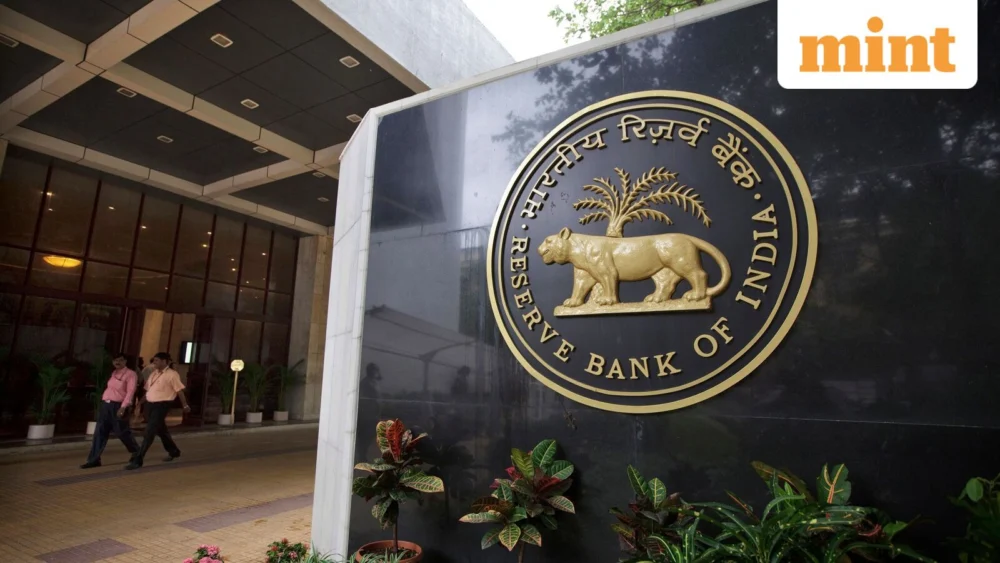
The Reserve Bank of India (RBI) has announced a significant new package of measures, including a third tranche of open market operations (OMOs) for government securities purchases totaling ₹1 trillion and dollar-rupee buy/sell swaps amounting to $10 billion, signaling an intensified effort to stabilize systemic liquidity and bolster the national currency. This proactive intervention, scheduled for February, comes as the Indian rupee recently plumbed a new record low against the US dollar, reflecting mounting pressures from capital outflows and domestic market dynamics. The central bank’s actions underscore a persistent commitment to maintaining orderly market conditions ahead of its crucial Monetary Policy Committee (MPC) meeting.
A Multi-pronged Approach to Market Stability
The latest round of liquidity injections builds on earlier initiatives this fiscal year, with the RBI set to acquire government securities worth ₹50,000 crore on February 5 and another ₹50,000 crore on February 12. These OMOs are a conventional monetary tool designed to infuse durable liquidity into the banking system by purchasing government bonds from commercial banks, thereby increasing their cash reserves available for lending and investment. Simultaneously, the auction of three-year dollar-rupee buy/sell swaps on February 4, valued at $10 billion, aims to address foreign exchange liquidity concerns. In a dollar-rupee buy/sell swap, the RBI buys dollars from banks for a specific period and simultaneously agrees to sell them back at a future date, providing dollar liquidity to the market while temporarily absorbing rupees. This mechanism helps to ease dollar demand and reduce pressure on the rupee. Further complementing these long-term measures, the RBI also announced a 90-day Variable Rate Repo (VRR) operation of ₹25,000 crore for January 30, a shorter-term tool that allows banks to borrow funds at market-determined rates, offering immediate, though transient, relief to liquidity shortfalls.
These interventions are not isolated but form part of a series of actions initiated by the RBI. The first tranche was unveiled alongside the December 2025 monetary policy statement, comprising ₹1 trillion in OMO purchases and $5 billion in dollar-rupee swaps. This was followed by a doubling of the scale in late December 2025, with the central bank committing to ₹2 trillion in OMOs and $10 billion in dollar-rupee swaps for January 2026. The latest announcement, therefore, represents an escalation in the RBI’s efforts, signaling a clear acknowledgment of the deep-seated liquidity and currency challenges confronting the economy.

The Rupee’s Unprecedented Weakness
The urgency of the RBI’s latest measures is underscored by the rupee’s recent depreciation. The domestic currency touched an all-time low of 91.97 against the US dollar intraday, subsequently closing marginally higher at 91.96. This record low surpassed the previous nadir of 91.75 recorded just two days prior, on January 21. The persistent downward pressure on the rupee stems from a confluence of factors, primarily a significant selloff in domestic equities by foreign institutional investors (FIIs), robust dollar outflows, and heightened demand from importers. In the current calendar year, FIIs have divested shares worth an estimated ₹36,587 crore, with the selling intensity accelerating in recent weeks. This capital flight has been exacerbated by global risk aversion, potentially driven by expectations of higher interest rates in developed economies, making emerging markets less attractive.
A weaker rupee has broad economic implications. It escalates the cost of imports, particularly crude oil and other essential commodities, fueling inflationary pressures within the economy. For a net oil importer like India, currency depreciation can quickly translate into higher fuel prices, impacting transportation, manufacturing, and ultimately, consumer spending. While a weaker currency theoretically benefits exporters, the current global economic slowdown and subdued demand may limit this advantage. Moreover, it increases the burden of servicing foreign-denominated debt for Indian companies and the government, adding to financial stress. The RBI’s consistent interventions in the foreign exchange market, though not always publicly disclosed in real-time, have been crucial in curbing excessive volatility and preventing an even sharper depreciation.
Navigating India’s Liquidity Squeeze
Beyond currency concerns, the Indian banking system has been grappling with persistent liquidity tightness. This condition, characterized by a deficit of funds in the interbank market, has been a key focus for market participants and economists alike. A primary driver of this tightness is the substantial borrowing program undertaken by both the central and state governments, projected to be around ₹30 trillion for the current fiscal year. Such large-scale government borrowing often "crowds out" private sector access to funds, pushing up bond yields and increasing overall borrowing costs for businesses. Other contributing factors to the liquidity deficit include seasonal currency demand, advance tax payments by corporations, and slower growth in bank deposits relative to credit demand.

The tightness in liquidity manifests in elevated overnight money market rates, indicating banks’ struggle to meet their short-term funding needs. This can impede credit growth, a vital component for economic expansion. Market participants have consistently urged the RBI to address this structural liquidity deficit, advocating for measures that inject durable, rather than transient, funds into the system. In pre-policy consultations, economists and financial experts reportedly advised the central bank to prioritize easing liquidity conditions over further interest rate cuts. Suggestions included the publication of an indicative OMO calendar for the next financial year, potentially up to ₹5 trillion, to provide greater predictability and allow markets to plan effectively. Additionally, there were calls for longer-duration variable-rate repos (VRRs) and even the reintroduction of targeted long-term repo operations (TLTROs), which provide banks with long-term funds at favorable rates for specific lending purposes.
Monetary Policy and the Road Ahead
The upcoming Monetary Policy Committee (MPC) meeting, scheduled for February 4-6, takes on heightened significance against this backdrop. While the RBI has cumulatively cut the policy repo rate by 25 basis points since February 2025, signaling an accommodative stance, the focus for this meeting is likely to remain firmly on liquidity management and financial stability. The central bank faces a delicate balancing act: supporting economic growth through ample liquidity while simultaneously managing inflationary pressures and maintaining currency stability. Global factors, including the trajectory of commodity prices, geopolitical developments, and the monetary policy stance of major global central banks like the US Federal Reserve, will also heavily influence the RBI’s decisions.
The RBI’s explicit statement that it "will continue to monitor evolving liquidity and market conditions and take measures as appropriate to ensure orderly liquidity conditions" underscores its readiness to act flexibly. This commitment is crucial for reassuring markets and preventing undue speculation. The effectiveness of these interventions will depend on several factors, including the persistence of FII outflows, the global strength of the dollar, and the domestic economic growth momentum. A sustained recovery in FII sentiment, potentially driven by an improving global outlook or stronger domestic corporate earnings, could alleviate some of the pressure on the rupee. Similarly, a moderation in government borrowing or an acceleration in deposit growth could naturally ease liquidity constraints.
In an increasingly interconnected global economy, India’s challenges are not unique. Many emerging markets are grappling with capital outflows and currency depreciation as global liquidity tightens and investors seek safer havens or higher yields elsewhere. However, India’s robust foreign exchange reserves, proactive central bank, and relatively strong macroeconomic fundamentals offer a degree of resilience. The latest package of measures reflects a comprehensive and adaptive strategy by the RBI to navigate these complex domestic and international headwinds, aiming to safeguard financial stability and support the broader economic recovery. The upcoming MPC meeting will provide further clarity on the central bank’s medium-term outlook and its strategic framework for the months ahead.