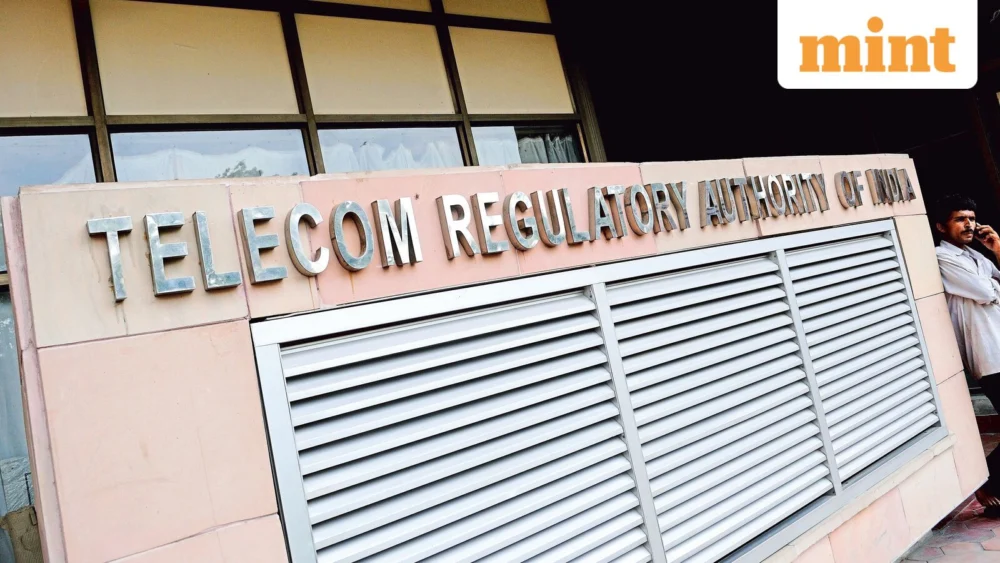
For a critical regulatory body entrusted with safeguarding one of the world’s largest and most dynamic telecommunications markets, the ongoing inability to legally own its own headquarters presents an unusual operational and symbolic challenge. Nearly two years after the Telecom Regulatory Authority of India (TRAI) commenced operations from its new premises within the sprawling World Trade Centre complex in New Delhi’s Nauroji Nagar, the formal registration of the property remains in bureaucratic limbo. This administrative entanglement underscores a broader narrative of operational constraints and a persistent quest for greater functional independence that TRAI has been advocating for, crucial for a sector that serves over 1.1 billion subscribers and contributes significantly to India’s digital economy.
The genesis of the current predicament traces back to a financial dispute between TRAI and NBCC (India) Ltd, the state-owned construction giant responsible for developing the World Trade Centre. TRAI, established in 1997 and operating from rented accommodations for decades, received government approval in November 2020 to acquire its own office space. The regulator subsequently moved into floors four to seven of Tower F, a substantial 1.16 lakh square feet of prime commercial real estate, a project valued at approximately ₹450 crore. However, the formal transfer of ownership, contingent on a No-Objection Certificate (NOC) from the Ministry of Housing and Urban Affairs, has been stalled. NBCC has levied an interest charge of ₹56.8 lakh, citing delayed payment by TRAI, a claim the regulator vehemently disputes.
According to officials familiar with the matter, the delay in payment by TRAI was a direct consequence of the premises being handed over in an "incomplete state" in May 2024. Issues such as ongoing construction on upper floors of Tower F led to water seepage within TRAI’s occupied areas, causing damage to interiors and furniture. This necessitated TRAI withholding a portion of the payment – specifically ₹30 lakh – until the rectification of these deficiencies. While this amount was eventually released in December 2024 upon completion of the remedial work, NBCC’s subsequent demand for interest has created an impasse. TRAI has communicated repeatedly with NBCC, seeking a waiver of these charges, which it deems illegitimate given the circumstances, and has also escalated the matter to the Ministry of Housing and Urban Affairs. However, NBCC maintains its position, stating that its e-auction terms clearly stipulate interest charges for delayed payments, calculated at SBI Highest MCLR + 2%, and that the NOC will only be issued upon receipt of full payment.

The implications of this protracted dispute extend beyond a mere bureaucratic hiccup. Without legal registration, TRAI cannot formally establish ownership of its headquarters. This lack of legal title creates significant hurdles, not least in accessing the remaining project funds required for essential payments like stamp duty and other statutory charges. The Ministry of Communications, under which TRAI operates, has reportedly been pressing the regulator to return any unspent funds, further intensifying the need for formal registration. TRAI relies on grants from the Department of Telecommunications (DoT) for its operational expenses, with its general fund set at ₹130 crore for FY25 and ₹131 crore for FY26. While it received additional grants for the building project during its construction phase, the current deadlock threatens to tie up crucial resources and divert managerial attention from its core mandate. Industry analysts suggest that such administrative quagmires can subtly erode public trust and project an image of internal disarray, potentially weakening the regulator’s stance in broader policy discussions.
Beyond the brick-and-mortar issues, TRAI is simultaneously pushing for a more fundamental restructuring of its powers and financial model. Its current legislative framework, primarily the TRAI Act of 1997, grants it significant regulatory and advisory functions but limits its enforcement capabilities. This structural constraint means TRAI largely relies on the DoT for initiating license actions against non-compliant operators, a process that can be slow and cumbersome. This limited enforcement authority has, according to TRAI’s own observations, hampered its effectiveness in addressing persistent issues such such as deteriorating service quality, rampant unsolicited commercial communications (spam calls and messages), and ensuring fair competition in a rapidly evolving market.
The Indian telecom sector, characterized by fierce competition among a handful of major players like Reliance Jio, Bharti Airtel, and Vodafone Idea, boasts some of the lowest data tariffs globally but often struggles with perceived service quality. TRAI’s efforts to curb issues like call drops, inconsistent data speeds, and the pervasive problem of spam calls have often been met with limited success, partly attributed to its inability to directly impose and recover significant penalties. "A truly effective regulator needs sharp teeth, not just a strong voice," notes a senior telecom consultant, highlighting the global best practice where regulators like the FCC in the US or Ofcom in the UK possess direct, robust enforcement powers, including the ability to levy substantial fines without prolonged bureaucratic intervention.
In its annual report for FY25, TRAI articulated a compelling case for amending the TRAI Act to secure greater enforcement powers and financial autonomy. The regulator has specifically proposed that a minor portion of the license fees collected from telecom entities be allocated to cover its operational expenses, transforming these into administrative charges. This shift, TRAI argues, would eliminate its dependence on governmental grants-in-aid, providing the flexibility and independence crucial for effective regulation. This model draws parallels with other prominent Indian financial market regulators, such as the Securities and Exchange Board of India (SEBI), the Reserve Bank of India (RBI), and the Insurance Regulatory and Development Authority of India (IRDAI), all of which enjoy a degree of financial self-sufficiency that bolsters their independence.

The Ministry of Housing and Urban Affairs, while looking into the TRAI-NBCC dispute, faces the delicate task of balancing the regulator’s specific grievances with broader policy implications. Waiving interest charges for one government entity could set a precedent, opening the floodgates for similar demands from other public sector undertakings and potentially undermining contractual discipline across government projects. This highlights the intricate web of inter-ministerial coordination and policy considerations that often characterize governance in India.
The ongoing challenges faced by TRAI – from the unresolved ownership of its physical headquarters to its pursuit of enhanced legislative powers and financial independence – collectively present a critical juncture for India’s telecom regulatory landscape. In a sector pivotal to national digital transformation and economic growth, an empowered, autonomous, and efficient regulator is not merely desirable but essential. Resolving these administrative and statutory impediments will not only bolster TRAI’s operational efficacy but also reinforce its credibility as an independent watchdog, ultimately benefiting the millions of consumers and the multi-billion dollar telecom industry it oversees. The imperative is clear: to ensure that the body governing India’s digital backbone is itself on a firm and unshakeable foundation.