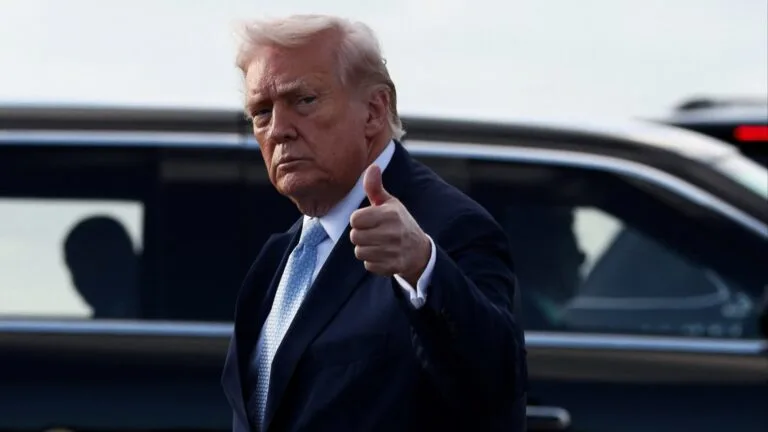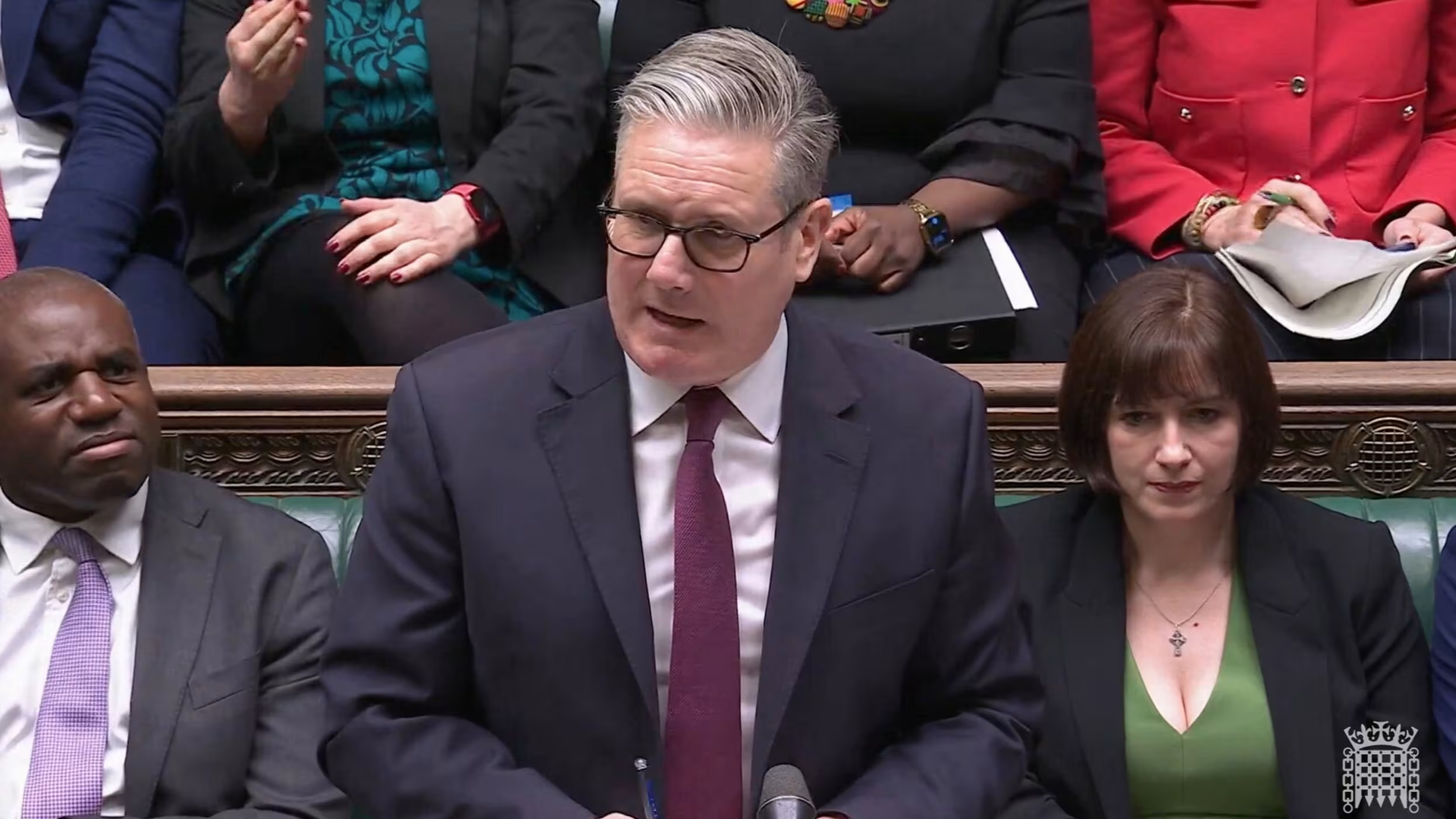
The geopolitical landscape of the High North has been thrust into the center of international discourse following Prime Minister Keir Starmer’s firm declaration that the United Kingdom will not support any attempts to alter the sovereign status of Greenland. This assertive stance comes as a direct response to renewed signals from the incoming United States administration, led by Donald Trump, suggesting a revival of the 2019 proposal for the U.S. to purchase the world’s largest island. Starmer’s warning underscores a burgeoning diplomatic rift between London and Washington, signaling that while the "Special Relationship" remains a cornerstone of British foreign policy, it is not immune to the pressures of territorial integrity and Arctic security.
The Arctic has rapidly evolved from a peripheral concern to a primary theater of global competition. Greenland, an autonomous territory within the Kingdom of Denmark, sits at the heart of this shift. For the UK, the stakes are not merely sentimental or historical; they are deeply rooted in maritime security, resource management, and the maintenance of a rules-based international order. By signaling that Britain "will not yield" on the question of Greenlandic sovereignty, Starmer is positioning the UK as a guardian of European stability against what many in Brussels and Copenhagen view as an erratic and transactional American foreign policy.
To understand the gravity of the current tension, one must look back to August 2019, when then-President Donald Trump publicly floated the idea of the United States acquiring Greenland. At the time, the proposal was met with a mixture of ridicule and indignation from Danish and Greenlandic officials, with Danish Prime Minister Mette Frederiksen famously labeling the idea "absurd." However, beneath the transactional rhetoric lies a cold, hard strategic logic. Greenland is home to the Pituffik Space Base (formerly Thule Air Base), a critical link in the U.S. global missile defense system. As the polar ice caps recede, the island also stands as the gateway to the "Northern Sea Route," a passage that could revolutionize global shipping by cutting transit times between Asia and Europe by up to 40%.
For the United Kingdom, the "Greenland-Iceland-UK (GIUK) Gap" represents a vital maritime corridor. During the Cold War, this stretch of water was the primary theater for tracking Soviet submarines entering the Atlantic. In the 21st century, its importance has only grown. A change in Greenland’s status—particularly one that moves it from a Danish-European framework to a direct U.S. possession—could destabilize the delicate balance of power within NATO. London fears that a unilateral American move would not only alienate key European allies but also provide a pretext for Russia and China to accelerate their own territorial claims in the Arctic.
The economic dimension of the dispute is equally significant. Greenland is believed to hold some of the world’s largest untapped deposits of rare earth minerals, including neodymium and praseodymium, which are essential for the production of electric vehicle motors, wind turbines, and advanced military hardware. Currently, China controls approximately 85% to 90% of the global supply chain for these minerals. For Western powers, securing a non-Chinese source of rare earths is a matter of national security. While the U.S. views acquisition as a way to "onshore" these resources, the UK and the EU argue that a collaborative, investment-led approach with the existing Greenlandic government is more sustainable and less disruptive to international law.
Market analysts suggest that Greenland’s mineral wealth could be worth trillions of dollars over the coming decades. However, extraction remains a logistical and political nightmare. The Kvanefjeld project, one of the world’s most significant rare earth and uranium deposits, has been a flashpoint for local politics, leading to the collapse of governments and a ban on uranium mining in 2021. Starmer’s government appears to believe that by supporting Greenland’s current autonomous status, the UK can foster a more predictable environment for British mining firms and green-tech investors, rather than seeing the region subsumed into a U.S.-led protectionist bloc.
The diplomatic friction also highlights a broader shift in Keir Starmer’s foreign policy. Since taking office, Starmer has sought to "reset" relations with Europe while navigating the complexities of a volatile Washington. By siding with Denmark on the Greenland issue, the UK is reinforcing its commitment to the European security architecture. This is a calculated risk; the UK remains heavily dependent on U.S. intelligence sharing and defense procurement. However, Downing Street seems to have concluded that the cost of silence—allowing the precedent of "purchasing" sovereign-adjacent territories to take root—is far higher than the risk of a temporary fallout with a Trump administration.
Expert insights from the Royal United Services Institute (RUSI) and other defense think tanks suggest that the UK’s stance is also a response to Russia’s increasing militarization of the Arctic. Moscow has reopened over 50 Soviet-era military outposts in the region and is regularly testing "super-weapons" like the Poseidon nuclear-powered torpedo in Arctic waters. In this context, NATO unity is paramount. A diplomatic brawl between the U.S. and Denmark over Greenland’s status would be a significant propaganda victory for the Kremlin, potentially fracturing the alliance’s northern flank at a time when cohesion is most needed.
Furthermore, the legalities of the situation are heavily weighted against the transactional "real estate" view of international relations. The 2009 Act on Greenland Self-Government recognizes the people of Greenland as a people under international law with the right to self-determination. Any change in status would require a referendum among Greenland’s 56,000 inhabitants. Current polling in Greenland suggests that while there is a strong desire for eventual independence from Denmark, there is almost no appetite for becoming a territory of the United States. Starmer’s rhetoric aligns the UK with these democratic principles, contrasting sharply with the "Great Power" politics often associated with the Trumpian worldview.
The economic impact of this geopolitical tug-of-war extends to the fishing industry as well. Greenlandic waters are among the most productive in the world, and post-Brexit, the UK has been active in negotiating bilateral fishing quotas in the North Atlantic. A shift in Greenland’s sovereignty would throw these carefully negotiated agreements into chaos, potentially harming the UK’s domestic fishing fleet and disrupting supply chains for Atlantic cod and cold-water prawns.
Global comparisons illustrate the rarity of such territorial ambitions in the modern era. While China has engaged in "salami slicing" tactics in the South China Sea and Russia has illegally annexed parts of Ukraine, the notion of a major democracy purchasing an inhabited, autonomous territory from another democracy is without modern precedent. The UK’s refusal to yield on this point is, therefore, a defense of the post-1945 global order, where borders are changed through legal processes and mutual consent, not through financial transactions or coercive diplomacy.
As the ice continues to melt, the "Scramble for the Arctic" will only intensify. The Northern Sea Route could eventually compete with the Suez Canal, and the Arctic seabed could hold up to 13% of the world’s undiscovered oil and 30% of its undiscovered gas. By taking a stand now, Keir Starmer is attempting to ensure that the UK has a seat at the table in deciding how these resources are managed. The message to Washington is clear: the United Kingdom views the Arctic as a shared strategic asset that must be governed by international law, not as a marketplace for territorial acquisition.
In the coming months, the diplomatic pressure is expected to mount. The UK will likely seek to lead a coalition of "Arctic-adjacent" nations, including Norway, Canada, and the Nordic states, to reaffirm the sanctity of the Arctic Council’s principles. While Donald Trump’s return to the White House may bring a renewed focus on "America First" expansionism, the UK’s firm "no yield" policy on Greenland suggests that the Special Relationship is entering a phase of robust, and perhaps necessary, disagreement. The frozen wastes of the High North have become a litmus test for the future of Western alliances, and for now, London is choosing the side of sovereignty over the allure of a transactional peace.