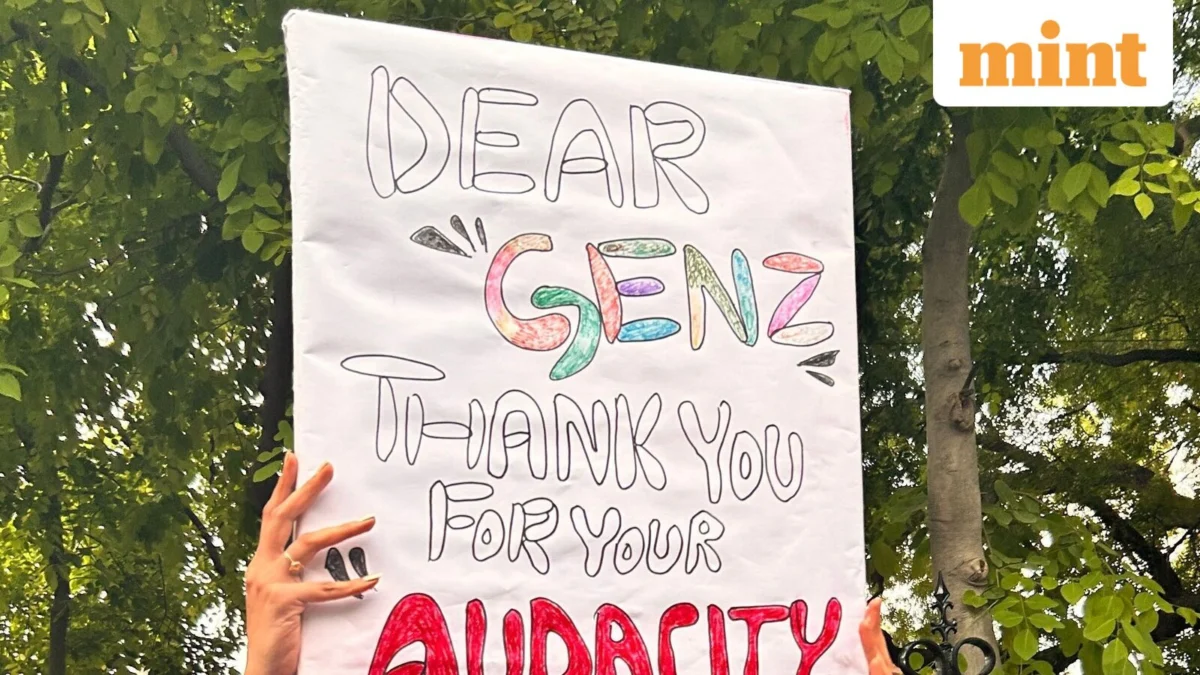
The recent student protests in India’s national capital against alleged irregularities in the NEET (UG) examination brought into sharp focus a burgeoning dynamic within the global digital economy: the evolving role of content creators and influencers. Many prominent voices, particularly those resonating deeply with Generation Z audiences, took public stances, sparking a renewed debate over the commercial implications of such activism. This episode serves as a powerful microcosm of a broader international trend, where the lines between personal conviction, audience expectation, and brand partnership are increasingly blurred, demanding a sophisticated recalibration of risk and reward for all stakeholders in the burgeoning creator economy.
The creator economy, globally valued at an estimated $104 billion in 2022 and projected to exceed $480 billion by 2027, is built on authenticity and direct audience engagement. Unlike traditional celebrities whose fame is often mediated by large studios or PR machines, creators cultivate communities through relatable content and genuine interaction. This foundational relationship fosters an expectation among followers that creators are not merely entertainers or product hawkers, but individuals with opinions on issues that matter. Industry experts concur that the contemporary creator occupies a fundamentally different position than even a few years ago; audiences follow them not just for content, but for the person behind it, transforming them into de facto opinion leaders and cultural arbiters.
This shift, however, presents a complex commercial tightrope walk. Taking a public position on a sensitive issue can deepen loyalty among a segment of the audience, forging a stronger, more authentic connection. Conversely, it risks alienating another, potentially leading to follower attrition and a perception of divisiveness. As fashion and lifestyle content creator Shivani Wagh articulated, creators are citizens first, and their opinions, while potentially impacting engagement positively or negatively, are an inherent part of their public identity. The challenge for creators lies in navigating this dual-edged sword: a vocal stance can cement an "authenticity premium," but also incur a "controversy discount" on future opportunities. Jigisha Joshi, another lifestyle creator, noted that while speaking up about the NEET protests led to some follower loss, it did not negatively impact her brand relationships, as her partners understood the distinction between respectful opinion and hate speech. This highlights a nuanced understanding developing within the industry, moving beyond a blanket aversion to any form of public commentary.
For brands, the decision to collaborate with a vocal creator is no longer straightforward. Historically, corporate entities, especially large multinational corporations, have prioritized safe, mass-appeal environments, viewing political polarization as a potential threat to their market returns and brand image. However, the modern brand landscape, increasingly influenced by ESG (Environmental, Social, and Governance) principles and a values-driven consumer base, particularly among younger demographics, necessitates a more nuanced approach. Brands are now evaluating partnerships less on whether a creator expressed an opinion and more on whether that opinion aligns with the brand’s core values, target audience, and overall risk profile.
Samay Kirad, co-founder of B.I.G Media Co, emphasizes that creators have evolved into brands themselves, cultivating communities built on trust and shared opinions. When a creator takes a stand, they inherently strengthen ties with one segment while distancing another. From a brand’s perspective, the crucial assessment becomes whether there is an appetite or alignment between the brand’s stance (or lack thereof) and the creator’s viewpoint. The recent protests demonstrated a proactive rather than reactive stance from many creators, with collaborations being put on hold or even cancelled if a creator felt a brand might compromise their positioning, or vice versa. This indicates a growing self-awareness among creators regarding their own brand equity and the strategic implications of their choices.

The distinction between "political" and "topical" is also critical for brands. Girish ‘Bobby’ Talwar, founder of Rebellion, points out that brands evaluate controversy, not ideology. Campaigns might be temporarily postponed rather than outright cancelled if a creator’s commentary, while sensitive, aligns with a broadly accepted social concern rather than partisan politics. The NEET protests, for instance, touched upon issues of fairness and educational equity – themes that resonate across political divides and are often seen as societal rather than purely political. Brands are increasingly compelled to look beyond superficial controversy and assess the underlying sentiment and potential long-term impact on their consumer base, especially in markets like India, where youth engagement in social discourse is rapidly escalating.
This evolving calculus also reflects changing audience expectations. A 2023 study by Edelman found that 63% of consumers worldwide want the brands they buy to take a stand on societal issues, with this figure rising to 76% for Gen Z. This pressure translates directly to creators, who are seen as extensions of the brands they endorse. Creators who have built platforms around social commentary are naturally expected to engage in such conversations, whereas those focused on niche content like comedy or technology might find silence more consistent with their established brand. As Jag Chima, co-founder at IPLIX Media, notes, the audience grants a different "permission" based on the creator’s established identity.
The strategic imperative for creators is becoming clearer: balancing authenticity with a sustainable business model. Prafulla Kumar Jha, founder of JEEVMEDIA, observes that many creators are now asking themselves if a particular stance is core to their identity or merely a short-term reaction to an event. While controversial events can lead to spikes in engagement, these often do not translate into long-term commercial viability if the stance is perceived as inauthentic or inconsistent with the creator’s overall brand. The most successful creators are those who integrate their values into their content organically, ensuring that their public positions are extensions of their core identity, thereby mitigating commercial risk while maximizing an "authenticity premium."
A striking contrast emerges when comparing creators to traditional film actors in their willingness to take public positions. Dane Pereira, A&R head at NoFlitr Group, highlights that actors derive fame from performances supported by vast marketing campaigns, while creators cultivate loyalty through relatable content and direct audience engagement. This fundamental difference shapes their relationship with power. Bollywood, for instance, often appears to maintain a cautious distance from overt political commentary, potentially due to its closer ties to established authorities and the complex web of contracts and intermediaries that define an actor’s livelihood.
Subarna Mukherjee, founder and global CEO of Shop Culture, eloquently summarizes this distinction: "Creators own their audience directly while actors rent theirs." Actors’ reach is intermediated by studios, streamers, and endorsement deals – assets controlled by external parties. The downside of a controversial stance for an actor is diffuse, uninsurable, and impacts multiple stakeholders who never signed up for that risk. Therefore, an actor’s silence is often rational risk management rather than a lack of conviction, dictated by contractual obligations and complex stakeholder relationships. Creators, conversely, possess greater autonomy, allowing them to align more closely with public sentiment, particularly that of their direct communities.
In conclusion, the episode of creators engaging with the NEET protests underscores a significant evolution in the digital media landscape. It highlights a maturing creator economy where authenticity is both a commercial asset and a potential liability. Brands are moving towards more sophisticated risk assessment, seeking alignment over mere reach, and recognizing the power of purpose-driven marketing. For creators, the challenge lies in strategically integrating their personal values with their professional brand, understanding that genuine conviction, when aligned with audience expectations and market realities, can build stronger, more resilient communities and sustainable businesses. As the digital sphere increasingly becomes a battleground for ideas and values, the commercial calculus of conscience will continue to redefine the landscape of influence and advertising, pushing both creators and brands to navigate a world where silence, too, has a price.